
Mediterranean Southwest Europe (280–291 CE): Diocletian’s Rise …
Years: 280 - 291
Mediterranean Southwest Europe (280–291 CE): Diocletian’s Rise and the Road to Stability
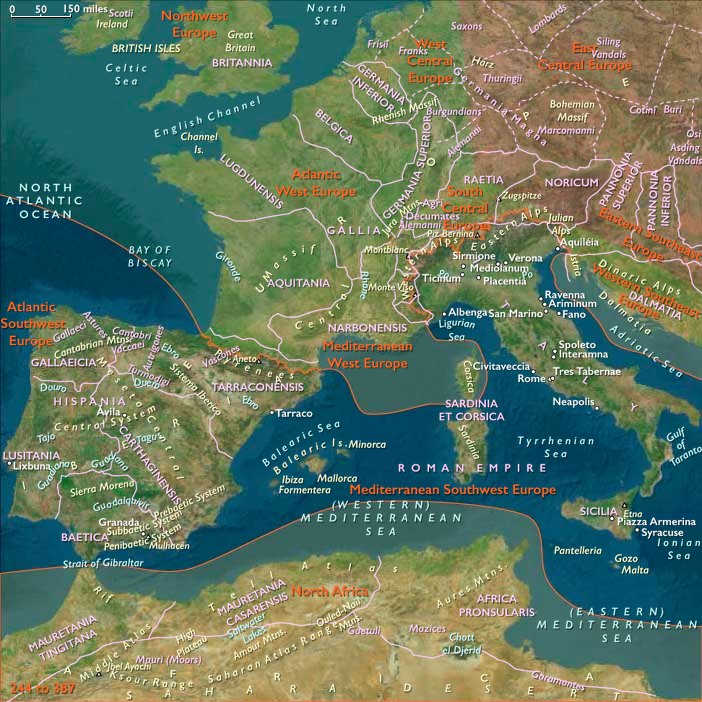
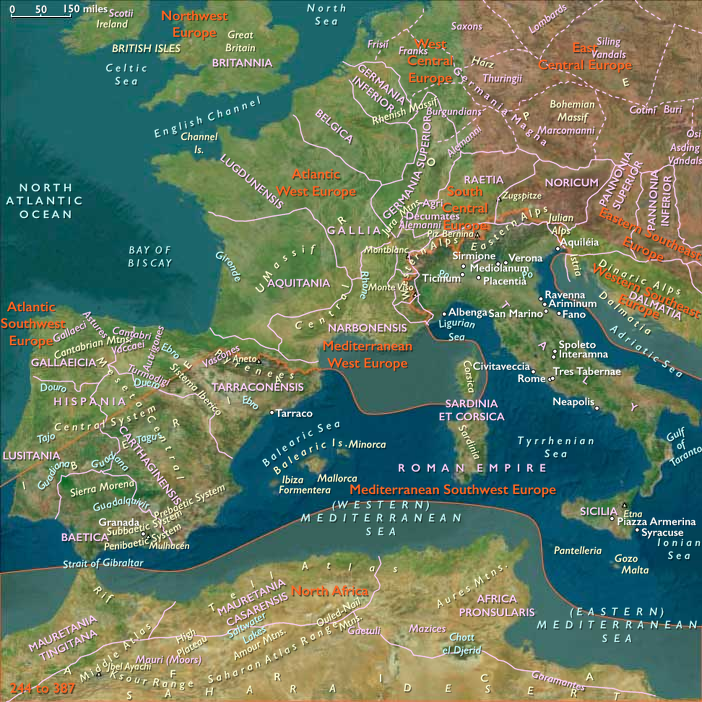
The era 280–291 CE in Mediterranean Southwest Europe marks the beginning of a critical transformation under Emperor Diocletian, whose ascension initiates significant administrative, military, and economic reforms, laying foundations for lasting imperial recovery following decades of crisis.
Emergence of Diocletian and the Tetrarchy
In 284 CE, Diocletian becomes emperor, decisively addressing the prolonged instability and fragmented authority of the previous decades. Recognizing the challenges of governing an expansive empire alone, he establishes the Tetrarchy—a system of rule by four emperors—aiming to improve governance, enhance military responsiveness, and restore political stability.
Administrative and Provincial Reforms
Diocletian reorganizes the empire’s administrative structure by dividing provinces into smaller, more manageable units, enhancing bureaucratic efficiency and oversight. This restructuring strengthens imperial control, improves taxation efficiency, and significantly reduces corruption, providing greater stability and effectiveness in regional governance.
Military Strengthening and Border Defense
Continuing the defensive initiatives of predecessors like Aurelian, Diocletian significantly reinforces military forces and frontier fortifications. His reforms prioritize well-trained and disciplined troops, enhancing Rome’s capacity to respond swiftly to external threats, especially along vulnerable frontiers.
Economic Revitalization and Currency Reform
Diocletian addresses persistent economic instability by introducing currency reforms and price controls aimed at curbing inflation and stabilizing markets. Although these measures initially provide economic relief and improve trade conditions, their effectiveness is limited by ongoing implementation challenges.
Persecution and Growth of Christianity
During Diocletian’s early reign, Christianity continues its expansion despite occasional regional persecutions. Christian communities maintain their vibrant theological discourse and organizational consolidation, further embedding Christianity within the fabric of Roman social and cultural life, setting the stage for subsequent religious and political developments.
Cultural Continuity and Intellectual Engagement
Cultural life remains resilient, with ongoing artistic, literary, and intellectual achievements reflecting adaptability amidst changing political and social conditions. Artistic expression, philosophical dialogue, and theological debate flourish, underscoring enduring intellectual vitality despite recent upheavals.
Legacy of the Era
The era 280–291 CE signifies a pivotal transition towards long-term stability, largely due to Diocletian’s visionary reforms and decisive leadership. The establishment of the Tetrarchy, administrative restructuring, military strengthening, and economic stabilization efforts collectively contribute to revitalizing Mediterranean Southwest Europe, laying critical foundations for the empire’s recovery from the extended crisis of the third century.
People
Groups
Topics
Subjects
Regions
Subregions
Related Events
Showing 7 events out of 7 total
Years: 280 - 291
People
Groups
Topics
Subjects
Regions
Subregions