
Mediterranean Southwest Europe (232–243 CE): Late Severan …
Years: 232 - 243
Mediterranean Southwest Europe (232–243 CE): Late Severan Stability and Emerging Challenges
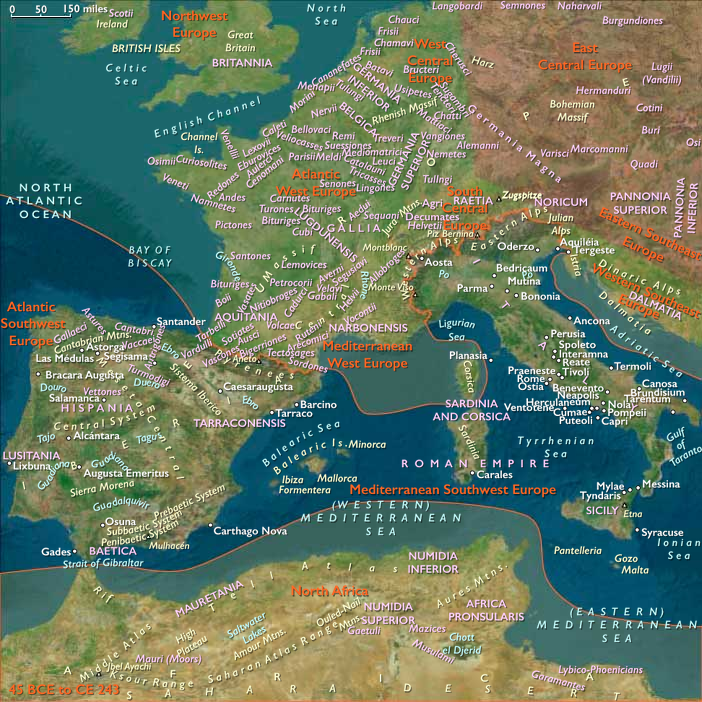
The era 232–243 CE in Mediterranean Southwest Europe continues under the relatively stable rule of Alexander Severus, gradually shifting towards increasing military and political challenges. This period witnesses ongoing administrative reforms, heightened frontier pressures, and sustained cultural vitality, marking the twilight of the Severan dynasty.
Continuing Administration of Alexander Severus
Alexander Severus maintains his efforts to improve governance, uphold judicial fairness, and enhance provincial administration. Relying significantly on influential advisors, notably jurists such as Ulpian, he further refines Roman law, bolstering the empire’s legal and administrative foundations.
Growing Military Pressures and Frontier Conflicts
During the 230s, Alexander Severus increasingly confronts military pressures along the empire's frontiers, notably from the Sassanian Empire in the east and Germanic tribes along the Rhine and Danube rivers. His attempts to balance diplomacy and military strength lead to mixed results, creating tension within Rome’s military leadership.
In 235 CE, amid these ongoing challenges, Alexander Severus undertakes a military campaign against Germanic incursions along the Rhine. The limited success of this campaign, combined with dissatisfaction among military ranks, contributes to growing discontent and instability.
Economic and Infrastructure Development
Despite external threats and internal pressures, Alexander Severus’s administration continues significant infrastructure investments. Improvements in roads, urban facilities, and economic policies support sustained regional prosperity and commercial growth across Mediterranean Southwest Europe.
Cultural and Intellectual Continuity
Cultural activities remain vibrant, marked by ongoing artistic, architectural, and intellectual achievements. Elaborate sculptures, intricately carved sarcophagi, and public monuments continue to thrive, reflecting the period's artistic richness. Intellectual life, especially philosophical discourse and theological discussions within early Christian communities, remains robust and influential.
Christian Community Developments
Christianity continues its expansion and doctrinal refinement during this period. The sustained intellectual engagement among Christian theologians helps solidify and articulate the emerging Christian identity, reinforcing the religion's significance within Roman society.
End of Alexander Severus and Emerging Instability
Alexander Severus’s reign ends abruptly with his assassination in 235 CE by disaffected soldiers, precipitating the "Crisis of the Third Century." This event signals a significant turning point, characterized by prolonged instability, internal conflict, and frequent changes in leadership.
Legacy of the Era
The era 232–243 CE represents the last phase of relative stability under the Severan dynasty, increasingly overshadowed by military pressures and internal dissent. Alexander Severus's administrative efforts and economic policies leave enduring impacts, although his assassination starkly underscores the empire’s vulnerability, setting the stage for subsequent decades of political turmoil and uncertainty.
People
Groups
Topics
Subjects
Regions
Subregions
Related Events
Showing 10 events out of 60585 total
Years: 232 - 243
People
Groups
Topics
Subjects
Regions
Subregions