
Mediterranean Southwest Europe (1936–1947 CE): Civil War, …
Years: 1936 - 1947
Mediterranean Southwest Europe (1936–1947 CE): Civil War, Authoritarian Expansion, and Postwar Realignments
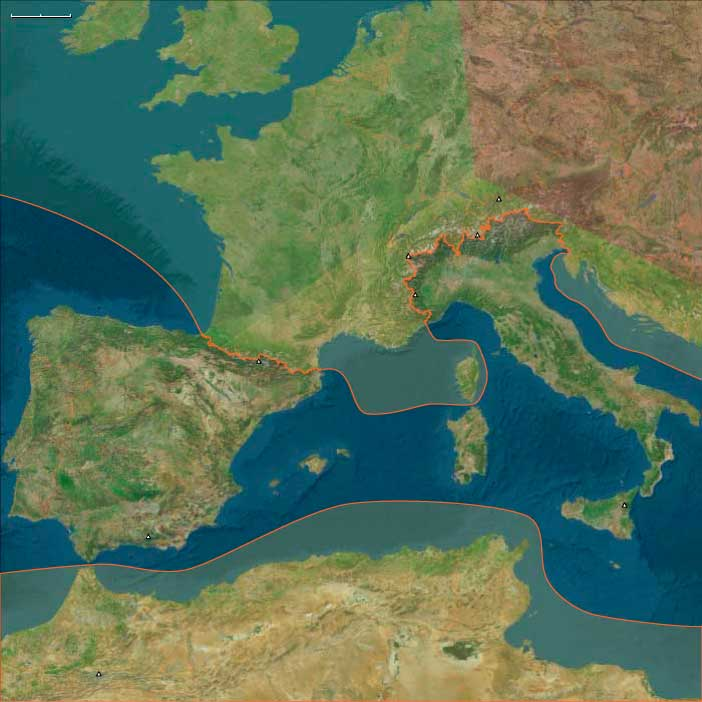
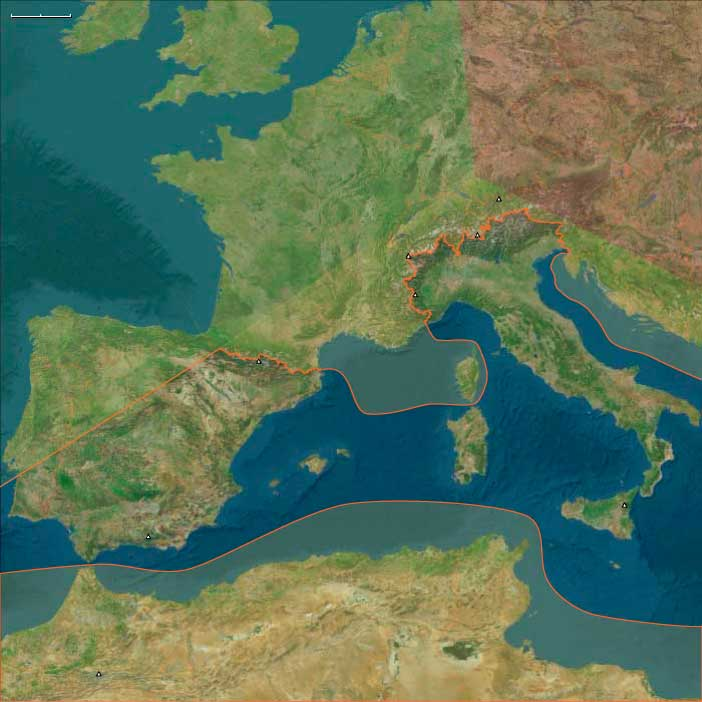
The era from 1936 to 1947 CE in Mediterranean Southwest Europe—encompassing the Italian Peninsula, southern and eastern Spain, southern Portugal, Andorra, the Balearic Islands, Sicily, Sardinia, and Malta—is marked by violent upheaval, aggressive authoritarian expansion, devastating warfare, and significant geopolitical and social realignments.
Spain: The Civil War and Rise of Franco’s Dictatorship
In Spain, escalating political polarization culminates in the outbreak of the brutal Spanish Civil War (1936–1939). General Francisco Franco leads a Nationalist rebellion against the Second Spanish Republic, backed by fascist regimes in Germany and Italy. Despite heroic Republican resistance, including international volunteers in the International Brigades, the Nationalists prevail, and Franco establishes a long-lasting authoritarian regime.
Under Franco, Spain becomes a repressive, corporatist state emphasizing conservative Catholicism, nationalism, and autarky. His regime systematically suppresses political opposition, regional autonomy, and workers' rights, leaving lasting divisions in Spanish society.
Italy: Fascist Aggression and World War II
Under Benito Mussolini, Italy aggressively expands its fascist ambitions, invading Ethiopia in 1935–1936, solidifying its position as a militarized fascist state. Italy allies itself closely with Nazi Germany through the Pact of Steel (1939), joining World War II as part of the Axis Powers in 1940.
Italy’s wartime experience is disastrous, characterized by military defeats in North Africa and Greece. By 1943, Mussolini is deposed following Allied invasions of Sicily and the Italian mainland. Italy suffers extensive devastation and becomes a battleground until liberation in 1945. Post-war, Italy transitions toward democracy with the abolition of the monarchy in 1946 and the establishment of the Italian Republic following a public referendum.
Portugal: Consolidation of the Estado Novo
In Portugal, António de Oliveira Salazar solidifies his Estado Novo authoritarian regime, emphasizing neutrality during World War II despite ideological sympathies with fascist powers. Salazar manages to maintain Portuguese neutrality, balancing cautiously between Axis and Allied pressures, and uses wartime conditions to reinforce domestic authoritarian control, severely limiting political freedoms and opposition activities.
Portugal’s neutrality allows it to benefit economically from trade with both sides during the war, consolidating the regime's strength and Salazar's personal rule.
Malta: World War II and the Struggle for Survival
Malta, strategically vital due to its position in the Mediterranean, endures severe bombardment and siege conditions during World War II, earning recognition as the most heavily bombed location in the conflict. The Maltese people’s resilience under constant attack earns the entire island the prestigious George Cross from King George VI in 1942, symbolizing civilian bravery and endurance.
Post-war, the valor demonstrated strengthens Maltese national identity and fuels demands for greater autonomy from British colonial rule.
Andorra: Neutrality and Continued Stability
Andorra maintains its traditional neutrality and political stability, remaining insulated from wartime upheavals. The principality continues to quietly develop its tourism and infrastructure, further integrating economically into regional markets. Andorra’s political and social structures remain largely unchanged, providing a stable contrast to broader regional turmoil.
Postwar Realignments and Reconstruction
By 1947, Mediterranean Southwest Europe emerges fundamentally transformed. Spain and Portugal remain under authoritarian regimes, insulated from broader postwar democratization efforts. Italy transitions to a democratic republic, becoming a central player in the emerging Western alliance system during the early Cold War. Malta’s wartime experiences bolster national consciousness and set the stage for its eventual path toward independence. Andorra, meanwhile, continues its trajectory of stability and gradual modernization.
This tumultuous era profoundly reshapes Mediterranean Southwest Europe, laying the foundation for significant geopolitical, social, and economic realignments in the decades following World War II.
People
Groups
- Andorra, Principality of
- Malta
- Ottoman Empire
- Britain (United Kingdom of Great Britain and Ireland)
- Italy, Kingdom of
- Austria-Hungary
- Italy, Kingdom of
- Portugal, (First) Republic of
- Ethiopia, Empire of
- Spain (Spanish Republic, Second)
- Germany, Third Reich
- Portugal, (New) State of
- Libya, Italian
- International Brigades
- Spain, Franconian Regency of (Spanish State)
- Italian Social Republic (Salo Republic)
- Libya, Allied Occupied
- Italy (Italian Republic)
Topics
- Italo-Abyssinian, Second
- Spanish Civil War of 1936-39
- World War, Second (World War II)
- East African campaign (World War II)
- Second World War on the Italian Front
Subjects
Regions
Subregions
Years: 1936 - 1947
People
Groups
- Andorra, Principality of
- Malta
- Ottoman Empire
- Britain (United Kingdom of Great Britain and Ireland)
- Italy, Kingdom of
- Austria-Hungary
- Italy, Kingdom of
- Portugal, (First) Republic of
- Ethiopia, Empire of
- Spain (Spanish Republic, Second)
- Germany, Third Reich
- Portugal, (New) State of
- Libya, Italian
- International Brigades
- Spain, Franconian Regency of (Spanish State)
- Italian Social Republic (Salo Republic)
- Libya, Allied Occupied
- Italy (Italian Republic)
Topics
- Italo-Abyssinian, Second
- Spanish Civil War of 1936-39
- World War, Second (World War II)
- East African campaign (World War II)
- Second World War on the Italian Front
Subjects
Regions
Subregions