
Mediterranean Southwest Europe (1912–1923 CE): War, Crisis, …
Years: 1912 - 1923
Mediterranean Southwest Europe (1912–1923 CE): War, Crisis, and National Transformation
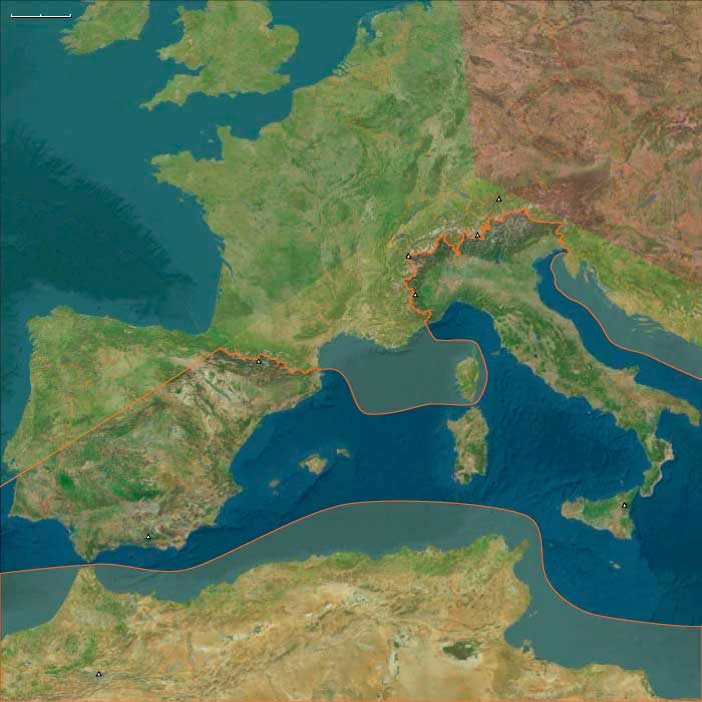
The era from 1912 to 1923 CE in Mediterranean Southwest Europe—encompassing the Italian Peninsula, southern and eastern Spain, southern Portugal, Andorra, the Balearic Islands, Sicily, Sardinia, and Malta—is profoundly shaped by the turmoil of World War I, post-war economic and social upheaval, the rise of authoritarian movements, and evolving cultural identities.
Italy: World War I, Post-War Turmoil, and Rise of Fascism
Italy enters World War I (1915–1918) on the side of the Entente Powers, driven by promises of territorial gains from the Austro-Hungarian Empire. Despite eventual victory, Italy's post-war period is marked by profound disillusionment, economic hardship, and social unrest. Disappointed by the modest territorial rewards granted at the Treaty of Versailles, Italian nationalists condemn this "mutilated victory," fueling widespread resentment.
The resultant instability provides fertile ground for radical ideologies. In 1919, Benito Mussolini founds the Fascist Party, rapidly gaining popularity by exploiting national grievances and promising order, economic revival, and renewed national prestige. Mussolini's March on Rome in October 1922 culminates in King Victor Emmanuel III appointing him Prime Minister, marking the start of authoritarian rule in Italy.
Spain: Neutrality and Deepening Internal Struggles
During World War I, Spain remains neutral, benefiting economically by supplying wartime Europe but exacerbating social disparities domestically. The profits from neutrality fuel industrial and financial growth, particularly in urban centers like Barcelona and Madrid, yet simultaneously deepen social tensions between the working class and the ruling elites.
Post-war Spain is characterized by escalating social conflicts, anarchist activism, regionalist movements, and frequent governmental instability. The deepening crisis ultimately prompts a military coup led by General Miguel Primo de Rivera in 1923, who establishes a military dictatorship promising to restore order and stability, suppressing parliamentary politics and regional autonomy movements.
Andorra: Continued Cultural Growth and Political Stability
Andorra continues its gradual cultural and social modernization, largely insulated from the upheavals impacting larger neighbors. The principality's participation in the Catalan Renaixença remains robust, strengthening its distinct Catalan identity through education and cultural institutions. Politically stable, Andorra maintains its traditional dual sovereignty between the French President and the Bishop of Urgell, successfully balancing tradition and modernity during this tumultuous period.
Malta: Strategic Importance and Emerging Nationalism
As a critical naval base within the British Empire during World War I, Malta experiences substantial economic benefit and infrastructural improvements due to increased British military presence. Yet, the war's aftermath sees growing nationalist sentiments and demands for greater political autonomy. Political organizations advocating Maltese self-government gain traction, highlighting emerging tensions between the island’s colonial dependence and aspirations for self-determination.
Conclusion: Transition and Authoritarianism
From 1912 to 1923, Mediterranean Southwest Europe undergoes dramatic transformations—Italy experiences the trauma of war followed by the establishment of fascism, Spain plunges deeper into political instability leading to dictatorship, while Andorra and Malta each navigate their paths through cultural reaffirmation and political evolution. This era sets the stage for significant geopolitical and social changes in subsequent decades, deeply influencing regional and global history.
People
Groups
- Andorra, Principality of
- Malta
- Ottoman Empire
- Britain (United Kingdom of Great Britain and Ireland)
- Italy, Kingdom of
- Austria-Hungary
- Spain, Bourbon Kingdom (second restoration) of
Topics
Subjects
Regions

Subregions
Years: 1912 - 1923
People
Groups
- Andorra, Principality of
- Malta
- Ottoman Empire
- Britain (United Kingdom of Great Britain and Ireland)
- Italy, Kingdom of
- Austria-Hungary
- Spain, Bourbon Kingdom (second restoration) of
Topics
Subjects
Regions
Subregions