
Mediterranean Southwest Europe (1768–1779 CE): Artistic Flourishing, …
Years: 1768 - 1779
Mediterranean Southwest Europe (1768–1779 CE): Artistic Flourishing, Economic Reforms, and Enlightened Governance
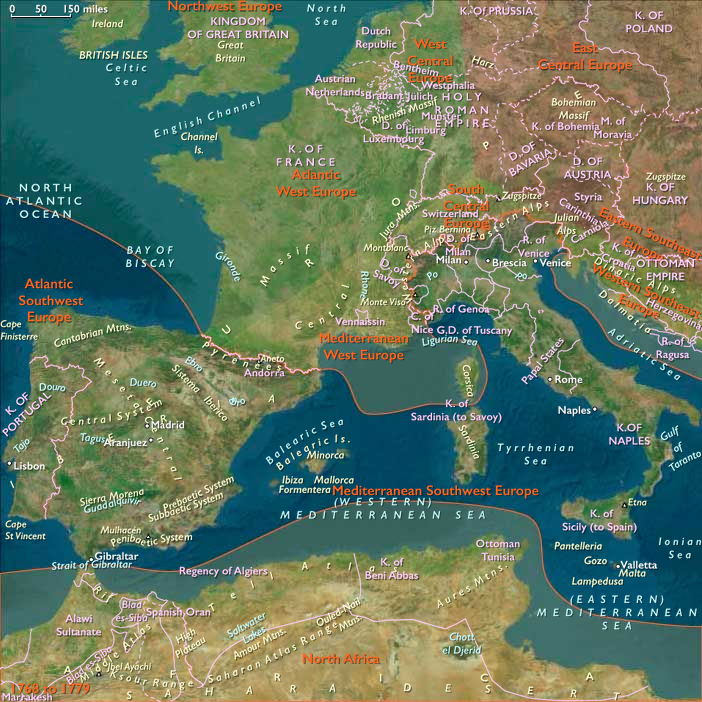
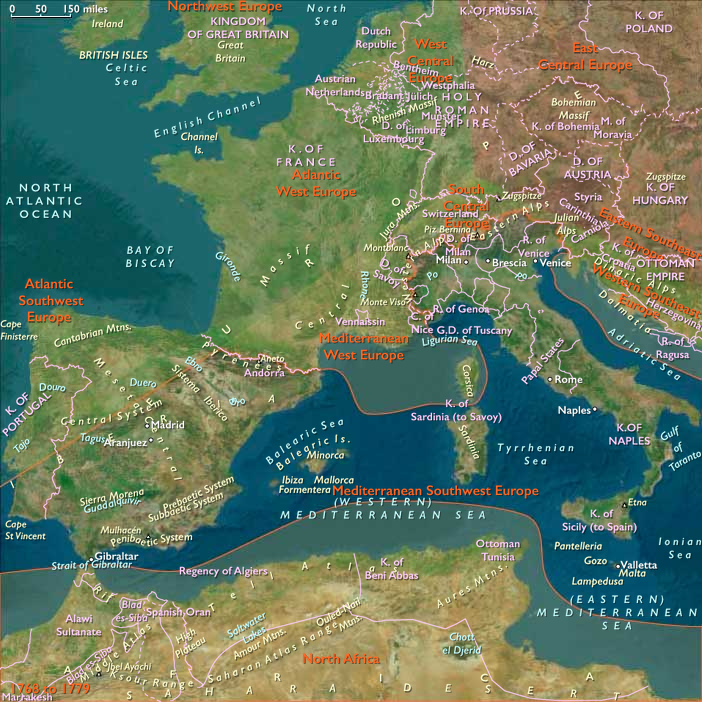
The era 1768–1779 CE in Mediterranean Southwest Europe marks a significant phase of artistic achievement, continued Enlightenment-inspired reforms, and complex social transformations across the region.
Artistic and Intellectual Developments
In Rome, the French Academy becomes a center for artistic innovation, hosting artists who profoundly influence European art. Among them, Jacques-Louis David, arriving in 1775, deeply engages with classical antiquity and Renaissance masters, notably Caravaggio, Raphael, and the Carracci. His meticulous studies and the influence of Enlightenment thinkers like Johann Joachim Winckelmann lay foundations for the Neoclassical movement, transforming artistic norms across Europe.
In Naples, archaeological excavations at sites such as Pompeii and Herculaneum continue under King Ferdinand IV, intensifying interest in classical culture and profoundly impacting artistic and intellectual discourse across the continent.
Economic and Administrative Reforms in Spain
Under Charles III, Spain experiences significant administrative improvements and economic revival. Charles continues the modernization initiatives begun during earlier years, emphasizing urban development, trade liberalization, and agricultural innovation. His policies promote industry and commerce, reduce regional trade barriers, and encourage infrastructural advancements, notably road building and urban renewal.
Challenges and Limitations of Reform
Despite these economic advancements, structural reforms under Charles III remain uneven. The persistence of traditional aristocratic landholding patterns and bureaucratic inertia hinder deeper socio-economic transformation. Moreover, Charles III's anti-clerical policies and the expulsion of the Jesuits in 1767 continue to generate significant tensions, limiting educational opportunities and intellectual diversity, and reflecting broader European struggles between Enlightenment ideals and conservative religious forces.
Cultural and Political Developments in Malta
Under Grandmaster Emmanuel Pinto de Fonseca and his successors, Malta maintains its strategic Mediterranean importance. Major fortification projects and extensive baroque architectural endeavors enhance Malta’s defenses and cultural prestige. The Sacra Infermeria sustains its reputation as a premier European medical institution. The island's cultural flourishing is characterized by architectural patronage and continued artistic innovation.
Conclusion: Enlightenment and Complexity
The period 1768–1779 CE in Mediterranean Southwest Europe is characterized by vibrant artistic expression, ongoing Enlightenment-driven reforms, and persistent challenges between modernizing aspirations and traditionalist resistance. These dynamics significantly shape the trajectory of the region’s future social, cultural, and political landscapes.
People
- Charles III of Spain
- Ferdinand I of the Two Sicilies
- Jacques-Louis David
- Johann Joachim Winckelmann
- Manuel Pinto da Fonseca
Groups
- Papal States (Republic of St. Peter)
- Malta
- Christians, Roman Catholic
- Austria, Archduchy of
- Knights of Malta, Sovereign and Military Order of the
- Jesuits, or Order of the Society of Jesus
- Habsburg Monarchy, or Empire
- Spain, Bourbon Kingdom of
- Naples and Sicily, Bourbon Kingdom of
Topics
Subjects
Regions
Subregions
Years: 1768 - 1779
People
- Charles III of Spain
- Ferdinand I of the Two Sicilies
- Jacques-Louis David
- Johann Joachim Winckelmann
- Manuel Pinto da Fonseca
Groups
- Papal States (Republic of St. Peter)
- Malta
- Christians, Roman Catholic
- Austria, Archduchy of
- Knights of Malta, Sovereign and Military Order of the
- Jesuits, or Order of the Society of Jesus
- Habsburg Monarchy, or Empire
- Spain, Bourbon Kingdom of
- Naples and Sicily, Bourbon Kingdom of
Topics
Subjects
Regions
Subregions