
Mediterranean Southwest Europe (1756–1767 CE): Enlightenment, Reform, …
Years: 1756 - 1767
Mediterranean Southwest Europe (1756–1767 CE): Enlightenment, Reform, and Challenges to Tradition
The era 1756–1767 CE in Mediterranean Southwest Europe witnesses a continued emphasis on Enlightenment ideals, significant political and administrative reforms, and a complex interaction between secular and religious authorities.
Spain: Charles III and Enlightened Despotism
Charles III ascends the Spanish throne in 1759 following the death of Ferdinand VI. Known for his enlightened despotism, Charles III brings his prior experience as King of Naples to Spain, promoting economic modernization, infrastructural development, and institutional reforms aimed at revitalizing the Spanish state. His reforms target the reduction of clerical influence, manifesting notably in the expulsion of the Jesuits in 1767, an act that severely impacts education and the intellectual climate in Spain. Under his guidance, Spain experiences a revival of urban planning, trade reforms, and increased secular control over traditionally clerical domains.
Italy: Bourbon Reforms and Intellectual Advances
In Naples, the momentum of Enlightenment reforms continues under King Ferdinand IV, the successor to Charles III. Guided initially by regent Bernardo Tanucci, Naples advances economically and culturally, maintaining archaeological excavations at sites like Pompeii and Herculaneum. These excavations attract European scholars, significantly influencing European Neoclassicism and historical studies.
In Lombardy, under Austrian rule, Maria Theresa’s enlightened administration continues economic and administrative reforms, including rational taxation and significant infrastructure investment, bolstering regional prosperity and enhancing trade links across Europe.
Malta: Strengthening Defenses and Cultural Patronage
Under Grandmaster Emmanuel Pinto de Fonseca, Malta experiences ongoing infrastructural and defensive fortification improvements, solidifying its strategic position in the Mediterranean. The Sacra Infermeria retains its reputation as a leading medical institution. Pinto's governance is marked by extensive architectural projects, baroque artistry, and cultural vibrancy, enhancing Malta’s prestige within Europe.
Religious and Intellectual Tensions
Throughout the region, Enlightenment-driven secular policies clash with entrenched religious traditions. Spain's anti-clerical stance, exemplified by the expulsion of the Jesuits, reflects broader European intellectual currents seeking rational governance and reduced ecclesiastical authority. This tension is mirrored across other Mediterranean societies experiencing similar secular-religious frictions.
Conclusion: Continued Enlightenment Influence
The period 1756–1767 CE in Mediterranean Southwest Europe underscores the ongoing influence of Enlightenment principles in governance and culture, amid notable conflicts between tradition and modernity. The reforms initiated during this period significantly shape the region’s subsequent social, political, and intellectual developments.
People
- Charles III of Spain
- Ferdinand I of the Two Sicilies
- Ferdinand VI of Spain
- Manuel Pinto da Fonseca
- Maria Theresa
Groups
- Malta
- Christians, Roman Catholic
- Austria, Archduchy of
- Milan, Duchy of
- Knights of Malta, Sovereign and Military Order of the
- Jesuits, or Order of the Society of Jesus
- France, (Bourbon) Kingdom of
- Habsburg Monarchy, or Empire
- Spain, Bourbon Kingdom of
- Sardinia, Kingdom of (Savoy)
- Naples and Sicily, Bourbon Kingdom of
Topics
Subjects
Regions
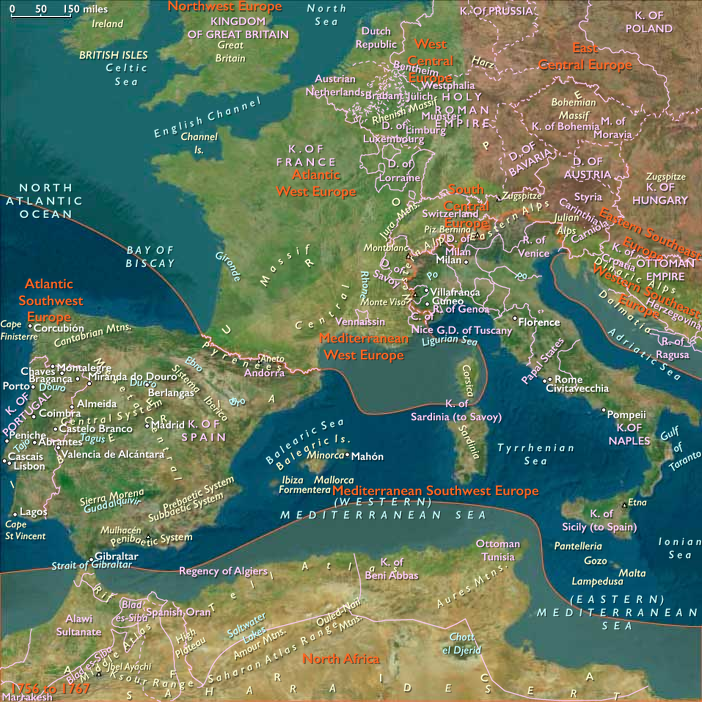
Subregions
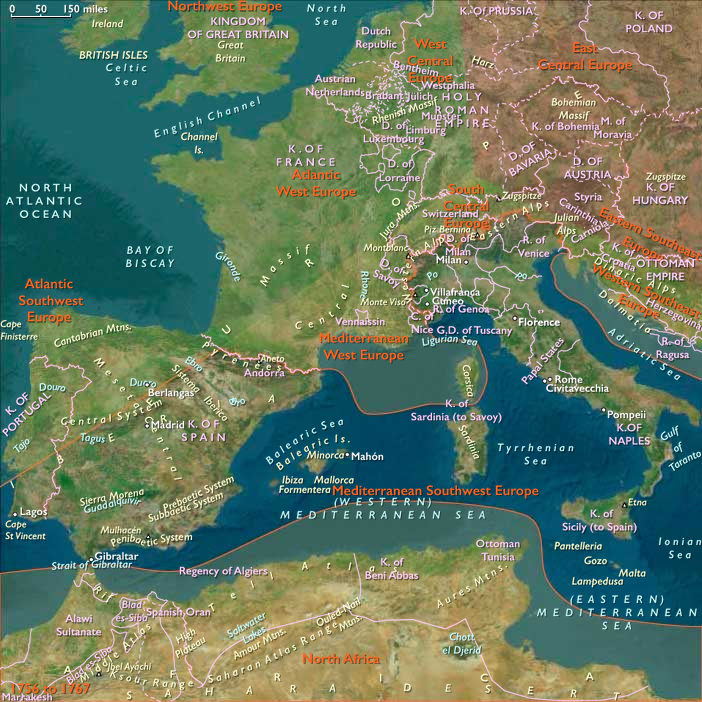
Years: 1756 - 1767
People
- Charles III of Spain
- Ferdinand I of the Two Sicilies
- Ferdinand VI of Spain
- Manuel Pinto da Fonseca
- Maria Theresa
Groups
- Malta
- Christians, Roman Catholic
- Austria, Archduchy of
- Milan, Duchy of
- Knights of Malta, Sovereign and Military Order of the
- Jesuits, or Order of the Society of Jesus
- France, (Bourbon) Kingdom of
- Habsburg Monarchy, or Empire
- Spain, Bourbon Kingdom of
- Sardinia, Kingdom of (Savoy)
- Naples and Sicily, Bourbon Kingdom of
Topics
Subjects
Regions
Subregions