
Mediterranean Southwest Europe (1744–1755 CE): Enlightened Reforms …
Years: 1744 - 1755
Mediterranean Southwest Europe (1744–1755 CE): Enlightened Reforms and Regional Stabilization
The era 1744–1755 CE in Mediterranean Southwest Europe continues the region's engagement with Enlightenment ideas, administrative reform, and cultural advancement amid a relatively stable geopolitical climate.
Spain: Bourbon Reforms and Cultural Revival
King Ferdinand VI ascends the Spanish throne in 1746, succeeding Philip V. His reign is characterized by a notable commitment to peace and internal reform, guided by Enlightenment principles. Under the influence of ministers like José de Carvajal y Lancaster and Marquess of Ensenada, Spain introduces extensive administrative, fiscal, and naval reforms, strengthening the central government’s efficiency. The creation of the Royal Academy of Fine Arts of San Fernando in 1752 highlights Ferdinand’s patronage of the arts and dedication to cultural revival.
Economic and infrastructural improvements, including modernization of the Spanish navy and development of transportation networks, further stabilize Spain, preparing it for future commercial expansion.
Italy: Bourbon Naples and Austrian Lombardy
In Naples, King Charles VII (Charles of Bourbon) continues significant Enlightenment-driven reforms, aiming at enhancing economic productivity, administrative efficiency, and intellectual life. His policies foster the expansion of commerce and agriculture, and he notably supports archaeological excavations, such as those at Herculaneum and Pompeii, significantly influencing European neoclassicism and historical studies.
Lombardy under Austrian rule experiences further economic prosperity due to enlightened administrative reforms. Austrian officials emphasize rational economic management, improved taxation systems, and substantial investment in public infrastructure, including roads and canals, further integrating the region into broader European trade networks.
Malta: Continued Fortification and Cultural Flourishing
Under the governance of the Knights Hospitaller, Malta's fortifications continue to expand, reinforcing its strategic importance in the Mediterranean. The Grandmaster Emmanuel Pinto de Fonseca (1741–1773) enhances the island's defenses, notably fortifying Valletta and its harbor. Pinto’s tenure is marked by architectural developments, public works, and a cultural flowering exemplified by baroque art and architecture. The Sacra Infermeria remains a prominent medical institution, renowned across Europe.
Broader Regional Trends
Throughout Mediterranean Southwest Europe, the period sees consolidation of enlightened absolutist policies, with monarchs and local authorities embracing ideas of rational governance, economic efficiency, and cultural patronage. Stability in the region facilitates sustained intellectual exchange, artistic creativity, and economic growth, laying the foundations for future developments across the Mediterranean.
Conclusion: Stability and Enlightenment Foundations
The era 1744–1755 CE solidifies Enlightenment-inspired reforms, administrative centralization, and cultural advancement across Mediterranean Southwest Europe. This period of relative stability and prosperity significantly influences the trajectory of subsequent economic and cultural transformations throughout the region.
People
- Charles VII, Holy Roman Emperor
- Elisabeth Farnese
- Ferdinand VI of Spain
- José de Carvajal y Lancáster
- Zenón de Somodevilla y Bengoechea, 1st Marquess of Ensenada
- Philip V of Spain
Groups
- Malta
- Austria, Archduchy of
- Milan, Duchy of
- Knights of Malta, Sovereign and Military Order of the
- France, (Bourbon) Kingdom of
- Habsburg Monarchy, or Empire
- Spain, Bourbon Kingdom of
- Sardinia, Kingdom of (Savoy)
- Naples and Sicily, Bourbon Kingdom of
Topics
Subjects
Regions
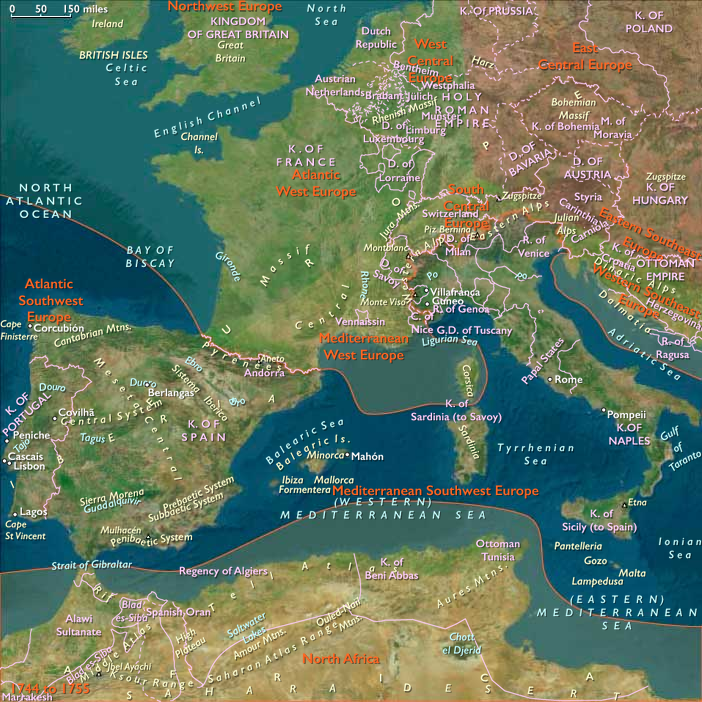
Subregions
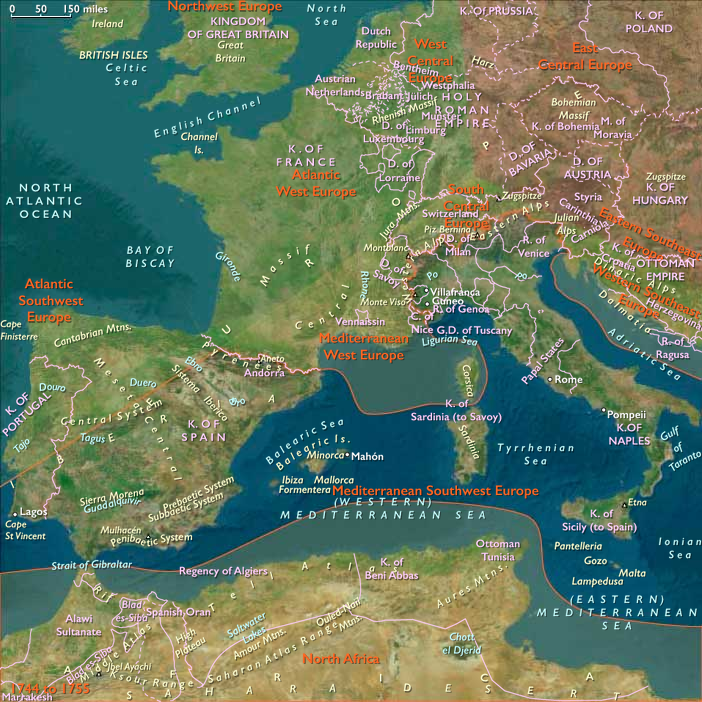
Years: 1744 - 1755
People
- Charles VII, Holy Roman Emperor
- Elisabeth Farnese
- Ferdinand VI of Spain
- José de Carvajal y Lancáster
- Zenón de Somodevilla y Bengoechea, 1st Marquess of Ensenada
- Philip V of Spain
Groups
- Malta
- Austria, Archduchy of
- Milan, Duchy of
- Knights of Malta, Sovereign and Military Order of the
- France, (Bourbon) Kingdom of
- Habsburg Monarchy, or Empire
- Spain, Bourbon Kingdom of
- Sardinia, Kingdom of (Savoy)
- Naples and Sicily, Bourbon Kingdom of
Topics
Subjects
Regions
Subregions