
Mediterranean Southwest Europe (1720–1731 CE): Centralization and …
Years: 1720 - 1731
Mediterranean Southwest Europe (1720–1731 CE): Centralization and Administrative Reform
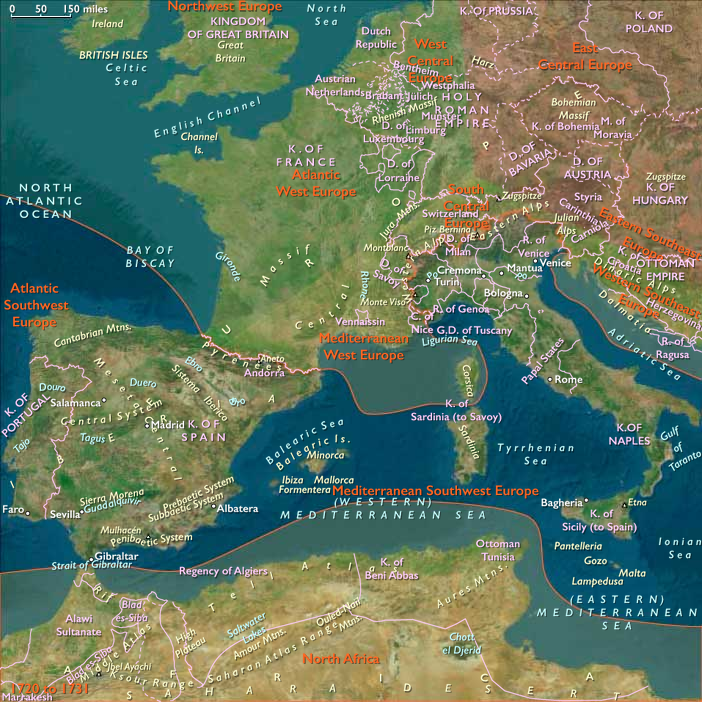
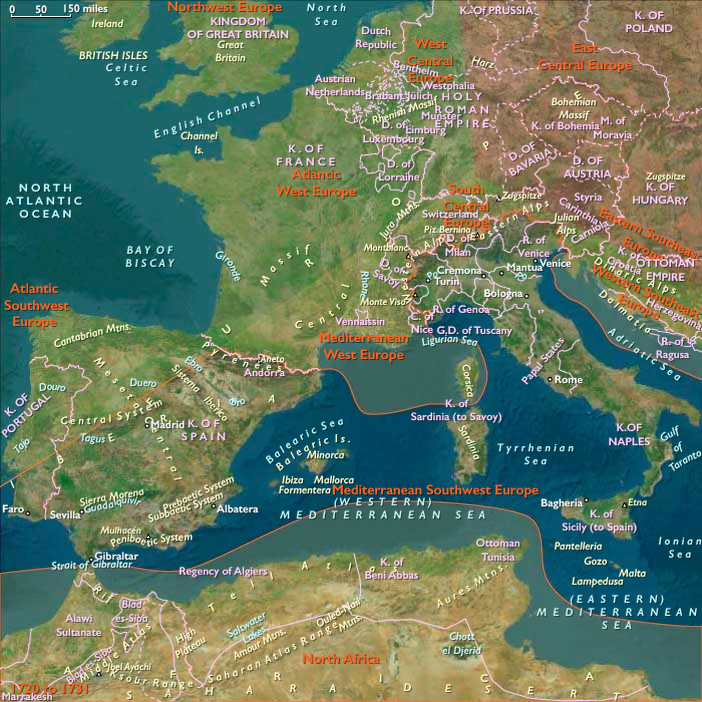
The era 1720–1731 CE in Mediterranean Southwest Europe witnesses significant administrative reforms and centralization efforts spearheaded by Philip V of Spain, reshaping the political and governmental structure of the region.
Spain: Administrative Centralization
In Spain, King Philip V actively undertakes comprehensive reforms aimed at modernizing and centralizing governance. Guided by French and Italian advisers, Philip V institutionalizes a centralized administration by systematically abrogating traditional local liberties (fueros), dissolving regional parliaments, and effectively diminishing the independent political influence of the Spanish aristocracy within the councils of state. These actions consolidate royal power, significantly changing the governance of Spain and laying the foundations for a more uniformly governed state, modeled along French lines.
This restructuring is met with resistance, particularly in areas with strong regional identities, but ultimately transforms the Spanish political landscape by centralizing authority in Madrid, marking a significant departure from Spain's historically fragmented political structures.
Italy: Austrian Consolidation and Cultural Adaptation
In Italy, the period is marked by the Austrian consolidation of territories such as Milan, Naples, and Sardinia, reinforcing Austrian Habsburg dominance. These territorial changes bring administrative reforms that mirror those in Spain, with centralizing policies implemented by the Austrians to streamline governance and enhance fiscal control.
Amid these shifts, Italian cultural and intellectual life remains robust. Artistic and intellectual circles in cities like Venice, Naples, and Rome continue to flourish, adapting to the political realignments while increasingly reflecting Enlightenment ideals in their output.
Malta: Stability and Fortification
In Malta, governance under the Knights Hospitaller continues to emphasize strategic stability and military preparedness. The fortifications of Valletta receive continued attention, enhancing Malta’s significance as a strategic military and maritime hub in the Mediterranean. Maltese medical institutions, particularly the Sacra Infermeria, maintain their reputation for exceptional medical care, serving as a beacon of healthcare excellence throughout Europe.
Broader Regional Context
Throughout Mediterranean Southwest Europe, the early eighteenth century's centralization efforts significantly reshape the region’s administrative landscape, setting important precedents for governmental structures in Spain and its former Italian territories. These developments reflect broader European trends towards absolutist governance and administrative modernization, significantly influencing subsequent political and social developments.
Conclusion: Setting the Stage for Enlightenment
The era 1720–1731 CE thus sees crucial administrative transformations in Mediterranean Southwest Europe, driven by centralization and reformist policies. These developments lay important groundwork for subsequent political stability, social reforms, and the spread of Enlightenment ideals across the region.
People
Groups
- Malta
- Venice, (Most Serene) Republic of
- Austria, Archduchy of
- Sardinia, Kingdom of
- Milan, Duchy of
- Knights of Malta, Sovereign and Military Order of the
- France, (Bourbon) Kingdom of
- Habsburg Monarchy, or Empire
- Spain, Bourbon Kingdom of
- Sardinia, Kingdom of (Savoy)
Topics
Subjects
Regions
Subregions
Years: 1720 - 1731
People
Groups
- Malta
- Venice, (Most Serene) Republic of
- Austria, Archduchy of
- Sardinia, Kingdom of
- Milan, Duchy of
- Knights of Malta, Sovereign and Military Order of the
- France, (Bourbon) Kingdom of
- Habsburg Monarchy, or Empire
- Spain, Bourbon Kingdom of
- Sardinia, Kingdom of (Savoy)
Topics
Subjects
Regions
Subregions