
Mediterranean Southwest Europe (1684–1695 CE): Recovery, Reorientation, …
Years: 1684 - 1695
Mediterranean Southwest Europe (1684–1695 CE): Recovery, Reorientation, and Continued Challenges
The era 1684–1695 CE in Mediterranean Southwest Europe is characterized by gradual recovery from previous calamities, persistent economic constraints, and significant shifts in governance, culture, and intellectual life.
Spain: End of Epidemic and Ongoing Challenges
In Spain, the prolonged plague epidemic finally subsides by 1685, having claimed over 250,000 lives. Although the epidemic’s end brings relief, Spain remains economically debilitated, weighed down by continued fiscal burdens, internal political stagnation, and the persistent after-effects of prolonged warfare under the declining Habsburg dynasty. Despite minor attempts at reform, Spain struggles to regain its earlier status as a dominant European power.
Italy: Cultural Renewal Amid Economic Difficulties
Under continued foreign influence, particularly from Spain, Italy experiences an incremental yet notable revival. States such as Venice and Florence actively pursue fresh commercial and diplomatic ventures, striving to counteract economic setbacks caused by shifting trade routes. Venice, in particular, strengthens its role as a hub for early Enlightenment thought, fostering renewed cultural activities, notably in opera, theater, and innovative architecture. Such patronage helps to sustain Italy's influential role in European cultural life, even as it faces ongoing economic challenges.
Malta: Strengthened Defenses and Improved Public Health
In Malta, the Knights Hospitaller significantly enhance the island's resilience following the catastrophic plague of 1675–1676. Valletta emerges with improved fortifications and renowned medical institutions, particularly the prestigious Sacra Infermeria, which sets a standard for advanced public health and quarantine practices. These developments position Malta as a notable center of medical expertise, providing crucial defenses against future epidemics.
Intellectual and Cultural Shifts
Throughout Mediterranean Southwest Europe, intellectual and cultural life remains vibrant, increasingly shaped by Enlightenment ideals. The arrival of coffee via Venetian commerce with the Ottoman Empire symbolizes widening cultural exchanges and expanding global trade. Intellectual circles embrace more rigorous empirical observation and rational inquiry, fueling debates on governance and social reforms. Meanwhile, the commedia dell'arte remains popular, reflecting and shaping societal attitudes while influencing theater traditions throughout Europe.
Legacy of an Era
Thus, the era 1684–1695 CE in Mediterranean Southwest Europe represents both a conclusion to a period marked by epidemic and economic crisis and a tentative beginning of broader transformations. Improved public health measures, revitalized cultural patronage, and a gradual intellectual turn towards modernity indicate significant steps toward the developments of the eighteenth century.
Groups
- Malta
- Italy, Kingdom of (Holy Roman Empire)
- Genoa, (Most Serene) Republic of
- Christians, Roman Catholic
- Venice, (Most Serene) Republic of
- Holy Roman Empire
- Ottoman Empire
- Spain, Habsburg Kingdom of
- Knights of Malta, Sovereign and Military Order of the
- Tuscany, Grand Duchy of
- Habsburg Monarchy, or Empire
Topics
- Spain: famines and plagues of of the 1670s and 1680s
- Spanish Plague of 1676-1685
- Enlightenment, Age of
Commodoties
Subjects
- Commerce
- Architecture
- Performing Arts
- Public health
- Faith
- Government
- Custom and Law
- Catastrophe
- Medicine
Regions
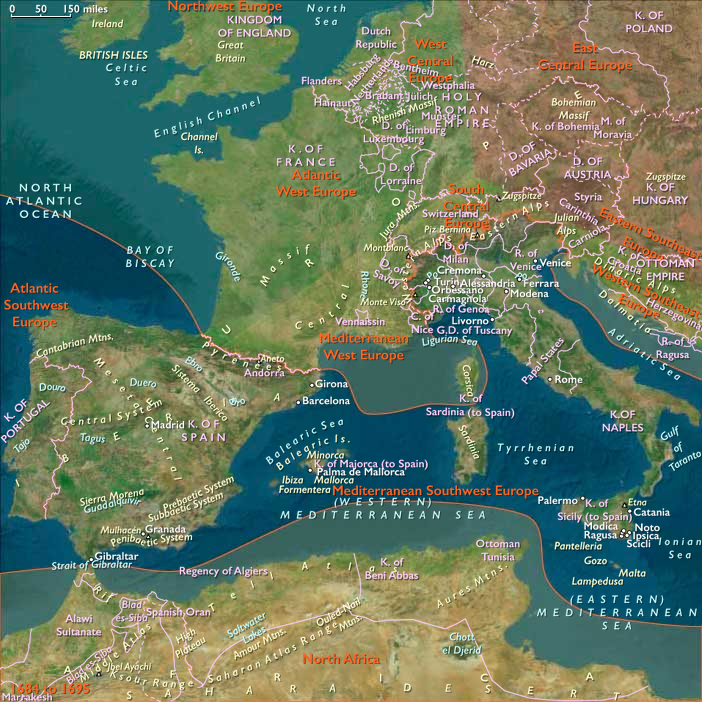
Subregions
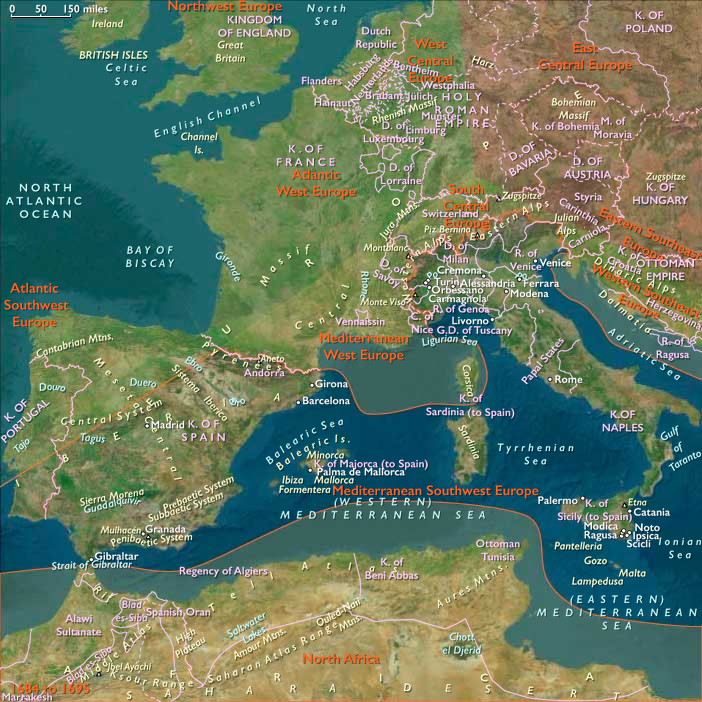
Years: 1684 - 1695
Groups
- Malta
- Italy, Kingdom of (Holy Roman Empire)
- Genoa, (Most Serene) Republic of
- Christians, Roman Catholic
- Venice, (Most Serene) Republic of
- Holy Roman Empire
- Ottoman Empire
- Spain, Habsburg Kingdom of
- Knights of Malta, Sovereign and Military Order of the
- Tuscany, Grand Duchy of
- Habsburg Monarchy, or Empire
Topics
- Spain: famines and plagues of of the 1670s and 1680s
- Spanish Plague of 1676-1685
- Enlightenment, Age of
Commodoties
Subjects
- Commerce
- Architecture
- Performing Arts
- Public health
- Faith
- Government
- Custom and Law
- Catastrophe
- Medicine
Regions
Subregions