
Mediterranean Southwest Europe (1672–1683 CE): Plague Resurgence, …
Years: 1672 - 1683
Mediterranean Southwest Europe (1672–1683 CE): Plague Resurgence, Cultural Responses, and Strategic Adjustments
The period 1672–1683 CE in Mediterranean Southwest Europe is marked by significant challenges and transformative responses. Another devastating outbreak of plague strikes the region, particularly affecting Spain and Malta, prompting profound social and economic impacts. Concurrently, the era witnesses dynamic cultural developments and strategic political adjustments, demonstrating resilience amid adversity.
Spain: Recurrent Plague and Socioeconomic Strain
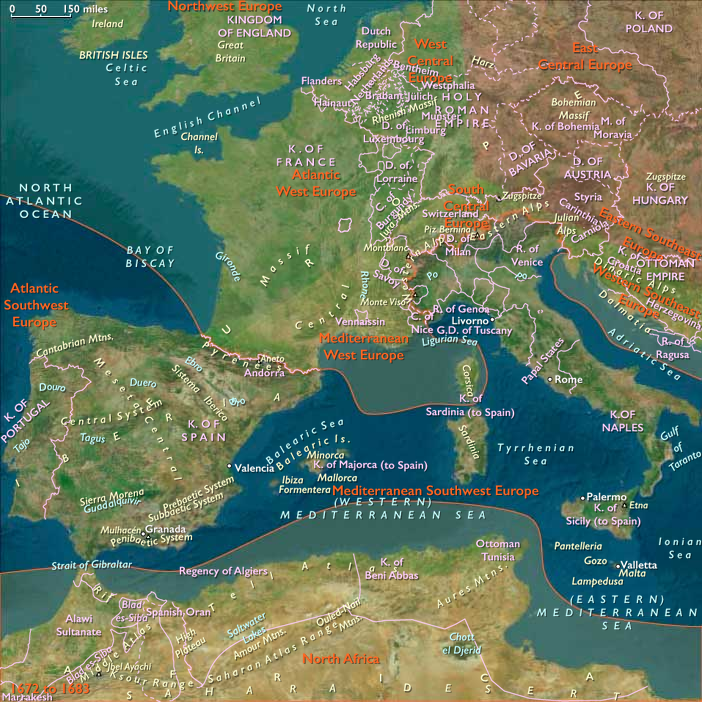
Spain endures a severe recurrence of plague nearly a quarter-century after the Great Plague of Seville. Between 1676 and 1685, periodic epidemics ravage the country, especially affecting the southern and eastern regions, notably Andalucía and Valencia. The crisis is compounded by poor harvests during 1682–83, leading to widespread famine conditions. Tens of thousands succumb, weakening Spain's already struggling economy and exacerbating demographic losses.
This tragic period reinforces existing social inequalities and intensifies pressures on rural and urban communities, significantly affecting labor availability and economic productivity.
Malta: Severe Epidemic and Public Health Crisis
Malta experiences its most devastating plague epidemic in 1675–1676. Beginning in Valletta with the death of Anna Bonnici in late 1675, the plague rapidly spreads across urban and rural areas, despite initial confusion and delayed official recognition of the disease.
The epidemic peaks dramatically, leading to the deaths of approximately 11,300 individuals, representing a substantial proportion of Malta's total population of around 60,000 to 70,000. The highly urbanized and densely populated areas around the Grand Harbor—including Valletta, Senglea, Birgu, and Cospicua—experience catastrophic losses, with urban centers losing approximately 41% of their residents.
Despite severe casualties among the clergy, medical professionals, and hospital workers, Malta’s authorities implement rigorous quarantine measures and sanitation reforms. These actions eventually succeed in containing the epidemic, reflecting significant advancements in public health strategies.
Italy: Artistic Flourishing and Economic Challenges
Italy continues its remarkable cultural achievements amidst ongoing economic difficulties. Baroque art reaches new heights with artists like Carlo Maratta and Giovanni Battista Gaulli (Baciccio) flourishing during this era. Their vivid, emotional religious compositions and grand ceiling frescoes symbolize the Baroque's dramatic spirit, further cementing Italy's central role in European artistic innovation.
Economically, however, Italian city-states, notably Venice and Genoa, confront substantial challenges as shifting trade routes and competition from Northern Europe erode traditional Mediterranean commerce. Adjustments include efforts to diversify economically, invest in new industries, and modernize infrastructure.
Venice: Continued Cultural Vitality
Despite economic pressures, Venice sustains its reputation as a center of European culture, particularly in music and opera. The Venetian opera tradition continues to thrive, drawing audiences from across Europe. Cultural patronage remains robust, and the city maintains its significance as a hub for intellectual discourse and artistic innovation.
Venice also proactively navigates economic adaptations by diversifying its trade and diplomatic relationships, particularly engaging in strategic negotiations with Northern European powers to secure favorable trading conditions.
Broader Cultural and Intellectual Responses
Throughout Mediterranean Southwest Europe, intellectual and cultural life undergoes dynamic shifts. The severe demographic impacts of recurrent plagues lead to significant transformations in urban planning, public health policy, and scientific inquiry. Enlightenment ideals begin to gain traction, emphasizing empirical observation, rational inquiry, and proactive governance. Intellectual circles increasingly advocate for modernization and reform, profoundly influencing subsequent social and political developments.
Legacy of the Era
The years 1672–1683 CE encapsulate a critical phase of adversity and transformation across Mediterranean Southwest Europe. The recurrent plague outbreaks dramatically reshape societies, economies, and governance strategies, while vigorous cultural responses reaffirm the region's resilience. Strategic adjustments, particularly in public health, economic diversification, and cultural patronage, lay essential foundations for recovery and innovation, significantly influencing the region's trajectory in the ensuing centuries.
People
Groups
- Malta
- Italy, Kingdom of (Holy Roman Empire)
- Genoa, (Most Serene) Republic of
- Christians, Roman Catholic
- Venice, (Most Serene) Republic of
- Holy Roman Empire
- Spain, Habsburg Kingdom of
- Knights of Malta, Sovereign and Military Order of the
Topics
- Humanism, Renaissance
- Renaissance, Italian
- Spanish Golden Age
- Spain: famines and plagues of of the 1670s and 1680s
- 1675–76 Malta plague epidemic
- Spanish Plague of 1676-1685
Subjects
- Commerce
- Painting and Drawing
- Performing Arts
- Public health
- Government
- Custom and Law
- Catastrophe
- Medicine
Regions
Subregions
Years: 1672 - 1683
People
Groups
- Malta
- Italy, Kingdom of (Holy Roman Empire)
- Genoa, (Most Serene) Republic of
- Christians, Roman Catholic
- Venice, (Most Serene) Republic of
- Holy Roman Empire
- Spain, Habsburg Kingdom of
- Knights of Malta, Sovereign and Military Order of the
Topics
- Humanism, Renaissance
- Renaissance, Italian
- Spanish Golden Age
- Spain: famines and plagues of of the 1670s and 1680s
- 1675–76 Malta plague epidemic
- Spanish Plague of 1676-1685
Subjects
- Commerce
- Painting and Drawing
- Performing Arts
- Public health
- Government
- Custom and Law
- Catastrophe
- Medicine
Regions
Subregions