
Mediterranean Southwest Europe (153–142 BCE): The Numantine …
Years: 153BCE - 142BCE
Mediterranean Southwest Europe (153–142 BCE): The Numantine Conflict and Renewed Celtiberian Resistance
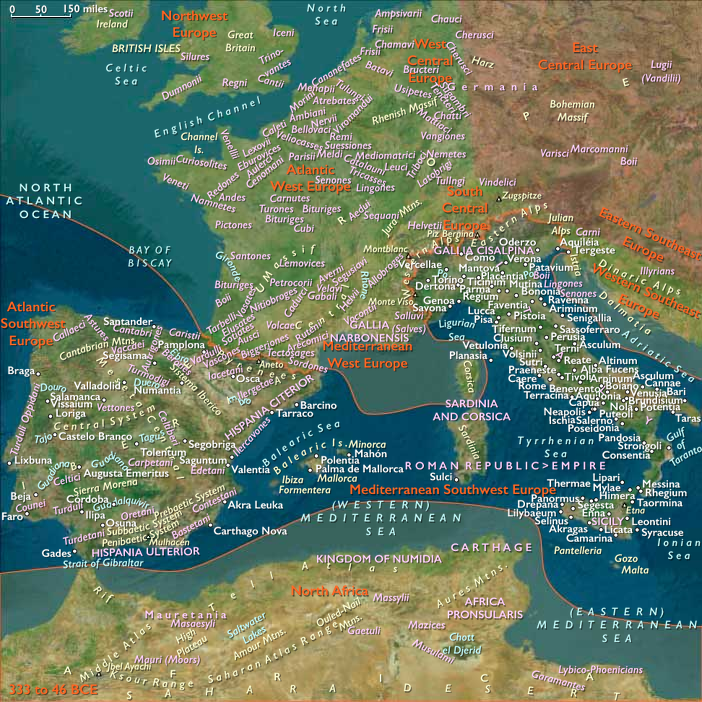
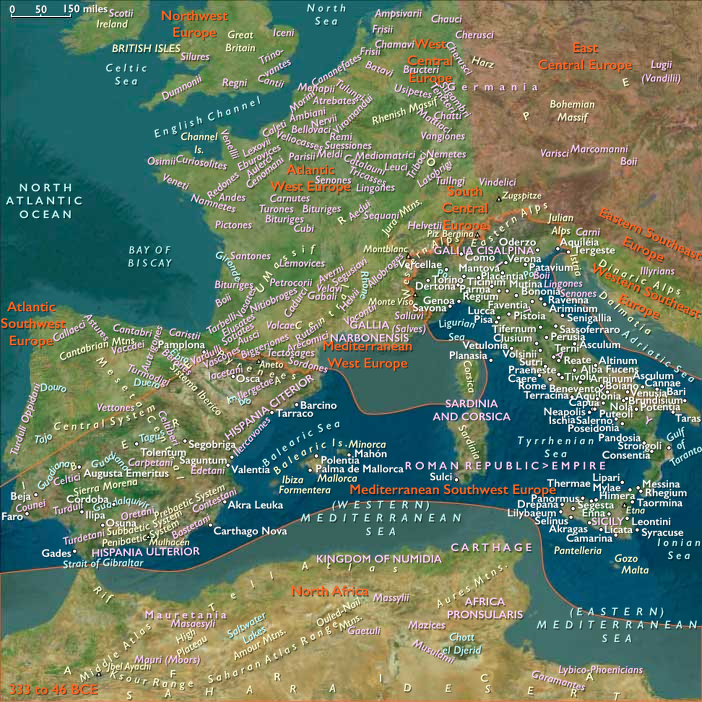
The era 153–142 BCE witnesses continued Roman struggles to maintain control over its territories in Hispania Citerior, as hostilities between the Roman Republic and resilient Celtiberian tribes reignite, centering on the defiant city of Numantia.
Prelude and Outbreak of the Numantine War
Following the brief peace established in 151 BCE, tensions between Rome and the Celtiberian tribes intensify. The initial conflict, begun as a localized revolt in Numantia in 154 BCE, had seemingly ended three years later. However, the conditions imposed by Roman authorities and lingering resentment among the Celtiberians quickly set the stage for renewed warfare.
Renewal of Celtiberian Resistance
In 143 BCE, war erupts once more as Numantia defiantly resists Roman authority. This renewed conflict, known as the Numantine War, represents more than a local insurrection. It embodies the Celtiberians' collective determination to preserve their independence against Rome's persistent and aggressive expansion in the Iberian Peninsula. Numantia rapidly becomes a potent symbol of indigenous resistance, uniting various tribes against their common Roman enemy.
Roman Challenges and Indigenous Defiance
Rome’s repeated attempts to suppress the Numantine uprising highlight both its determination to dominate the Iberian tribes and the complexities inherent in subduing fiercely independent peoples. The ongoing resistance at Numantia, emblematic of broader indigenous defiance, tests Roman military capabilities and governance strategies.
This era underscores Rome's continuing struggle to fully pacify the region, foreshadowing further escalation of conflict and leading to protracted engagements that would eventually become legendary within Roman military history.
Groups
- Celtiberians
- Roman Republic
- Hispania Citerior (region of Hispania)
- Hispania Ulterior (region of Hispania)
Topics
Subjects
Regions
Subregions
Related Events
Showing 2 events out of 2 total
Years: 153BCE - 142BCE
Groups
- Celtiberians
- Roman Republic
- Hispania Citerior (region of Hispania)
- Hispania Ulterior (region of Hispania)
Topics
Subjects
Regions
Subregions