
Mediterranean Southwest Europe (1660–1671 CE): Recovery, Cultural …
Years: 1660 - 1671
Mediterranean Southwest Europe (1660–1671 CE): Recovery, Cultural Flourishing, and Political Realignment
The period 1660–1671 CE in Mediterranean Southwest Europe marks a phase of recovery from the catastrophic epidemics of preceding decades, accompanied by renewed cultural dynamism and significant political shifts. This era underscores the region's resilience, evident in the flourishing of the arts, science, and strengthened governance structures amid lingering economic challenges.
Spain: Restoration and Economic Realignment
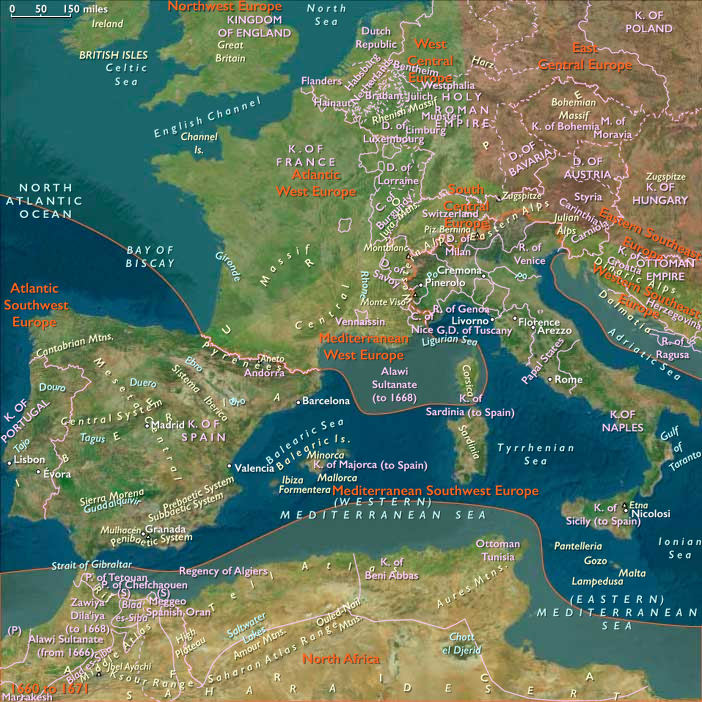
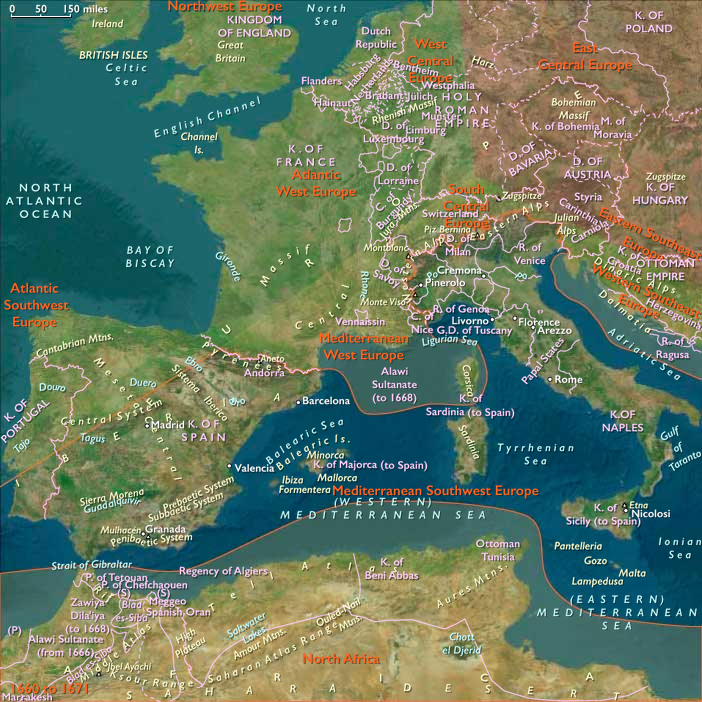
Following the devastating Great Plague of Seville, Spain experiences a period of demographic recovery and restructuring. Although still burdened by economic difficulties, significant efforts are made toward administrative reform and economic stabilization. In 1668, Spain recognizes Portuguese independence with the Treaty of Lisbon, formally ending the protracted Portuguese Restoration War (1640–1668). This treaty redefines Iberian geopolitics and prompts Spain to focus inwardly on recovery and internal consolidation.
Artistically, the Spanish Baroque continues to thrive, notably through the works of painters such as Bartolomé Esteban Murillo, whose religious and genre scenes become emblematic of the Spanish Counter-Reformation ethos.
Italy: Scientific and Artistic Advancements
Italy remains a beacon of scientific and artistic innovation during this period. The flourishing of Baroque art is exemplified by masterpieces from Gian Lorenzo Bernini, including notable architectural and sculptural commissions in Rome that reinforce his position as a leading figure in European art. Concurrently, Francesco Borromini continues to revolutionize Baroque architecture with innovative designs characterized by complex geometries and striking dynamism.
Scientific inquiry also experiences notable advancement, building on Galileo's legacy despite ongoing tensions with Church authorities. The Accademia del Cimento, established in Florence in 1657, actively conducts experimental research, contributing significantly to the European scientific revolution by systematically applying empirical methods.
Malta: Continued Strategic Importance and Cultural Patronage
Malta, under the rule of the Knights Hospitaller, reinforces its strategic maritime significance through enhanced fortifications and naval power. Grand Master Nicolás Cotoner (1663–1680) initiates significant architectural and infrastructural projects, including the expansion and embellishment of fortifications around Valletta. The Sacra Infermeria continues its prominence as a leading medical institution, attracting scholars and physicians from across Europe.
Culturally, Malta thrives, benefiting from artistic patronage by the Order, fostering a vibrant Baroque art scene and elevating Valletta's international reputation as a cultural center.
Venice: Cultural Splendor Amid Economic Adaptation
Venice sustains its cultural significance despite ongoing economic adaptations necessitated by shifting trade patterns and persistent competition from Atlantic trade routes. Venetian opera reaches new heights during this period, with composers like Francesco Cavalli achieving widespread acclaim. His works solidify Venice's reputation as the epicenter of European musical innovation and operatic development.
Economic diversification efforts continue, with Venice adjusting its trade policies and maritime strategies to counteract the impact of reduced Mediterranean trade volumes.
Broader Cultural and Social Developments
Across Mediterranean Southwest Europe, social and cultural life sees significant transformation. Urban societies increasingly engage with intellectual and scientific circles, contributing to the wider European Enlightenment's preliminary stages. The economic and demographic challenges of preceding decades prompt shifts in labor organization and social structures, with notable urbanization trends and evolving cultural tastes that emphasize education, scientific inquiry, and artistic patronage.
Legacy of the Era
The years 1660–1671 CE represent a critical juncture in Mediterranean Southwest Europe's history, characterized by recovery, cultural vibrancy, and geopolitical realignment. Spain's acceptance of Portuguese sovereignty marks a turning point in Iberian relations, while Italy, Malta, and Venice exemplify resilience through sustained cultural innovation and strategic adaptation. This era significantly shapes the region's future trajectory, laying the foundations for further cultural, scientific, and political advancements in the ensuing decades.
People
- Bartolomé Esteban Murillo
- Francesco Borromini
- Francesco Cavalli
- Gian Lorenzo Bernini
- Nicolás Cotoner
Groups
- Papal States (Republic of St. Peter)
- Malta
- Italy, Kingdom of (Holy Roman Empire)
- Christians, Roman Catholic
- Venice, (Most Serene) Republic of
- Holy Roman Empire
- Spain, Habsburg Kingdom of
- Knights of Malta, Sovereign and Military Order of the
- Portugal, Bragança Kingdom of
Topics
- Humanism, Renaissance
- Renaissance, Italian
- Spanish Golden Age
- Portuguese Restoration War
- Seville, Great Plague of
- Western Art: 1660 to 1672
Subjects
Regions
Subregions
Years: 1660 - 1671
People
- Bartolomé Esteban Murillo
- Francesco Borromini
- Francesco Cavalli
- Gian Lorenzo Bernini
- Nicolás Cotoner
Groups
- Papal States (Republic of St. Peter)
- Malta
- Italy, Kingdom of (Holy Roman Empire)
- Christians, Roman Catholic
- Venice, (Most Serene) Republic of
- Holy Roman Empire
- Spain, Habsburg Kingdom of
- Knights of Malta, Sovereign and Military Order of the
- Portugal, Bragança Kingdom of
Topics
- Humanism, Renaissance
- Renaissance, Italian
- Spanish Golden Age
- Portuguese Restoration War
- Seville, Great Plague of
- Western Art: 1660 to 1672
Subjects
Regions
Subregions