
Mediterranean Southwest Europe (1636–1647 CE): Epidemic Aftermath, …
Years: 1636 - 1647
Mediterranean Southwest Europe (1636–1647 CE): Epidemic Aftermath, Cultural Flourishing, and Political Realignments
The era 1636–1647 CE in Mediterranean Southwest Europe is characterized by recovery from devastating plagues, significant cultural advancements, and shifting political dynamics. Italy, Spain, Malta, and Venice each navigate unique challenges, embracing artistic innovation, fostering intellectual discourse, and adjusting to the shifting balance of regional and European power.
Italy: Recovery, Cultural Vitality, and Jewish Advocacy
Italy begins to recover gradually from the severe plague epidemic of the previous decade, though demographic and economic impacts linger. Despite these challenges, cultural and intellectual life resumes vigorously. In Venice, Simone Luzzato, a prominent rabbi, publishes his groundbreaking Essay on the Jews in Venice (1638). His innovative economic arguments advocate for tolerance and improved conditions for Italian Jews, emphasizing their indispensable role in commerce and the stability they provide by lacking foreign allegiances.
Meanwhile, artistic production thrives. The ongoing Baroque movement continues to flourish under masters like Gian Lorenzo Bernini, whose work significantly influences sculpture and architecture across Europe. Claudio Monteverdi furthers Venetian opera, enriching the city’s vibrant cultural milieu.
Spain: Continued Strain and Artistic Expression
Spain remains embroiled in political and military tensions, notably through continued involvement in the Thirty Years' War, leading to persistent financial strains and societal unrest. Despite these adversities, the Spanish Golden Age in literature and arts persists. Esteemed playwright Pedro Calderón de la Barca continues to produce significant works, further enriching Spanish theater. Calderón’s dramas, marked by profound philosophical and theological explorations, epitomize the resilience and creative vitality of Spanish culture amid political and economic hardship.
Religious orthodoxy continues to prevail under the watchful eye of the Spanish Inquisition, which maintains strict control over cultural and religious life, reflecting Spain’s internal tensions between creative expression and conservative forces.
Malta: Continued Fortification and Cultural Prestige
The Knights Hospitaller in Malta sustain their vigorous defensive enhancements and continue to fortify coastal defenses against persistent Ottoman threats. Valletta, increasingly fortified and culturally vibrant, remains a significant center of European intellectual and artistic exchange. The renowned Sacra Infermeria continues its advancement in medical sciences, reinforcing Malta’s prestige in healthcare and humanitarian practices across Europe.
Venice: Trade Realignments and Continued Cultural Influence
Venice, still recovering from the catastrophic plague losses, continues to face shifting trade dynamics that challenge its longstanding maritime dominance. The city adapts economically, shifting toward new trading networks and alliances. Nonetheless, its cultural prestige remains intact. Venice continues to excel musically, notably through Monteverdi’s operatic compositions, reinforcing its central role in European artistic and cultural innovation.
Political Realignments and European Influence
This era also witnesses significant political realignments, driven by the continued fallout of the Thirty Years' War. Italian city-states realign their diplomatic and economic strategies to maintain autonomy and prosperity. Spain grapples with increasingly unsustainable military commitments, prompting domestic unrest and economic instability. Malta strategically navigates its role between major European powers, continuing to serve as a critical Mediterranean bastion.
Legacy of the Era
The period 1636–1647 CE illustrates Mediterranean Southwest Europe’s resilient recovery from severe crises, significant cultural contributions, and strategic political adaptations. Italy’s advocacy for Jewish economic integration, Spain’s persistent artistic and literary output amid profound internal and external pressures, Malta’s fortified presence and medical advancements, and Venice’s cultural resilience and adaptability collectively underscore the region's enduring capacity for innovation and adaptation amid adversity.
People
Groups
- Papal States (Republic of St. Peter)
- Malta
- Italy, Kingdom of (Holy Roman Empire)
- Christians, Roman Catholic
- Venice, (Most Serene) Republic of
- Holy Roman Empire
- Milan, Duchy of
- Ottoman Empire
- Spain, Habsburg Kingdom of
- Knights of Malta, Sovereign and Military Order of the
- Tuscany, Grand Duchy of
Topics
- Humanism, Renaissance
- Renaissance, Italian
- Spanish Golden Age
- Counter-Reformation (also Catholic Reformation or Catholic Revival)
- Thirty Years' War
Commodoties
Subjects
Regions
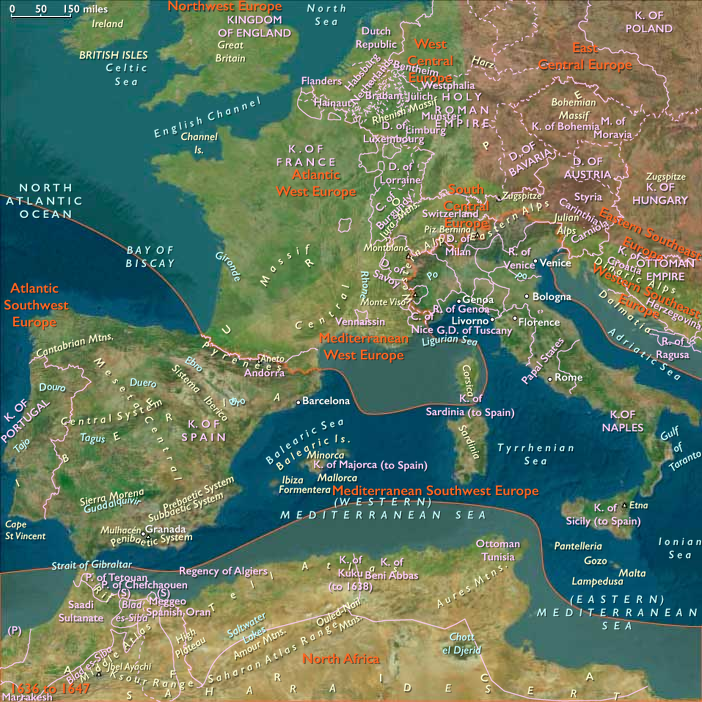
Subregions
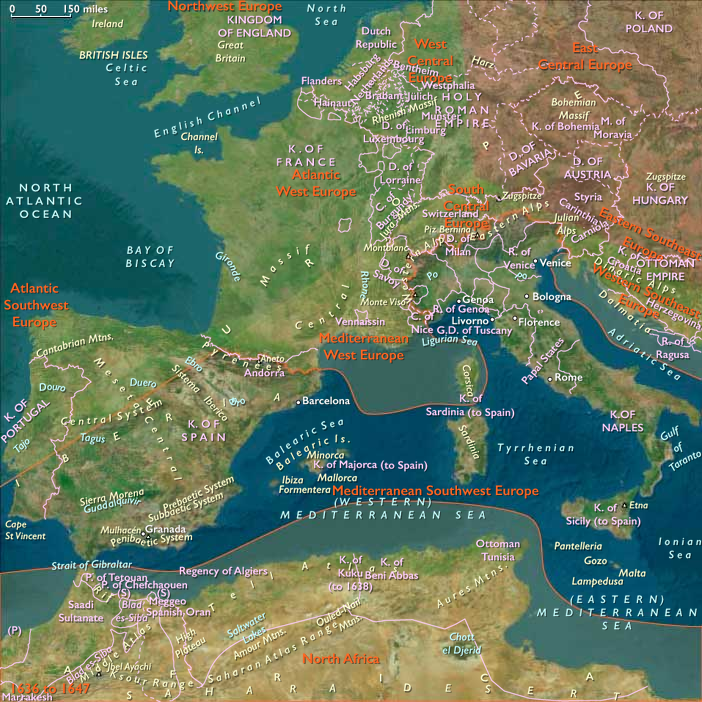
Related Events
Showing 10 events out of 32410 total
Years: 1636 - 1647
People
Groups
- Papal States (Republic of St. Peter)
- Malta
- Italy, Kingdom of (Holy Roman Empire)
- Christians, Roman Catholic
- Venice, (Most Serene) Republic of
- Holy Roman Empire
- Milan, Duchy of
- Ottoman Empire
- Spain, Habsburg Kingdom of
- Knights of Malta, Sovereign and Military Order of the
- Tuscany, Grand Duchy of
Topics
- Humanism, Renaissance
- Renaissance, Italian
- Spanish Golden Age
- Counter-Reformation (also Catholic Reformation or Catholic Revival)
- Thirty Years' War
Commodoties
Subjects
Regions
Subregions