
Mediterranean Southwest Europe (1600–1611 CE): Sovereign Adjustments, …
Years: 1600 - 1611
Mediterranean Southwest Europe (1600–1611 CE): Sovereign Adjustments, Cultural Refinements, and Strategic Developments
The era 1600–1611 CE in Mediterranean Southwest Europe witnesses important adjustments in sovereignty, ongoing cultural refinements, and significant strategic developments across the region. The Iberian Peninsula sees crucial political developments regarding Andorra’s unique governance structure, Italy maintains its cultural and scientific advancements, and Malta continues to strengthen its maritime and defensive significance.
Andorra’s Sovereignty Formalized
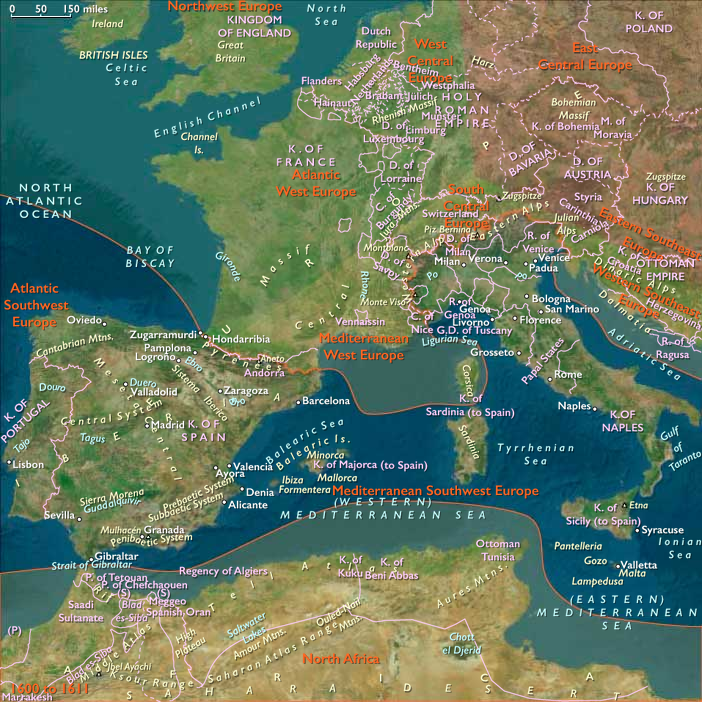
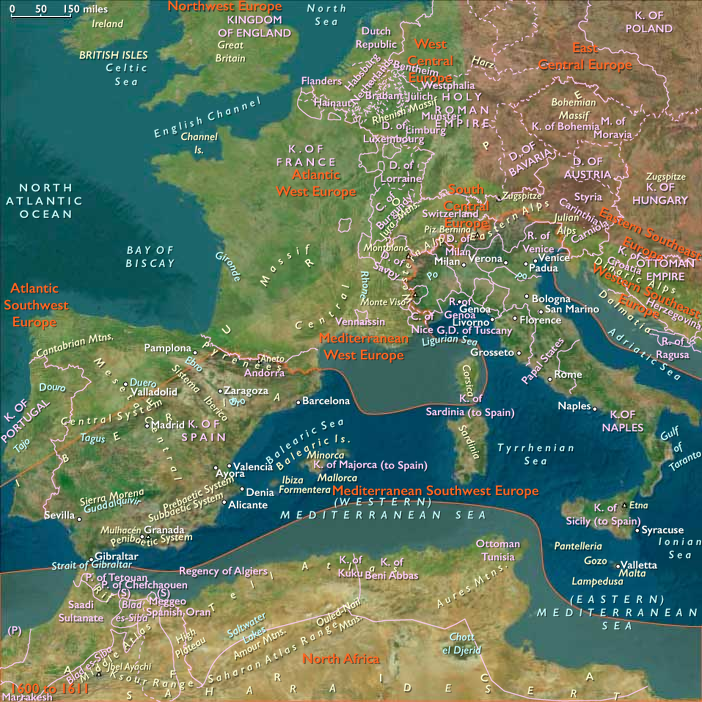
Andorra’s distinct co-sovereignty arrangement, long shared between the Count of Foix and the Bishop of Urgell in Catalonia, undergoes formal clarification. Historically, the French claim to Andorra had passed to the kings of Navarre. In 1607, King Henry IV of France (formerly Henry of Navarre) formally recognizes and codifies this arrangement through an edict, establishing the French head of state and the Bishop of Urgell as co-princes. This unique political settlement solidifies Andorra's territorial and governance structure, laying the foundations for its enduring political stability and identity.
Continuing Literary and Cultural Achievements in Spain
Spain continues to experience the heights of its literary Golden Age, despite ongoing geopolitical pressures and challenges. The early 1600s mark the publication of Miguel de Cervantes’ iconic Don Quixote (first part published in 1605), a literary masterpiece that profoundly influences European literature and culture. Cervantes' work symbolizes Spain’s vibrant intellectual life, reflecting both humanist ideals and critical social commentary. At the same time, playwrights such as Lope de Vega remain prolific, further enriching Spanish drama and solidifying Spain's position as a cultural powerhouse in Europe.
Italian Artistic and Scientific Flourishing
In Italy, artistic innovations continue, characterized by further development of Baroque aesthetics. Artists such as Caravaggio continue to profoundly influence European art through dramatic chiaroscuro techniques and intensely realistic portrayals of human emotion and physicality. In music, Italian composers advance vocal and instrumental forms, enhancing the complexity and emotive power of the emerging Baroque style.
Scientifically, Italy maintains its leading role in Europe, with the University of Padua at the forefront of anatomical and medical studies. The era sees continued refinement and expansion of scientific inquiry, bolstering Italy’s academic prestige and drawing scholars from across the continent.
Malta’s Expanding Defensive Capabilities
Under the Knights Hospitaller, Malta further develops its strategic defensive infrastructure. Following the completion of the fortified city of Valletta in 1571, the Knights continue to reinforce the island’s military strength through the construction of coastal watchtowers and fortifications. These strategic enhancements ensure Malta remains a formidable Mediterranean stronghold, crucial for protecting European interests against Ottoman and North African threats. Additionally, Malta's Sacra Infermeria enhances its reputation across Europe, known for pioneering medical practices and superior healthcare services.
Venetian Trade and Cultural Exchange
Venice sustains its influential role as a Mediterranean commercial hub, continuing robust trade with the Ottoman Empire and North Africa. This commerce introduces Europeans to an expanding range of commodities, notably coffee, significantly shaping European tastes and habits. Venice’s position as a vital cultural crossroads remains secure, facilitating cultural fusion and diplomatic exchanges that enhance its strategic economic importance.
Legacy of the Era
The years 1600–1611 CE in Mediterranean Southwest Europe are marked by political consolidations, cultural brilliance, and strategic preparedness. Andorra's governance stabilization, Spain's literary and cultural zenith, Italy’s ongoing artistic and scientific excellence, Malta's fortification, and Venice’s thriving trade all combine to define a dynamic era, setting a complex yet vibrant stage for subsequent European historical developments.
People
- Félix Lope de Vega
- Henry IV of France
- Michelangelo Merisi da Caravaggio
- Miguel de Cervantes
- Philip II of Spain
Groups
- Andorra, Principality of
- Malta
- Italy, Kingdom of (Holy Roman Empire)
- Christians, Roman Catholic
- Venice, (Most Serene) Republic of
- Holy Roman Empire
- Ottoman Empire
- England, (Tudor) Kingdom of
- Spain, Habsburg Kingdom of
- Knights of Malta, Sovereign and Military Order of the
Topics
- Humanism, Renaissance
- Renaissance, Italian
- Spanish Golden Age
- Counter-Reformation (also Catholic Reformation or Catholic Revival)
- Spanish Armada, Defeat of the
Commodoties
Subjects
Regions
Subregions
Years: 1600 - 1611
People
- Félix Lope de Vega
- Henry IV of France
- Michelangelo Merisi da Caravaggio
- Miguel de Cervantes
- Philip II of Spain
Groups
- Andorra, Principality of
- Malta
- Italy, Kingdom of (Holy Roman Empire)
- Christians, Roman Catholic
- Venice, (Most Serene) Republic of
- Holy Roman Empire
- Ottoman Empire
- England, (Tudor) Kingdom of
- Spain, Habsburg Kingdom of
- Knights of Malta, Sovereign and Military Order of the
Topics
- Humanism, Renaissance
- Renaissance, Italian
- Spanish Golden Age
- Counter-Reformation (also Catholic Reformation or Catholic Revival)
- Spanish Armada, Defeat of the
Commodoties
Subjects
Regions
Subregions