
Southwest Europe (1540–1683 CE) Habsburg Sea …
Years: 1540 - 1683
Southwest Europe (1540–1683 CE)
Habsburg Sea Power, Baroque Splendor, and Ottoman Encounters
Geography & Environmental Context
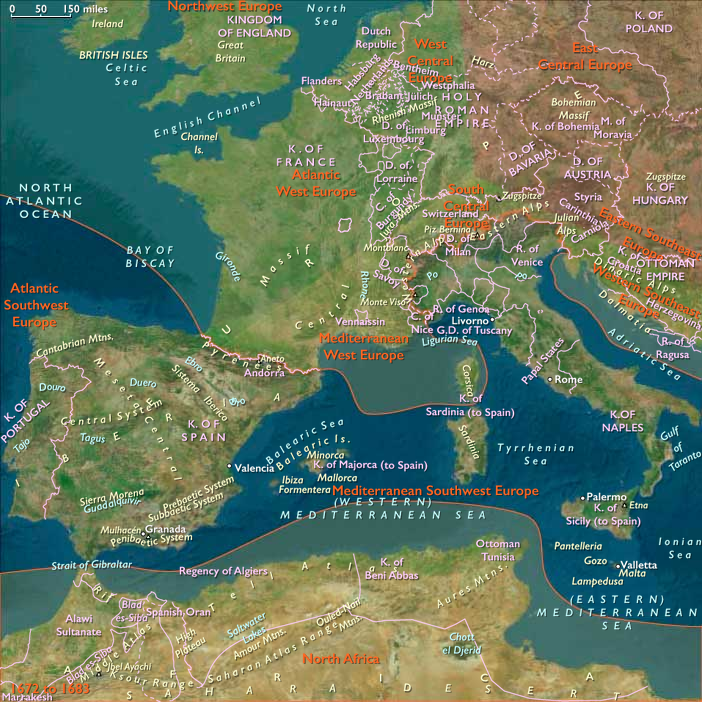
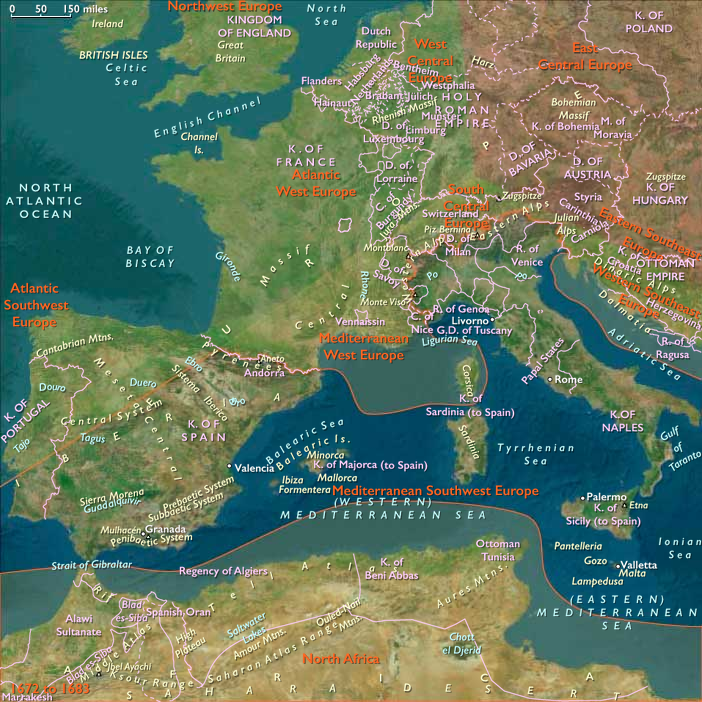
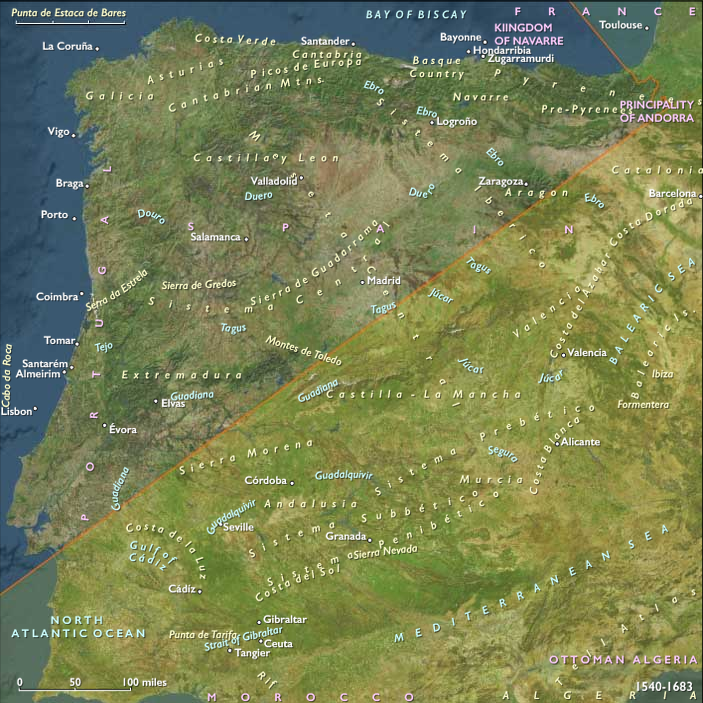
Southwest Europe in this era encompassed Spain, Italy (including Sicily, Sardinia, and Milan), Malta, and the Balearic Islands—a region unified under the broad influence of Habsburg empire and shadowed by the Ottoman frontier. Anchors stretched from the Po Valley and Apennines to the Andalusian plains, from the Valencian huertas to the fortified harbors of Malta, Messina, and Barcelona. The western Mediterranean linked fertile deltas and mountainous interiors to a network of maritime highways—the very arteries of imperial power and commerce.
Climate & Environmental Shifts
The Little Ice Age deepened its grip between the mid-sixteenth and mid-seventeenth centuries. Cool, wet decades (1550s–1620s) alternated with prolonged droughts (1630s–1660s):
-
Po Valley floods and silting tested irrigation networks.
-
Andalusia, Sicily, and Murcia suffered harvest failures under aridity.
-
Terraced slopes of Catalonia and Liguria faced erosion from torrential winter rains.
Urban resilience relied on imported Sicilian and Sardinian grain, huerta irrigation, and charitable granaries. American crops such as maize and peppers, diffusing gradually, improved food security across rural districts.
Subsistence & Settlement
Cereal, vine, and olive cultures remained the economic base, complemented by citrus and pastoralism.
-
Italy: Rice expanded in Lombardy; olives and silk thrived around Naples and Tuscany.
-
Spain: Andalusia’s olive estates, Valencia’s sugar and silk, and Murcia’s irrigated citrus supported dense populations.
-
Sicily and Sardinia: Granaries of empire; wheat exports fed Naples, Rome, and the Spanish navy.
-
Malta & Balearics: Dependent on imports but essential as naval depots and fisheries.
Urbanization peaked: Naples exceeded a quarter million inhabitants; Seville, Valencia, Palermo, and Venice flourished as port metropolises linking Europe to the Atlantic and Levant.
Technology & Material Culture
-
Hydraulics & irrigation: Canal dredging in the Po Delta, acequia upkeep in Valencia, and cistern systems in Malta and Sardinia mitigated climatic stress.
-
Maritime innovation: Arsenal systems at Venice, Genoa, and Barcelona produced galleons and galleasses; the transition from oared to sail-driven fleets blurred the Mediterranean–Atlantic divide.
-
Manufactures: Venetian glass, Neapolitan and Florentine silks, Valencian ceramics, and Sevillian metalwork adorned both courtly and ecclesiastical settings.
-
Architecture & arts: The Baroque replaced the Renaissance—Bernini and Borromini in Rome, Caravaggio in Naples, Zurbarán and El Greco in Iberia—melding sacred passion with imperial majesty.
Movement & Interaction Corridors
-
Imperial arteries: The Spanish Road linked Milan to Flanders, while Mediterranean convoys moved troops, bullion, and grain to the Levantine frontier.
-
Trade circuits: Venice dealt in Levantine goods; Genoa financed Habsburg loans; Seville and later Cádiz funneled American silver into Mediterranean markets.
-
Pilgrimage & diplomacy: Jubilee processions in Rome and the fortified splendor of Valletta symbolized Catholic resilience. Jesuit missions spread education and reform from Italian and Iberian ports to Africa, Asia, and the Americas.
Cultural & Symbolic Expressions
The Catholic Reformation defined the region’s spiritual and artistic life.
-
The Council of Trent (1545–1563) reaffirmed doctrine and inspired an artistic counteroffensive—the visual eloquence of Baroque sculpture, music, and architecture proclaiming divine order.
-
Rome regained its stature as capital of faith; Jesuit colleges and Franciscan missions spread learning from Palermo to Lisbon.
-
Malta, entrusted to the Knights of St. John, repelled the Ottoman siege (1565), transforming Valletta into a walled sanctuary of Christendom.
-
Folk traditions—harvest feasts, confraternities, and processions—endured beneath clerical orthodoxy, fusing old and new devotional worlds.
Environmental Adaptation & Resilience
Mixed agriculture, rotational grazing, and intercropped vines and olives buffered against famine. Urban monti di pietà(public grain funds) and confraternal charities distributed bread in crisis years. Imports of maize, potato, and beans from the New World diversified diets, easing demographic recovery after plague cycles (notably Naples 1656, Seville 1649). Irrigation and terrace rebuilding sustained rural populations through climatic volatility.
Technology & Power Shifts (Conflict Dynamics)
-
Ottoman frontier: Naval clashes at Malta (1565) and Lepanto (1571) marked the zenith of Christian–Ottoman contest.
-
Venetian wars: Costly struggles for Cyprus (1570–73) and Crete (1645–1669) sapped Venice’s strength yet preserved its maritime prestige.
-
Habsburg entanglements: The Dutch Revolt, Thirty Years’ War, and Neapolitan and Catalan uprisings (1640s) drained Spanish coffers and authority.
-
Corsair and pirate war: Barbary fleets raided Sicily, Valencia, and the Balearics, while Mediterranean galleons hunted rivals across shifting alliances.
-
Fiscal exhaustion & renewal: The 17th century’s recessions and plagues weakened Spain’s grip, but stable dynasties restored order by the 1680s.
Transition (to 1683 CE)
By 1683, Southwest Europe remained the cultural and maritime heart of the Catholic world. Habsburg Spain ruled Naples, Sardinia, and Sicily; Venice and Genoa persisted as cosmopolitan city-states; Malta, rebuilt after siege, stood as fortress and hospital of the seas.
Baroque art and Jesuit learning animated its cities, while ships from Seville, Valencia, Naples, and Venice spanned oceans from the Caribbean to the Levant.
Despite famine, plague, and revolt, irrigation, terrace agriculture, and global commerce preserved prosperity. The region’s blend of imperial might, artistic grandeur, and maritime innovation made Southwest Europe the enduring core of the early modern Mediterranean world.
People
- Charles III of Spain
- Charles IV of Spain
- Ferdinand VII of Spain
- Jacques-Louis David
- Joachim Murat
- Joseph Bonaparte
- Manuel de Godoy, Prince of the Peace
- Napoleon
- Rafael del Riego
Groups
- Andorra, Principality of
- Austria, Archduchy of
- Sardinia, Kingdom of
- Spanish Empire
- Naples, Kingdom of
- Puerto Rico (Spanish Colony)
- Cuba (Spanish Colony)
- Spain, Habsburg Kingdom of
- Savoy, Duchy of
- Spain, Bourbon Kingdom of
- Sardinia, Kingdom of (Savoy)
- Naples and Sicily, Bourbon Kingdom of
- Piedmontese Republic
- Sardinia, Kingdom of
- Austrian Empire
- Naples, Bonapartist Kingdom of
- Spain, Bonapartist Kingdom of
- Spain, Bourbon Kingdom (first restoration) of
- Sardinia, Kingdom of
- Savoy, (restored) Duchy of
Topics
- Colonization of the Americas, Spanish
- Enlightenment, Age of
- Spanish Succession, War of the
- Spanish American wars of independence
- Trienio Liberal (Spanish Civil War of 1820-23)
- Franco-Spanish War of 1823
Subjects
Regions
Subregions
Related Events
Showing 10 events out of 37475 total
Years: 1540 - 1683
People
- Charles III of Spain
- Charles IV of Spain
- Ferdinand VII of Spain
- Jacques-Louis David
- Joachim Murat
- Joseph Bonaparte
- Manuel de Godoy, Prince of the Peace
- Napoleon
- Rafael del Riego
Groups
- Andorra, Principality of
- Austria, Archduchy of
- Sardinia, Kingdom of
- Spanish Empire
- Naples, Kingdom of
- Puerto Rico (Spanish Colony)
- Cuba (Spanish Colony)
- Spain, Habsburg Kingdom of
- Savoy, Duchy of
- Spain, Bourbon Kingdom of
- Sardinia, Kingdom of (Savoy)
- Naples and Sicily, Bourbon Kingdom of
- Piedmontese Republic
- Sardinia, Kingdom of
- Austrian Empire
- Naples, Bonapartist Kingdom of
- Spain, Bonapartist Kingdom of
- Spain, Bourbon Kingdom (first restoration) of
- Sardinia, Kingdom of
- Savoy, (restored) Duchy of
Topics
- Colonization of the Americas, Spanish
- Enlightenment, Age of
- Spanish Succession, War of the
- Spanish American wars of independence
- Trienio Liberal (Spanish Civil War of 1820-23)
- Franco-Spanish War of 1823
Subjects
Regions
Subregions