
Mediterranean Southwest Europe (1456–1467 CE): Artistic Achievements …
Years: 1456 - 1467
Mediterranean Southwest Europe (1456–1467 CE): Artistic Achievements and Political Struggles
The era 1456–1467 CE in Mediterranean Southwest Europe witnesses remarkable artistic accomplishments, particularly in the work of Antonio di Pietro Averlino (Filarete), alongside turbulent political struggles, notably in Genoa, as France and Aragon vie for dominance in the region.
Artistic Contributions of Filarete
Antonio di Pietro Averlino, better known as Filarete, whose name means “a lover of virtue,” possibly began his artistic career in Florence under the renowned sculptor Lorenzo Ghiberti, who reputedly bestowed upon him this name. Filarete’s career experiences controversy when, accused of attempting to steal the head of John the Baptist, he is expelled from Rome. Subsequently, he moves to Venice and eventually settles in Milan, where he becomes a ducal engineer.
In Milan, from 1452 onwards, Filarete works under Francesco Sforza, contributing to significant architectural projects such as the Castello Sforzesco and the Ospedale Maggiore, where he serves as superintendent. Earlier, commissioned by Pope Eugene IV, Filarete completes the bronze central doors for Old St. Peter's Basilica in Rome over a span of twelve years, finishing in 1445. Despite being crafted during the Renaissance, these doors distinctly reflect Byzantine influences and echo medieval stylistic traditions. According to his biographer Vasari, Filarete's impactful career ends with his death in Rome around 1469.
Genoa’s Political Turmoil
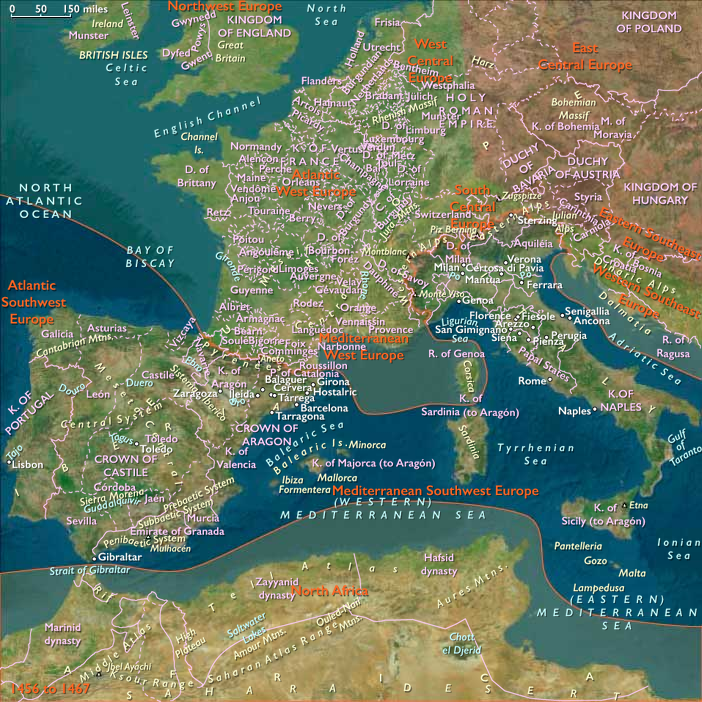
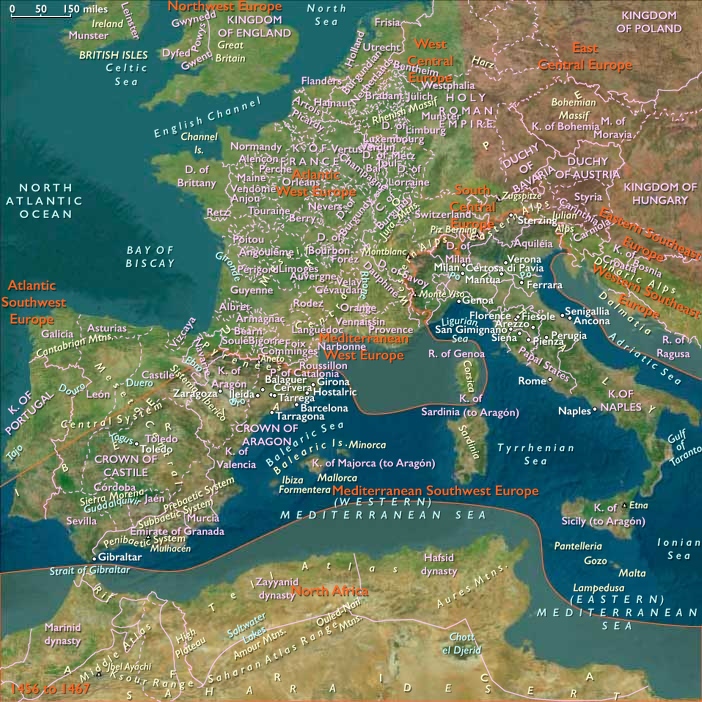
During this era, the Republic of Genoa finds itself deeply embroiled in the geopolitical rivalry between France and Aragon, significantly affecting its independence and prosperity. Pietro di Campofregoso, grandson of Tommaso di Campofregoso and vassal of the Visconti, is elected Doge on September 8, 1450, succeeding his cousin Lodovico di Campofregoso. Pietro's tenure proves disastrous for Genoa’s eastern colonies, marked by the loss of important territories such as Pera in Turkey, Caffa in Crimea, and Chios in Greece, significantly undermining Genoese trade and influence.
Under persistent threat from Alfonso V of Aragon and facing internal pressures from the Ghibelline faction, Pietro seeks support from King Charles VII of France in 1458. This decision effectively transforms Genoa into a French protectorate, the Duchy of Genoa, under the governorship of John II, Duke of Lorraine. Pietro’s unpopular alliance with France provokes rebellion; he is stoned to death near Porta Soprana on September 14, 1459.
Despite a successful restoration of the Republic in 1461, Genoa remains politically unstable. With Milanese support, Genoa revolts against French control, only to fall under Milanese dominance in 1464, becoming a fief of the French crown. Notably, Christopher Columbus is born in Genoa during this turbulent period, but he will ultimately pursue his ambitions elsewhere.
Legacy of the Era
The era 1456–1467 CE in Mediterranean Southwest Europe is characterized by exceptional artistic contributions and significant political upheavals. Filarete's enduring architectural and sculptural innovations contribute profoundly to Renaissance art, while Genoa’s struggles highlight the complexities of regional politics, ultimately influencing the broader geopolitical landscape of the Mediterranean.
People
- Alfonso V of Aragon
- Charles VII of France
- Filarete
- Francesco I Sforza
- John II, Duke of Lorraine
- Lorenzo Ghiberti
- Pietro Campofregoso
- Pope Eugene IV
Groups
- Genoa, (Most Serene) Republic of
- Florence, Republic of
- Venice, (Most Serene) Republic of
- Aragon, Crown of
- France, (Valois) Kingdom of
- Milan, Duchy of
Topics
Subjects
Regions
Subregions
Years: 1456 - 1467
People
- Alfonso V of Aragon
- Charles VII of France
- Filarete
- Francesco I Sforza
- John II, Duke of Lorraine
- Lorenzo Ghiberti
- Pietro Campofregoso
- Pope Eugene IV
Groups
- Genoa, (Most Serene) Republic of
- Florence, Republic of
- Venice, (Most Serene) Republic of
- Aragon, Crown of
- France, (Valois) Kingdom of
- Milan, Duchy of
Topics
Subjects
Regions
Subregions