
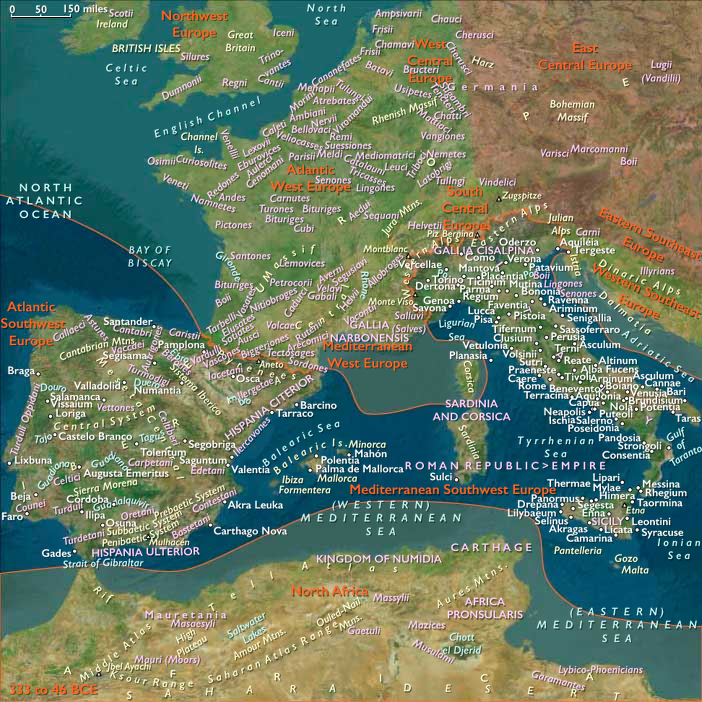
Mediterranean Southwest Europe (129–118 BCE): The Gracchan …
Years: 129BCE - 118BCE
Mediterranean Southwest Europe (129–118 BCE): The Gracchan Reforms and Roman Social Turmoil
The era 129–118 BCE witnesses pivotal developments within the Roman Republic, characterized by profound political and social tensions centered on land reform and wealth redistribution, accompanied by innovations in public communication. These events significantly influence Roman governance, social dynamics, and political culture in Mediterranean Southwest Europe and beyond.
The Gracchan Reform Movement
The Roman Republic faces escalating social tensions stemming from the increasing disparity between Rome's wealthy patrician elite and the disenfranchised plebeian majority. In response, two influential Roman tribunes, brothers Tiberius and Gaius Gracchus, propose sweeping land reform legislation aimed at redistributing extensive patrician landholdings among landless and impoverished plebeian citizens. Their reform efforts also include wider measures addressing economic inequality and social injustice.
Initially, the Gracchi achieve notable legislative successes, rallying popular support and challenging entrenched senatorial interests. However, their reforms threaten the political and economic power of Rome's senatorial aristocracy, prompting fierce opposition from powerful patrician factions.
Tragically, both Gracchi brothers ultimately fall victim to this elite backlash. Tiberius Gracchus is assassinated in 133 BCE, marking the first significant eruption of organized political violence in the Republic, and his younger brother, Gaius Gracchus, meets a similar violent fate in 121 BCE. These assassinations starkly illustrate the increasing volatility and internal conflict plaguing the Roman state, signaling profound future implications for republican governance.
Emergence of the Acta Diurna
Concurrent with this period of social unrest, Rome experiences significant advances in public information dissemination. Around 131 BCE, the establishment of the Acta Diurna (Latin: "Daily Acts") introduces a state-sanctioned daily news gazette posted prominently in public locations, such as the Roman Forum. These postings report on varied topics, including official government appointments, notable births and deaths, significant public decisions, and even astronomical occurrences.
Carved on stone or metal tablets, the Acta Diurna represent an innovative attempt by the Roman Republic to ensure transparency and enhance public communication, setting a precedent for future methods of mass communication across the Roman world. This pioneering institution provides citizens with regular access to official information and public records, facilitating an increased awareness of civic affairs and reflecting the changing relationship between Rome's government and its populace.
Long-Term Impact and Significance
The Gracchan reforms and their violent suppression, alongside the advent of the Acta Diurna, significantly shape Rome's subsequent social, political, and administrative trajectory. The events of this era underscore growing tensions between populist reform movements and entrenched elite interests, presaging the deep internal conflicts that will ultimately transform the Roman Republic. The era also sees early innovations in civic communication, indicative of Rome's ongoing evolution toward greater administrative complexity and societal interconnectedness, foreshadowing the imperial era ahead.
People
Groups
Topics
Subjects
Regions
Subregions
Related Events
Showing 10 events out of 63023 total
Years: 129BCE - 118BCE
People
Groups
Topics
Subjects
Regions
Subregions