
Mediterranean Southwest Europe (1384–1395 CE): Iberian Political …
Years: 1384 - 1395
Mediterranean Southwest Europe (1384–1395 CE): Iberian Political Realignments, Genoese-Venetian Rivalries, and Cultural Continuities
The era 1384–1395 CE in Mediterranean Southwest Europe is marked by significant political shifts within Iberia, ongoing hostilities between maritime republics Venice and Genoa, and sustained cultural and intellectual activities despite political instability.
Iberian Political Realignments: Portugal and Castile
This period witnesses significant shifts on the Iberian Peninsula, notably through the political crisis following the death of King Ferdinand I of Portugal in 1383. This event precipitates the 1383–1385 Crisis in Portugal, leading to conflict with Castile. John I of Portugal (João I), supported by English forces, secures his throne at the decisive Battle of Aljubarrota (1385), ending Castilian ambitions to dominate Portugal and establishing the House of Aviz. This victory realigns regional power balances, reinforcing Portuguese independence and fostering a lasting alliance with England.
Renewed Genoese-Venetian Rivalries
The ongoing rivalry between maritime powers Venice and Genoa continues with intense naval confrontations and territorial contests in the Mediterranean. Their competition influences trade routes, commercial dynamics, and regional alliances, maintaining economic vitality despite intermittent warfare.
Cultural and Artistic Continuities
The region remains culturally vibrant. Artistic patronage continues to flourish in Italian city-states such as Florence, Venice, and Siena. Gothic architecture and painting maintain prominence, supported by prosperous urban communities that invest significantly in public works and artistic commissions.
Intellectual Advancements
Scholarly and literary endeavors persist amid political turmoil. The humanist movement gains momentum, with scholars revisiting classical texts and promoting a revival of ancient philosophies and literary forms. The literary and intellectual legacy of earlier figures like Petrarch and Boccaccio continues to influence contemporary thought and writing.
Legacy of the Era
The era 1384–1395 CE significantly shapes Mediterranean Southwest Europe through critical political realignments in Iberia, sustained maritime rivalries, and continuous cultural and intellectual productivity. These developments collectively enhance regional stability, reshape political dynamics, and sustain cultural resilience, leaving lasting impacts on subsequent historical trajectories.
People
Groups
- Genoa, (Most Serene) Republic of
- Florence, Republic of
- Siena, Republic of
- Venice, (Most Serene) Republic of
- Castile, Crown of
- Hungary, Kingdom of
- Ottoman Empire
- Portugal, Kingdom of
- Portugal, Avizan (Joannine) Kingdom of
Topics
Subjects
Regions
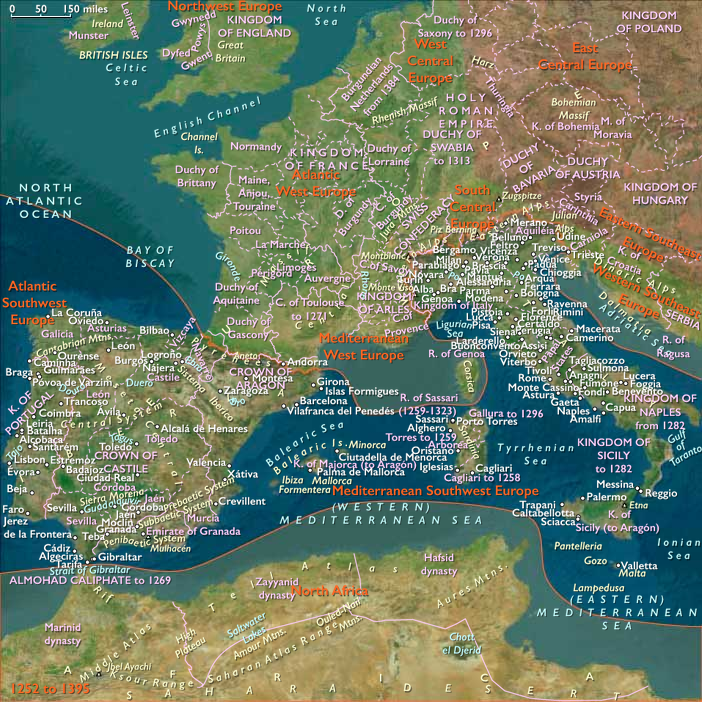
Subregions
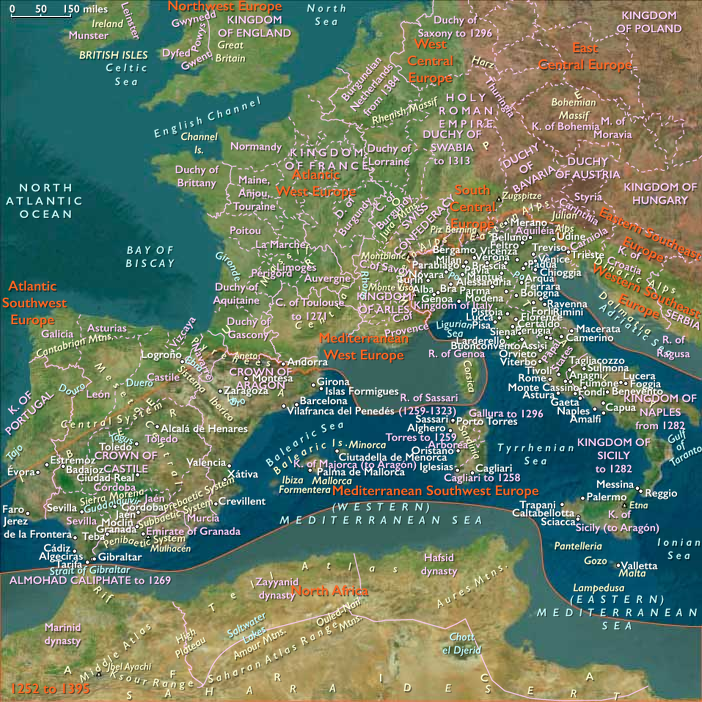
Related Events
Showing 10 events out of 43629 total
Years: 1384 - 1395
People
Groups
- Genoa, (Most Serene) Republic of
- Florence, Republic of
- Siena, Republic of
- Venice, (Most Serene) Republic of
- Castile, Crown of
- Hungary, Kingdom of
- Ottoman Empire
- Portugal, Kingdom of
- Portugal, Avizan (Joannine) Kingdom of
Topics
Subjects
Regions
Subregions