
Mediterranean Southwest Europe (1108 – 1251 CE): …
Years: 1108 - 1251
Mediterranean Southwest Europe (1108 – 1251 CE): Almohads, Aragon’s Union, and Hohenstaufen Sicily
Climate and Environmental Shifts
-
Productive regimes persisted with localized dryness in Iberia; irrigation buffered Valencia, Murcia, Andalusia, Sicily.
Societies and Political Developments
-
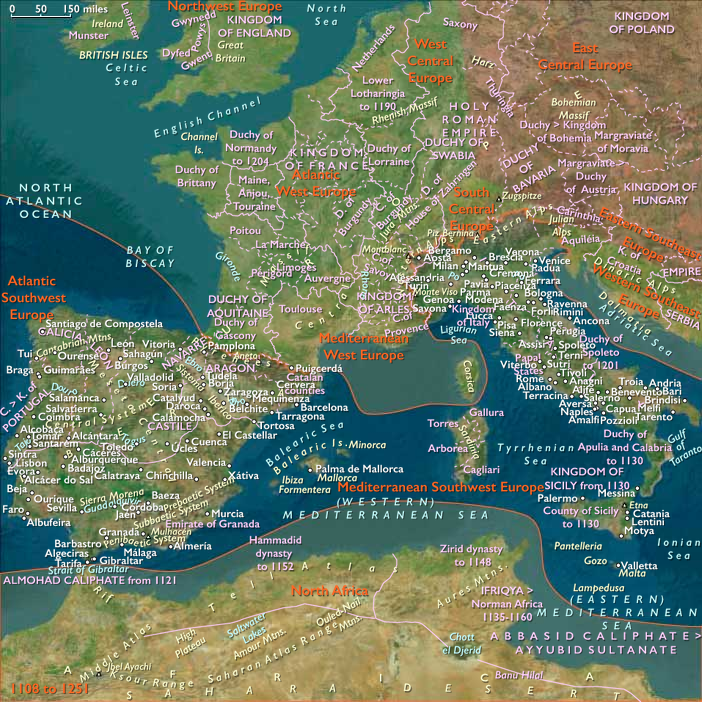
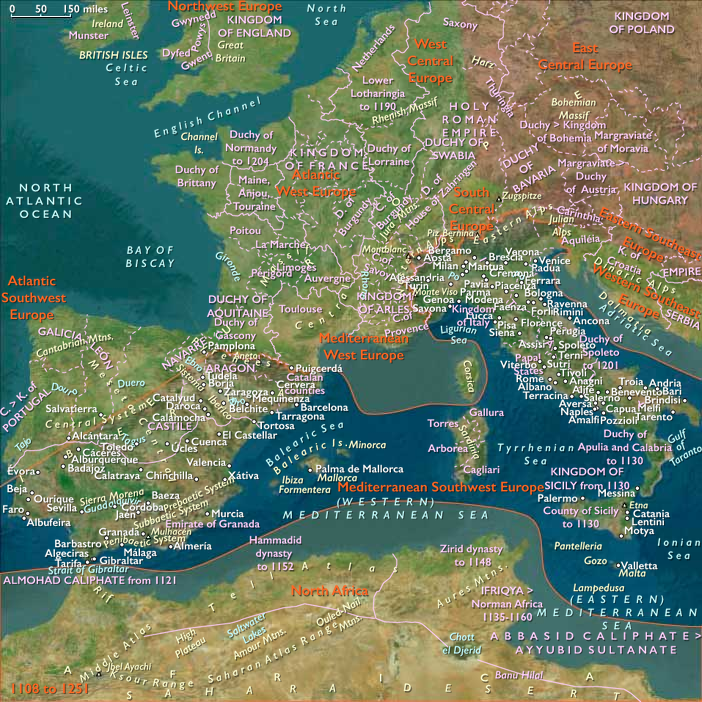
Crown of Aragon (union 1137 of Aragon and Barcelona) expanded into Catalonia, Roussillon, and the Balearics’ approaches; Andorra remained within Catalan orbit.
-
Almohads superseded Almoravids in al-Andalus; Christian advances paused until Las Navas de Tolosa (1212) opened the Guadalquivir. Valencia (1238) and the Balearics (1229–1235) fell to King James I.
-
Portugal consolidated Algarve and Alentejo frontiers; Castile/León held Toledo and pushed La Mancha; Madrid grew as a frontier town.
-
Hohenstaufen Sicily under Frederick II (r. 1197–1250) centralized law and science; Sardinia drew Aragonese interest; Venice led Adriatic power and eastern ventures.
-
Malta attached to the Sicilian crown.
Economy and Trade
-
Venice, Genoa, Pisa dominated Levantine–western circuits; Barcelona–Valencia fleets grew in western routes.
-
Sicily/Apulia exported grain, sugar, and citrus; Andalusia/Valencia irrigated gardens sustained urban markets; Algarve fisheries and salt fed Atlantic–Mediterranean trade.
Subsistence and Technology
-
Hydraulic estates in al-Andalus and Sicily; notarial–credit instruments in Italian and Catalan cities; communal shipyards standardized galleys.
Movement and Interaction Corridors
-
Rhône–Ligurian pivot into Genoa and Venice; Ebro–Pyrenees to Barcelona; Guadalquivir/Segura/Turiariver basins supplied Seville–Valencia ports; Strait of Messina and Otranto gates for Sicilian–Italian flows.
Belief and Symbolism
-
Almohad reformism; Latin cathedral building—Burgos (nearby, outside core) influenced Toledo, Valencia; Frederick II’s court culture blended Arabic–Latin–Greek learning; crusading mobilizations flowed through Italian/Iberian ports.
Long-Term Significance
By 1251, Aragon anchored a western thalassocracy; Venice led the Adriatic; Frederick II’s Sicily structured the central Med; Iberia’s Christian kingdoms were poised for decisive 13th-century gains.
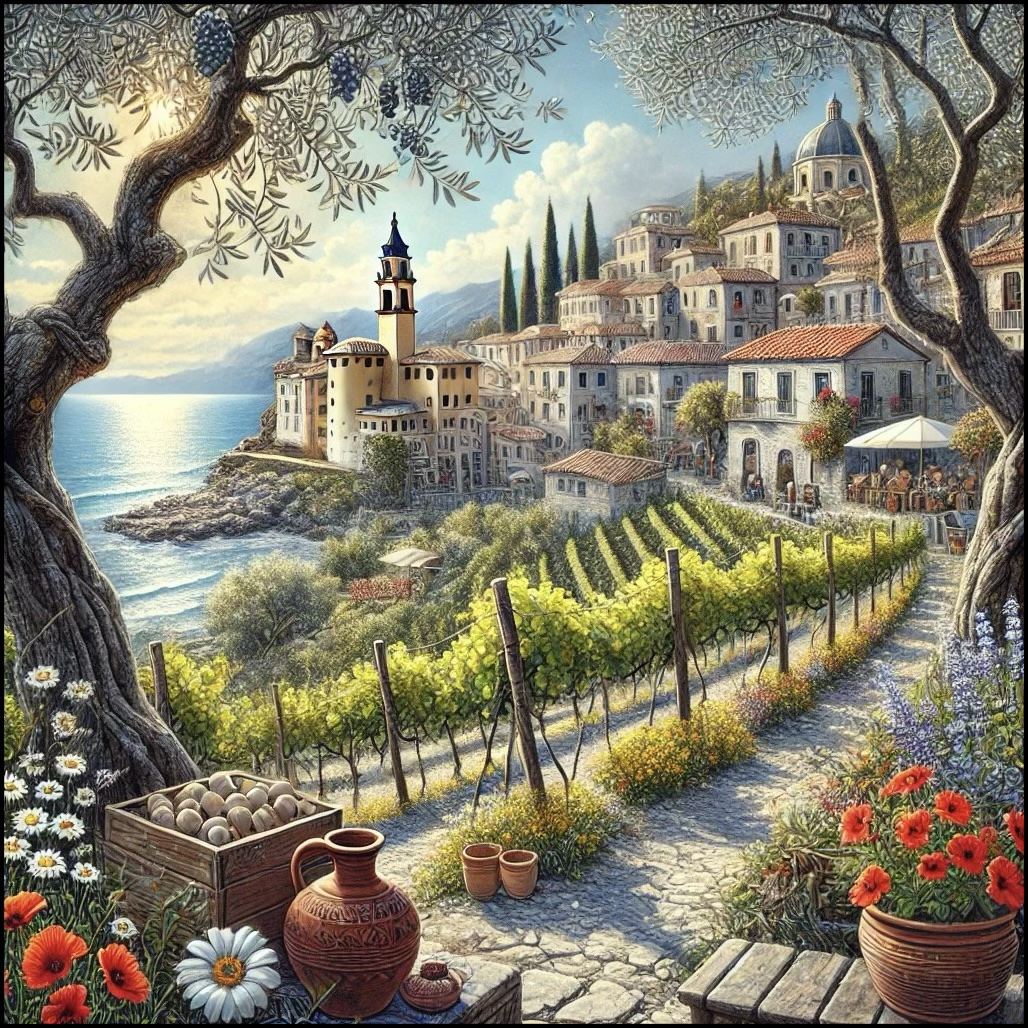
Mediterranean Southwest Europe (with civilization) ©2024-25 Electric Prism, Inc. All rights reserved.
People
Groups
- Arab people
- Berber people (also called Amazigh people or Imazighen, "free men", singular Amazigh)
- Italian city-states
- Jews
- Greeks, Medieval (Byzantines)
- al-Andalus (Andalusia), Muslim-ruled
- Al-Garb Al-Andalus
- Venice, Duchy of
- Papal States (Republic of St. Peter)
- Barcelona, County of
- Andorra, Principality of
- León, Kingdom of
- Normans
- Holy Roman Empire
- Italy, Kingdom of (Holy Roman Empire)
- Pisa, (first) Republic of
- Genoa, (Most Serene) Republic of
- Christians, Roman Catholic
- Almoravid dynasty
- Sicily, County of
- Castile, Kingdom of
- Italo-Normans
- Majorca, (Pisan-Catalan-occupied) Muslim statelet, or taifa, of
- Florence, Republic of
- Aragón, Kingdom of
- Almohad Caliphate
- Sicily, Kingdom of
- Venice, (Most Serene) Republic of
- Aragon, Crown of
- Lombard League
- Sicily, Hohenstaufen Kingdom of
- Franciscans, or Order of St. Francis
- Dominicans, or Order of St. Dominic
- Castile, Crown of
- Granada, Emirate of, or Nasrid Kingdom of
- Milan, Lordship of
Topics
- Reconquista, the
- Medieval Warm Period (MWP) or Medieval Climate Optimum
- Las Navas de Tolosa, Battle of
Commodoties
Subjects
Regions
Subregions
Years: 1108 - 1251
Mediterranean Southwest Europe (with civilization) ©2024-25 Electric Prism, Inc. All rights reserved.
People
Groups
- Arab people
- Berber people (also called Amazigh people or Imazighen, "free men", singular Amazigh)
- Italian city-states
- Jews
- Greeks, Medieval (Byzantines)
- al-Andalus (Andalusia), Muslim-ruled
- Al-Garb Al-Andalus
- Venice, Duchy of
- Papal States (Republic of St. Peter)
- Barcelona, County of
- Andorra, Principality of
- León, Kingdom of
- Normans
- Holy Roman Empire
- Italy, Kingdom of (Holy Roman Empire)
- Pisa, (first) Republic of
- Genoa, (Most Serene) Republic of
- Christians, Roman Catholic
- Almoravid dynasty
- Sicily, County of
- Castile, Kingdom of
- Italo-Normans
- Majorca, (Pisan-Catalan-occupied) Muslim statelet, or taifa, of
- Florence, Republic of
- Aragón, Kingdom of
- Almohad Caliphate
- Sicily, Kingdom of
- Venice, (Most Serene) Republic of
- Aragon, Crown of
- Lombard League
- Sicily, Hohenstaufen Kingdom of
- Franciscans, or Order of St. Francis
- Dominicans, or Order of St. Dominic
- Castile, Crown of
- Granada, Emirate of, or Nasrid Kingdom of
- Milan, Lordship of
Topics
- Reconquista, the
- Medieval Warm Period (MWP) or Medieval Climate Optimum
- Las Navas de Tolosa, Battle of
Commodoties
Subjects
Regions
Subregions