
Mediterranean Southwest Europe (105–94 BCE): The Cimbrian …
Years: 105BCE - 94BCE
Mediterranean Southwest Europe (105–94 BCE): The Cimbrian War and Internal Strife in Rome
The era 105–94 BCE is marked by significant military and political upheaval within the Roman Republic, primarily driven by the devastating invasions of Germanic tribes and internal struggles culminating in major military reforms.
The Catastrophe at Arausio
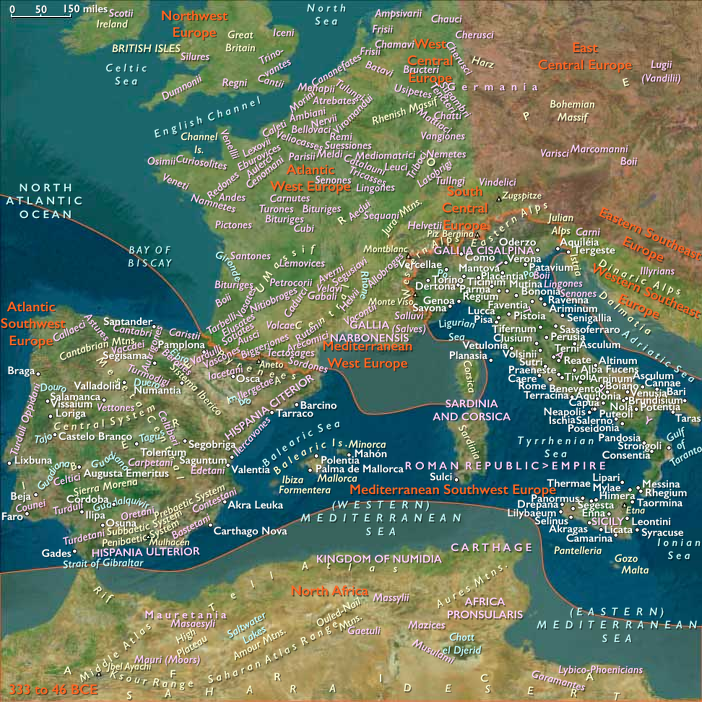
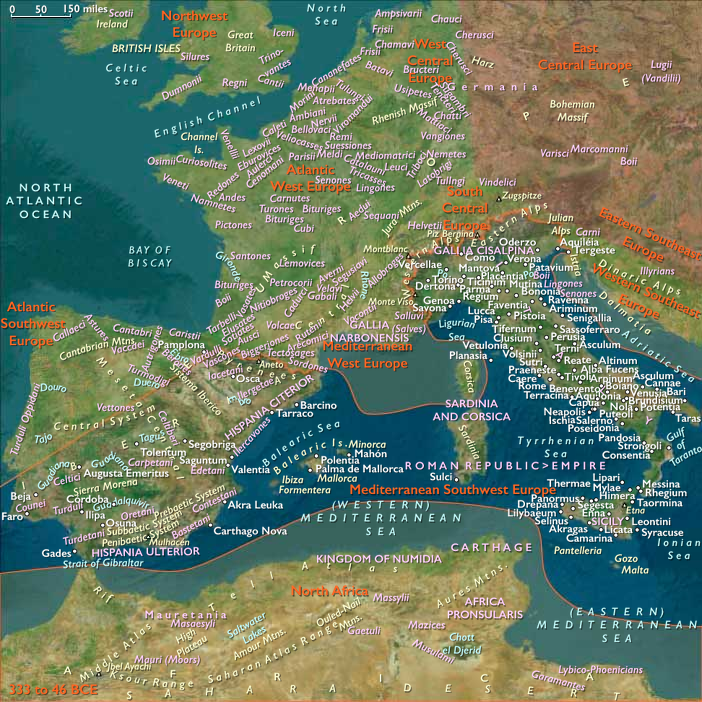
In 105 BCE, Rome faces one of its gravest military defeats at the Battle of Arausio near present-day Orange in southern Gaul. To repel the advancing Germanic tribes of the Cimbri and Teutones, the Republic assembles an enormous force—the largest since the Second Punic War—under the consul Gnaeus Mallius Maximus and proconsul Quintus Servilius Caepio. The consuls, however, fail to cooperate effectively due to mutual distrust, establishing separate camps on opposite sides of the Rhône River. Exploiting this vulnerability, the Cimbri and Teutones destroy Caepio’s army in isolation before overwhelming Maximus’s forces. The Romans suffer staggering losses, comparable only to their historical disaster at Cannae.
Despite their overwhelming victory, the tribes inexplicably do not press on to invade Italy immediately. Instead, the Cimbri migrate towards Hispania, and the Teutones remain in Gaul, granting Rome crucial breathing space to reorganize.
Emergency and Military Reforms Under Marius
The catastrophic defeat at Arausio throws Rome into widespread panic—known as the terror cimbricus. In response, traditional republican procedures are set aside, and Gaius Marius, the hero of the Jugurthine War, is elected consul for an unprecedented five consecutive terms from 104 BCE. Marius capitalizes on this extraordinary power to radically reorganize Rome’s military forces. He opens army recruitment to landless citizens, fundamentally altering the structure and loyalty dynamics of Roman legions.
Decisive Roman Victories
By 102 BCE, Marius is prepared to confront the Teutones decisively. Near Aquae Sextiae, he engineers a strategic ambush, obliterating the Teutones and capturing their king, Teutobod. In 101 BCE, the remaining threat from the Cimbri materializes as they penetrate northern Italy. Marius, reinforced by his battle-hardened legions, decisively defeats the Cimbri at the Battle of Vercellae on the Raudine Plain. The Cimbri are annihilated; their leaders, Boiorix and Lugius, are killed, and their women, preferring death to slavery, tragically take their own lives and those of their children.
The Second Servile War
Meanwhile, internal struggles plague Roman territories. In Sicily, a major slave uprising known as the Second Servile War erupts in 104 BCE, reflecting widespread social tensions and unrest within Roman territories. The rebellion persists until 100 BCE, when it is finally suppressed through considerable effort.
Cultural Contributions: Lucilius and Roman Satire
Amid these tumultuous events, cultural developments continue. The prominent Roman satirist Gaius Lucilius dies in Naples in 103 BCE. Lucilius, hailed as the originator of Roman satire, leaves behind approximately thirty volumes of work, providing a scathing commentary on contemporary Roman society and politics. His pioneering literary contributions greatly influence subsequent Roman satirists, including Horace and Juvenal, marking a significant cultural legacy during this era.
Long-term Implications
The aftermath of the Cimbrian War and the internal strife highlight critical vulnerabilities within Rome’s political and military structures. Marius’s military reforms establish a precedent of armies increasingly loyal to their generals rather than the Republic, setting the stage for future political upheaval and ultimately contributing to the Republic’s transition toward empire.
People
- Boiorix
- Gaius Lucillius
- Gaius Marius
- Gnaeus Mallius Maximus
- Lugius
- Quintus Servilius Caepio
- Teutobod
Groups
Topics
- Roman Republic, Crisis of the
- Cimbrian War
- Arausio, Battle of
- Servile War, Second (Slave War in Sicily, second)
- Vercellae, Battle of
Commodoties
Subjects
Regions
Subregions
Years: 105BCE - 94BCE
People
- Boiorix
- Gaius Lucillius
- Gaius Marius
- Gnaeus Mallius Maximus
- Lugius
- Quintus Servilius Caepio
- Teutobod
Groups
Topics
- Roman Republic, Crisis of the
- Cimbrian War
- Arausio, Battle of
- Servile War, Second (Slave War in Sicily, second)
- Vercellae, Battle of
Commodoties
Subjects
Regions
Subregions