
Mediterranean Southwest Europe (1060–1071 CE): Papal Reforms, …
Years: 1060 - 1071
Mediterranean Southwest Europe (1060–1071 CE): Papal Reforms, Norman Expansion, and Early Crusading Efforts
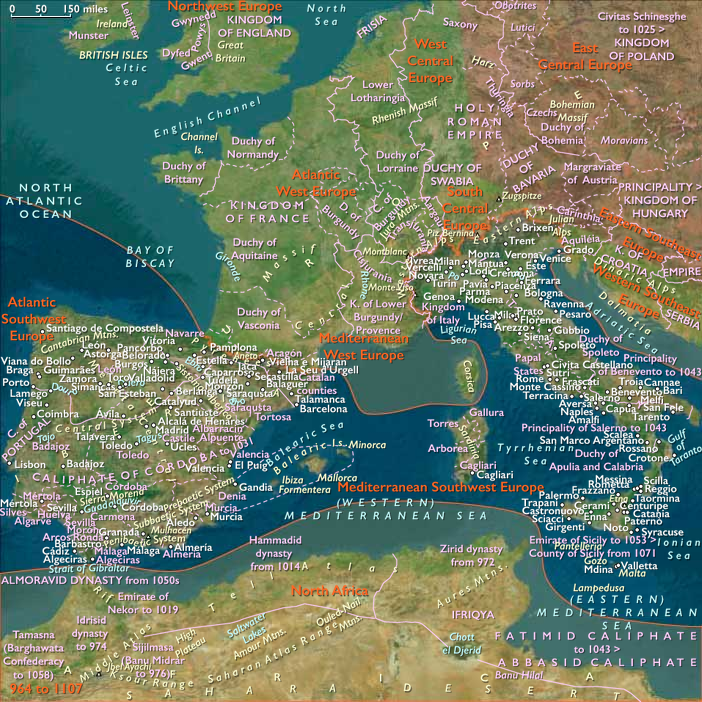
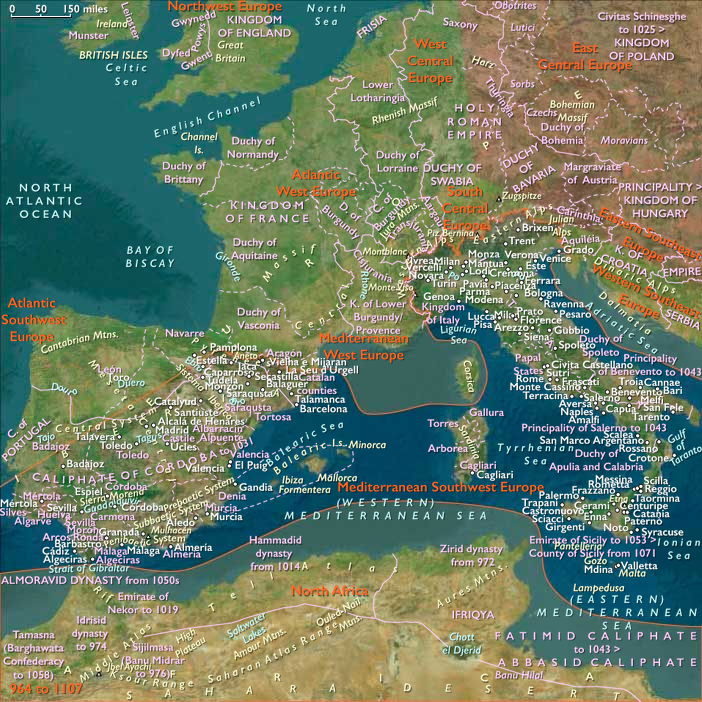
The era 1060–1071 CE in Mediterranean Southwest Europe is marked by critical developments in papal reform and ecclesiastical independence, significant Norman military expansion in southern Italy and Sicily, and early international efforts against Muslim-held territories in Iberia, presaging the Crusades.
Papal Reform and Electoral Independence
In 1061 CE, following the death of Pope Nicholas II, a landmark papal election is conducted in accordance with Nicholas II’s earlier papal bull, In Nomine Domini. For the first time in the history of the Roman Catholic Church, the cardinal bishops exclusively elect the pope, marking a significant step towards papal electoral independence and institutional reform. Bishop Anselmo de Baggio of Lucca, not a cardinal himself but noted as one of the Pataria reform movement’s founders, is elected as Pope Alexander II. Due to strong opposition, Alexander II's coronation takes place at nightfall on October 1, 1061, in Rome's San Pietro in Vincoli Basilica, as St. Peter's Basilica remains inaccessible for the ceremony.
Norman Conquests in Southern Italy and Sicily
Norman adventurers intensify their conquests in southern Italy, further challenging Byzantine (Greek) and Lombard dominance in the region. Led notably by the Guiscard brothers, Robert and Roger, the Normans consolidate power in Apulia and Calabria, effectively terminating Byzantine rule. Their military campaigns soon extend into Sicily, initiating a prolonged conflict against Muslim control and laying the foundation for lasting Norman influence throughout southern Italy and Sicily.
Barbastro Campaign: A Prelude to the Crusades
In 1064 CE, Pope Alexander II sanctions a significant international military expedition targeting the Muslim-held city of Barbastro in northern Iberia. Comprising warriors from across Western Europe, this successful siege symbolizes a notable early effort within the broader Reconquista movement. Its explicitly papal sanction and international participation distinctly anticipate the character and methods of the subsequent Crusades of the late eleventh and twelfth centuries.
Political Realignments in Muslim Al-Andalus
In Muslim Iberia, significant political realignments occur as the emirate of Seville, dominated by Arabs, strategically asserts dominance over the Berber factions, expanding its influence to the Atlantic coast. Concurrently, the Emirate of Toledo emerges as the preeminent Muslim polity in Iberia, replacing the political primacy previously held by the defunct Umayyad Caliphate of Córdoba, reflecting continued fragmentation yet strategic reconsolidation among the taifa kingdoms.
Continued Cultural and Scholarly Vitality
Jewish and Mozarab scholarly activities remain robust, particularly in intellectual centers such as Lucena, sustaining their critical roles in intercultural dialogue, learning, and commerce across the Iberian Peninsula. These vibrant communities continue to preserve and enrich cultural traditions despite the region's shifting political landscape.
Legacy of the Era
The era 1060–1071 CE is distinguished by pivotal reforms in papal governance, aggressive Norman military expansion, and early international religiously motivated campaigns in Iberia. Collectively, these developments presage significant cultural, political, and religious transformations, shaping the historical trajectory of Mediterranean Southwest Europe well into subsequent centuries.
People
Groups
- Berber people (also called Amazigh people or Imazighen, "free men", singular Amazigh)
- Jews
- Moors
- Islam
- Al-Garb Al-Andalus
- al-Andalus (Andalusia), Muslim-ruled
- Mozarabs
- Papal States (Republic of St. Peter)
- Aborea, Giudicato of
- Logudoro, Giudicato of
- Normans
- Gallura, Giudicato of
- Toledo, (Muslim statelet, or taifa, of)
- Cagliari, Giudicato of
- Sevilla, (Abbadid) Muslim statelet, or taifa, of
- Christians, Roman Catholic
Topics
Subjects
Regions
Subregions
Years: 1060 - 1071
People
Groups
- Berber people (also called Amazigh people or Imazighen, "free men", singular Amazigh)
- Jews
- Moors
- Islam
- Al-Garb Al-Andalus
- al-Andalus (Andalusia), Muslim-ruled
- Mozarabs
- Papal States (Republic of St. Peter)
- Aborea, Giudicato of
- Logudoro, Giudicato of
- Normans
- Gallura, Giudicato of
- Toledo, (Muslim statelet, or taifa, of)
- Cagliari, Giudicato of
- Sevilla, (Abbadid) Muslim statelet, or taifa, of
- Christians, Roman Catholic
Topics
Subjects
Regions
Subregions