
Mediterranean Southwest Europe (112–123 CE): Cultural Critique …
Years: 112 - 123
Mediterranean Southwest Europe (112–123 CE): Cultural Critique and Societal Reflections
The era 112–123 CE in Mediterranean Southwest Europe continues under the prosperous and stable rule of Emperor Trajan, highlighting significant cultural, social, and intellectual developments. Notably, the period features critical reflections on Roman society, epitomized by the influential satirical writings of Juvenal.
Juvenal and Roman Satire
During this period, the satirist Juvenal composes his impactful Satire 3, sharply criticizing contemporary Roman society by contrasting it with the moral integrity perceived to have characterized the early Roman Republic. Juvenal’s writings reflect broader societal anxieties, providing incisive commentary on issues of morality, civic responsibility, and political power.
Famous Maxims from Juvenal
Juvenal's satirical works offer enduring maxims that resonate through history, capturing key insights into Roman cultural attitudes and social commentary:
-
"Bread and circuses" (panem et circenses): Highlighting public apathy toward civic freedom and moral decline, suggesting that citizens prioritize entertainment and sustenance over liberty and political involvement.
-
"A sound mind in a sound body" (mens sana in corpore sano): Emphasizing the ideal balance of physical and mental health, reflecting Roman values on personal well-being and philosophical moderation.
-
"A rare bird" (rara avis in terris nigroque simillima cycno): Commenting humorously yet sharply on the difficulty of finding the ideal partner, reflecting prevailing societal skepticism about marital fidelity and idealism.
-
"Who will watch the watchers?" (quis custodiet ipsos custodes): Addressing fundamental concerns about accountability, power, and corruption, this maxim questions the reliability and integrity of those entrusted with authority.
Economic Stability and Cultural Prosperity
Economic prosperity persists under Trajan, facilitating continued cultural achievements and supporting extensive intellectual and artistic activities. Hispania, central to Rome’s economy, maintains robust trade networks, contributing significantly to the broader prosperity of Mediterranean Southwest Europe.
Continued Infrastructure and Urban Development
Under Trajan's ongoing reign, infrastructural improvements such as roads, aqueducts, ports, and public buildings continue to enhance the region’s economic vitality and urban livability, reflecting sustained imperial investment in provincial development.
Scientific and Technological Insights
Roman scholars, including Pliny the Younger and contemporaries, continue documenting scientific and medical knowledge. They provide insights into practices such as the use of mercury, antimony, and arsenic-based compounds, illustrating sophisticated Roman understandings of materials and their applications.
Legacy of the Era
The era 112–123 CE is marked by vibrant cultural expression, thoughtful societal critique, and sustained economic and infrastructural growth. Juvenal’s enduring maxims encapsulate Roman society's critical self-awareness, while continued prosperity and development highlight the strengths and complexities of Rome’s imperial system, solidifying Trajan’s legacy and Rome’s broader historical trajectory.
People
Groups
- Hispania Tarraconensis (Roman province)
- Hispania Baetica (Roman province)
- Roman Empire (Rome): Flavian dynasty
Topics
Commodoties
Subjects
Regions
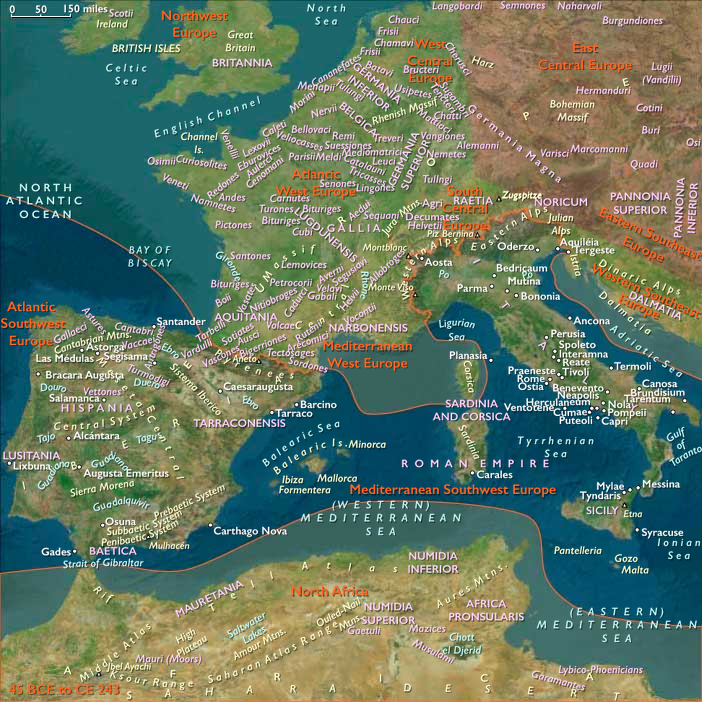
Subregions
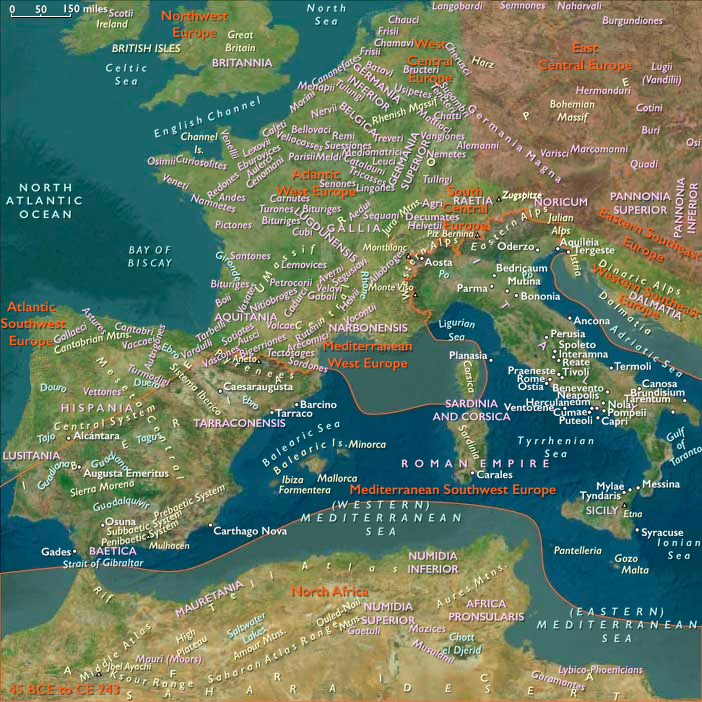
Related Events
Showing 10 events out of 61261 total
Years: 112 - 123
People
Groups
- Hispania Tarraconensis (Roman province)
- Hispania Baetica (Roman province)
- Roman Empire (Rome): Flavian dynasty
Topics
Commodoties
Subjects
Regions
Subregions