
Maximilian of Austria, Margaret’s Betrothal, and the …
Years: 1493 - 1493
Maximilian of Austria, Margaret’s Betrothal, and the Treaty of Arras (1482–1492)
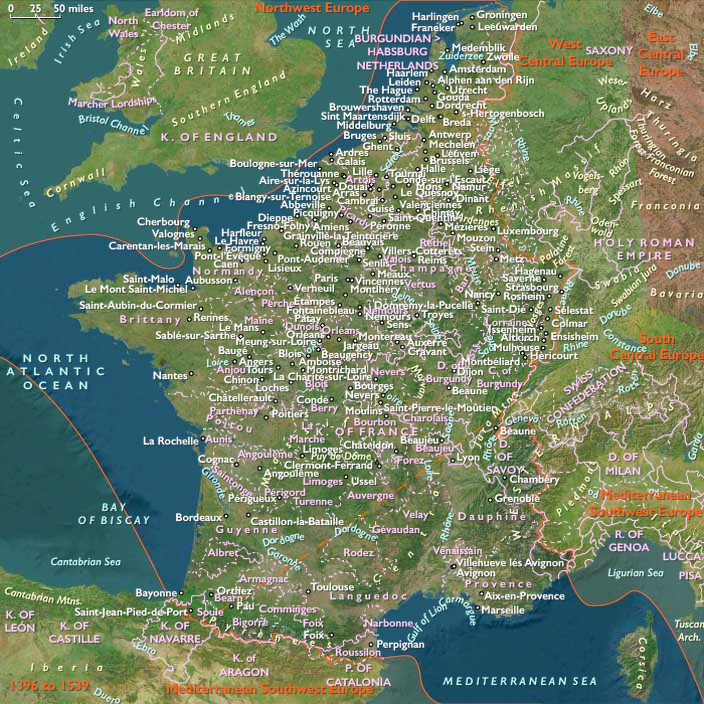
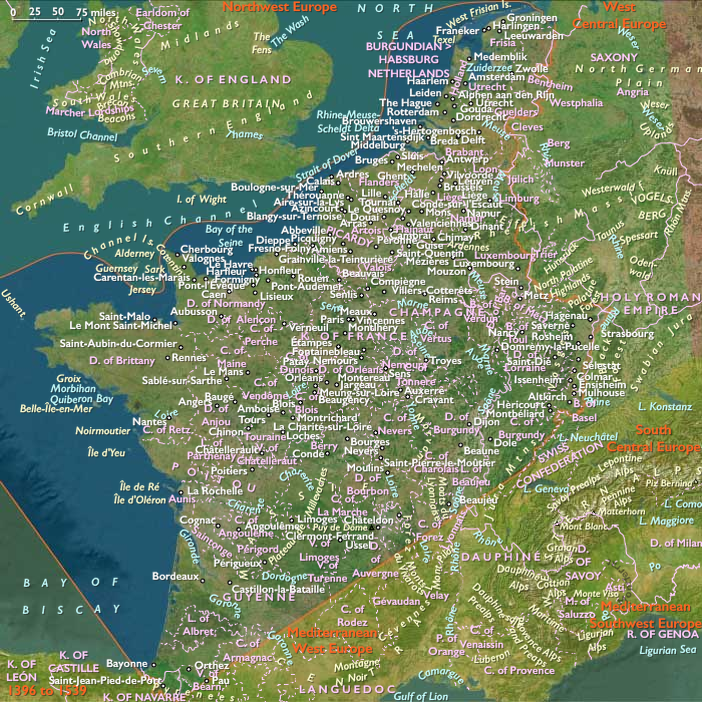
In 1482, Archduke Maximilian of Austria strategically betrothed his young daughter, Margaret of Austria, to the Dauphin of France (later Charles VIII) as part of the Treaty of Arras. This diplomatic arrangement—intended to ease tensions following the Burgundian succession crisis—would significantly impact relations between the Habsburgs and the French crown, shaping regional politics in Atlantic West Europe.
Diplomatic Context of Margaret’s Betrothal (1482)
The Treaty of Arras (1482) was negotiated in response to intense pressure from King Louis XI of France, Maximilian’s persistent adversary who contested the Burgundian inheritance following the death of Charles the Bold. Under the treaty’s terms, the three-year-old Margaret was engaged to Louis XI's young son, Charles, as part of an agreement intended to confirm peace between France and the Burgundian Netherlands.
In exchange, Maximilian reluctantly offered a substantial dowry: the territories of Burgundy, Artois, and Franche-Comté. These concessions significantly strengthened France’s territorial position in Atlantic West Europe.
Changing Fortunes and the Breton Marriage Crisis (1491)
Initially, Margaret remained at the French court awaiting her marriage to Charles VIII. However, circumstances dramatically shifted with the death of Francis II, Duke of Brittany, in 1488, leaving his duchy to his young daughter, Anne of Brittany. With the French crown eager to secure control of Brittany, the regent, Anne of France—Charles VIII’s elder sister—maneuvered to end Charles’s betrothal to Margaret.
In 1491, taking advantage of Maximilian’s distraction by dynastic disputes in Central Europe, Charles VIII decisively repudiated his earlier engagement to Margaret, compelled Anne of Brittany to repudiate her unconsummated marriage to Maximilian, and instead married Anne himself. Margaret, humiliated and left politically isolated, nevertheless remained at the French court.
Diplomatic Repercussions and Margaret’s Continued Residence in France
Margaret’s continued presence in France from 1482 to 1493, despite the repudiation of her betrothal, effectively rendered her a political hostage, ensuring Maximilian’s cooperation or at least restraint in matters involving France. Margaret’s detention at the French court symbolized ongoing diplomatic tensions, underscoring both her father's tenuous position and the complicated relations between France and the Habsburgs.
Resolution with the Treaty of Senlis (1493)
The situation was resolved only after Maximilian regained the upper hand militarily and diplomatically in 1493. The subsequent Treaty of Senlis on May 23, 1493, restored a measure of equilibrium. Margaret finally returned to her father, and the treaty adjusted territorial claims: Maximilian retained the Franche-Comté and Artois, while France held the Duchy of Burgundy itself, stabilizing the fragile Franco-Habsburg balance of power—albeit temporarily.
Long-Term Consequences and Historical Significance
The repudiation of Margaret’s betrothal had lasting diplomatic and dynastic implications. It deepened antagonisms between the French crown and the Habsburgs, tensions that would fuel future geopolitical rivalries. Margaret herself emerged as a prominent figure, notably as a capable governor of the Netherlands in later years, and became instrumental in subsequent Habsburg diplomatic negotiations. Meanwhile, Brittany's annexation reshaped French territorial integrity, permanently integrating the duchy into the French kingdom and symbolizing the royal drive towards centralized monarchy in late medieval Atlantic West Europe.
Thus, the complicated diplomatic maneuvers surrounding Margaret’s betrothal and its subsequent repudiation underscore the interplay of personal, dynastic, and political ambitions in shaping the geopolitics of late medieval Europe.
Locations
People
Commodoties
Subjects
Regions
Subregions
Years: 1493 - 1493
Locations
People
Commodoties
Subjects
Regions
Subregions