
Maximilian had started negotiations with other Catholic …
Years: 1609 - 1609
July
Maximilian had started negotiations with other Catholic princes early in 1608 to create a union of Catholic states as a counterpart to the newly formed Protestant Union.
The spiritual electors had manifested a tendency in favor of the confederacy suggested by Maximilian on July 5, 1608.
Opinions are even expressed as to the size of the confederate military forces to be raised.
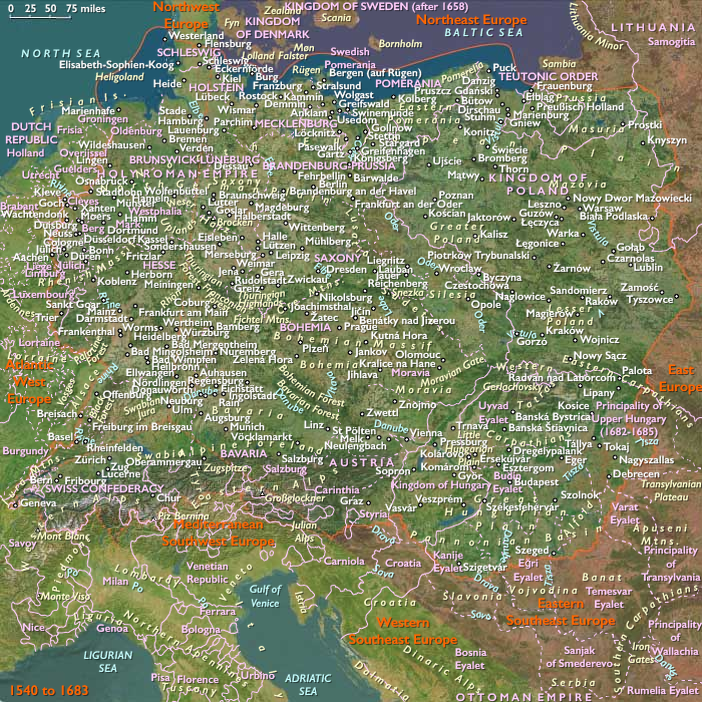
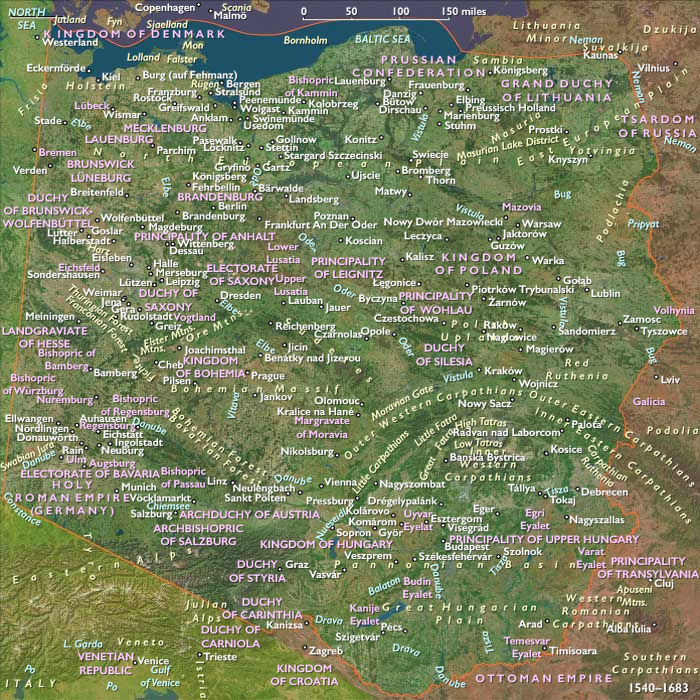
The representatives of the Prince-Bishops of Augsburg, Constance, Passau, Ratisbon, and Würzburg assemble at Munich.
The Prince-Archbishop of Salzburg, having shown disapproval, had not been not invited, and the Prince-Bishop of Eichstädt had hesitated.
The participating states conclude an alliance on July 10, 1609, "for the defense of the Catholic religion and peace within the Empire."
The most important regulation of the League is the prohibition of attacks on one another.
Instead of fighting, conflicts have to be decided by the laws of the Empire or, if these fail to solve the conflict, by arbitration within the League.
Should one member be attacked, it must be helped with military or alternatively legal support.
Duke Maximilian is to be the president, and the Prince-Bishops of Augsburg, Passau, and Würzburg his councilors.
The League is to continue for nine years.
Locations
People
Groups
- Passau, Bishopric of
- Augsburg, Prince-Bishopric of
- Christians, Roman Catholic
- Constance, Bishopric of
- Würzburg, Bishopric of
- Regensburg (Ratisbon), Imperial Free City of
- Bavaria, Wittelsbach Duchy of
- Lutheranism
- Protestant League (League of Evangelical Union)
- Catholic League, the (German)
Topics
Subjects
Regions
Subregions
Years: 1609 - 1609
July
Locations
People
Groups
- Passau, Bishopric of
- Augsburg, Prince-Bishopric of
- Christians, Roman Catholic
- Constance, Bishopric of
- Würzburg, Bishopric of
- Regensburg (Ratisbon), Imperial Free City of
- Bavaria, Wittelsbach Duchy of
- Lutheranism
- Protestant League (League of Evangelical Union)
- Catholic League, the (German)
Topics
Subjects
Regions
Subregions