
Mavia, also known as Mania or Mawia, …
Years: 377 - 377
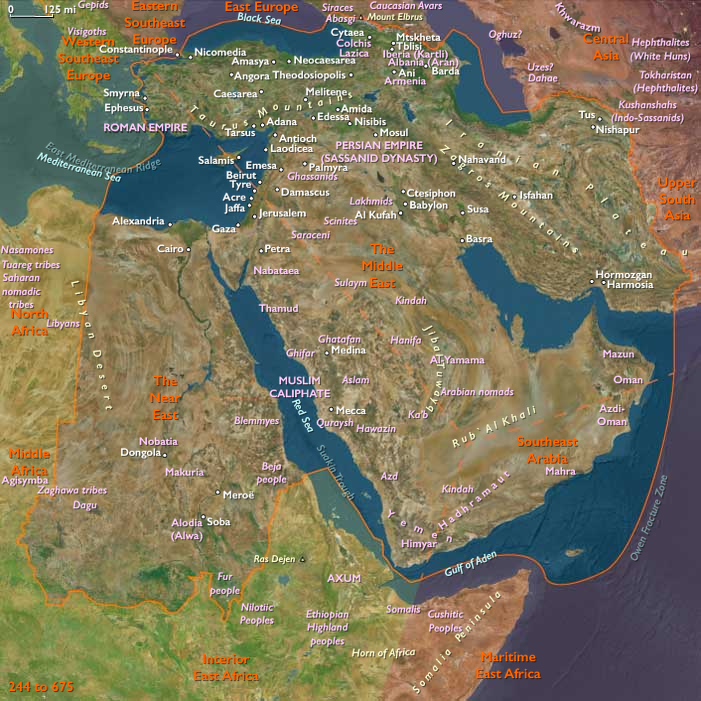
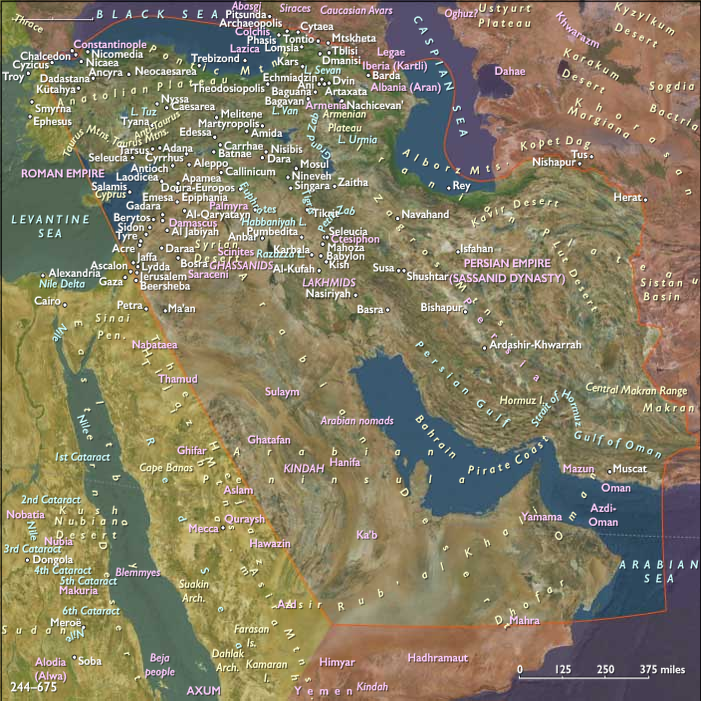
Mavia, also known as Mania or Mawia, the widowed queen of the Bedouin “Saracens,” rebels against Roman rule between 376 and 378, leading troops into Phoenicia, Palestine, and Egypt.
The ancestors of Mavia, whose Arabic name is Mawiyya, were Tanukhids, a loose affiliation of Arab tribes that had migrated northwards from the Arabian peninsula a century before Mavia was born, because of growing Sassanian influence in Iran.
Mavia's husband was al-Hawari, the last king of the semi-nomadic Tanukh confederation in southern Syria in the latter half of the fourth century.
When he died in 375 without leaving an heir, Mavia had risen to command the confederation in a revolt against Roman rule that extends throughout the Levant.
The reasons for the revolt are thought to have been religious.
After al-Hawari's death, the Roman emperor Valens, an Arian heterodox, decides to disregard the requests of the Arabs for an orthodox bishop, insisting on the appointment of an Arian bishop instead.
Mavia withdraws from Aleppo into the desert with her people, forming alliances with desert Arabs and gaining support throughout much of Arabia and Syria, in preparation for the fight against Roman rule.
It is unclear as to whether Mavia herself is Christian at this time or not.
Some historians report that it was during her military exploits that she met an ascetic monk named Moses who so impressed her that she converted to orthodox Christianity.
All agree, however, that the conditions she set for any truce with Rome, was this monk's appointment as bishop over her people.
Locations
People
Groups
- Arab people
- Bedouin
- Egypt (Roman province)
- Syria Palæstina, Roman province of (Judea, Samaria, and Idumea)
- Christianity, Arian
- Christianity, Nicene
- Roman Empire: Valentinian dynasty (Rome)
Topics
- Late Antiquity
- Arian controversy
- Visigothic Raids on the Roman Empire, Early
- Roman Gothic War, Fifth, or Gothic War (376–382)
Commodoties
Subjects
Regions
Subregions
Related Events
Showing 10 events out of 59594 total
Years: 377 - 377
Locations
People
Groups
- Arab people
- Bedouin
- Egypt (Roman province)
- Syria Palæstina, Roman province of (Judea, Samaria, and Idumea)
- Christianity, Arian
- Christianity, Nicene
- Roman Empire: Valentinian dynasty (Rome)
Topics
- Late Antiquity
- Arian controversy
- Visigothic Raids on the Roman Empire, Early
- Roman Gothic War, Fifth, or Gothic War (376–382)
Commodoties
Subjects
Regions
Subregions