
The Whig party was not yet sufficiently …
Years: 1836 - 1836
December
The Whig party was not yet sufficiently organized or unified to run one nationwide candidate—instead, William Henry Harrison was its candidate in the Northern and border states, Hugh Lawson White ran in the South, Daniel Webster ran in his home state of Massachusetts and in South Carolina the Whig's presidential candidate was Willie P. Mangum.
Whigs had hoped that four candidates would amass enough Electoral College votes among them to deny a majority to Martin Van Buren.
That would have moved the election to the House of Representatives, allowing the ascendant Whigs to select their most popular man as president.
Van Buren won 170 ballots in the Electoral College, with only 148 ballots needed to win, but the Whig strategy came very close to succeeding.
In Pennsylvania, which had 30 ballots in the Electoral College, Harrison got 87,235 votes to Van Buren's 91,457.
A change of just a few thousand votes in this state would have reduced Van Buren's ballot count to only 140, eight short of winning.
Whigs had hoped that four candidates would amass enough Electoral College votes among them to deny a majority to Martin Van Buren.
That would have moved the election to the House of Representatives, allowing the ascendant Whigs to select their most popular man as president.
Van Buren won 170 ballots in the Electoral College, with only 148 ballots needed to win, but the Whig strategy came very close to succeeding.
In Pennsylvania, which had 30 ballots in the Electoral College, Harrison got 87,235 votes to Van Buren's 91,457.
A change of just a few thousand votes in this state would have reduced Van Buren's ballot count to only 140, eight short of winning.
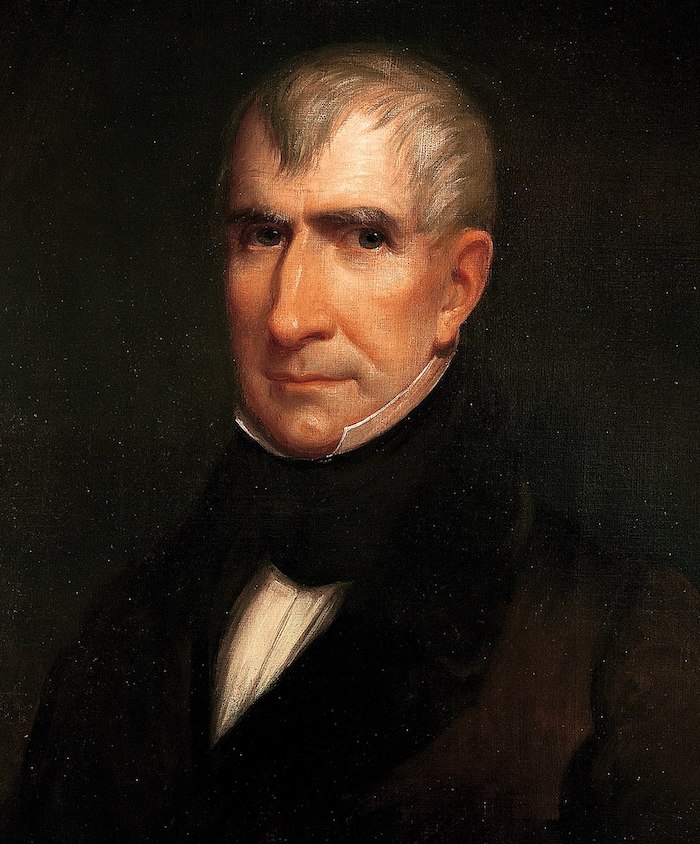
James Lambdin: William Henry Harrison (1835). Oil on canvas 76.2 cm (30 in) x 63.5 cm (25 in). White House.
Locations
People
Groups
Topics
Subjects
Regions
Subregions
Related Events
Showing 10 events out of 18452 total
Years: 1836 - 1836
December
James Lambdin: William Henry Harrison (1835). Oil on canvas 76.2 cm (30 in) x 63.5 cm (25 in). White House.
Locations
People
Groups
Topics
Subjects
Regions
Subregions