
East Asia (1108 – 1251 CE): Song …
Years: 1108 - 1251
East Asia (1108 – 1251 CE): Song Maritime Prosperity and the Mongol Unification
Between 1108 and 1251 CE, East Asia embodied both splendor and upheaval: the Southern Song’s commercial and artistic brilliance flourished even as the Mongols began their world-changing rise. Across the Korean Peninsula and Japan, Buddhist kingdoms and warrior clans matured in parallel; across the steppe and plateau, Mongol confederations and Tibetan monasteries expanded in power and reach. It was an age of cultural luminosity and political realignment, as the balance of the East shifted from agrarian heartlands to maritime trade and continental conquest.
Geographic and Environmental Context
Maritime East Asia included the coastal and riverine plains of China, the Korean Peninsula, Japan, and Taiwan;
Upper East Asia encompassed the Mongolian steppe, the Tibetan Plateau, Xinjiang, Gansu, and the Tarim Basin.
The Yangtze basin formed the Song dynasty’s agrarian and commercial core, while Hangzhou, Quanzhou, and Guangzhou opened China to the Indian Ocean.
Far to the north, Mongolia’s grasslands sustained mounted herders, and the Silk Road oases of the Tarim Basin linked China with Persia and Central Asia.
The Tibetan Plateau housed monastic strongholds and trade routes bridging India and China.
This convergence of steppe, plateau, and coast defined East Asia’s diversity and dynamism in the High Medieval world.
Climate and Environmental Shifts
The Medieval Warm Period produced favorable agricultural conditions across East Asia.
Southern China’s warm, wet climate enabled double-crop rice; the Yellow River’s floods, though destructive, deposited fertile loess.
In the steppe, milder winters increased grassland productivity, supporting larger herds and facilitating the rise of Mongol confederations.
On the Tibetan Plateau, warmer temperatures extended growing seasons in valley settlements.
These stable conditions underpinned demographic expansion, technological innovation, and interregional mobility.
Societies and Political Developments
Song China (960–1279):
The fall of the Northern Song to the Jurchen Jin dynasty in 1127 forced the court south to Hangzhou, inaugurating the Southern Song.
Despite territorial loss, the dynasty entered a golden age of economic and cultural vitality—urbanization, maritime commerce, printing, and painting all flourished.
The bureaucracy deepened its Confucian foundations even as technological progress accelerated.
Goryeo Korea (918–1392):
Under a centralized monarchy and landed aristocracy, Goryeo weathered Khitan and Jurchen invasions while fostering artistic and religious flourishing.
The Tripitaka Koreana, begun in this era, symbolized devotion and learning.
Korean celadon ceramics achieved technical and aesthetic perfection, becoming coveted exports to China and Japan.
Japan (Heian–Kamakura Transition):
The Heian court at Kyoto reached its aesthetic apex but lost political control to regional warrior clans.
The Genpei War (1180–1185) ended aristocratic dominance; victory by the Minamoto clan established the Kamakura shogunate, marking the rise of samurai governance.
While Kyoto retained cultural primacy, political power shifted decisively to the military class.
Tibet:
Monastic Buddhism expanded rapidly, anchored by the Kadam and early Sakya schools.
Monasteries accumulated land, organized lay labor, and fostered trans-Himalayan trade.
Religious authority intertwined with political control, prefiguring Tibet’s later theocratic states.
Mongolia and the Steppe:
In the late 12th century, Temüjin (Chinggis Khan) unified fractious Mongolic tribes through diplomacy, conquest, and charisma.
By 1206, his coronation as Chinggis Khan inaugurated an unprecedented transformation: the nomadic steppe became the launching ground for the Mongol Empire.
His successors expanded across northern China and Central Asia, initiating one of history’s greatest imperial revolutions.
Frontier States:
The Tangut Xi Xia kingdom in Gansu (1038–1227) and the Kara-Khitan (Western Liao) in Xinjiang thrived on trade and cultural synthesis but fell to Mongol conquest.
The Jurchen Jin (1115–1234) dominated northern China until its collapse under Mongol attack, completing the north’s transformation into steppe frontier.
Economy and Trade
The economy of East Asia fused agrarian production with commercial expansion.
-
Southern Song: Champa rice from Vietnam revolutionized agriculture, doubling yields and supporting massive population growth.
Paper money, copper coinage, and merchant guilds created a sophisticated market economy.
Urban centers like Hangzhou and Kaifeng ranked among the largest cities in the world. -
Goryeo: Rice cultivation and craft specialization fueled prosperity; Buddhist monasteries became both economic landlords and artistic patrons.
-
Japan: Agricultural estates (shōen) prospered, while trade with Song China brought ceramics, silks, and coins; artisans refined the tea bowl, sword, and scroll painting.
-
Steppe and Silk Road: Caravans carried silk, jade, horses, and salt through the Hexi Corridor and Tarim oases; the Mongols transformed trade routes into tributary highways.
-
Tibet: Monastic estates and caravan links with Nepal and India enriched temple treasuries.
Together, these networks wove East Asia into the global fabric of the 12th–13th centuries, connecting the monsoon seas with the continental interior.
Technology and Knowledge
Innovation flourished across the region:
-
Printing and Publishing: Movable type advanced in both China and Korea; Buddhist texts and Confucian classics circulated widely.
-
Gunpowder and Engineering: Song armies pioneered gunpowder weapons and advanced siegecraft.
-
Shipbuilding and Navigation: Chinese junks plied the seas to Southeast Asia and India; mariners mapped monsoon routes with growing precision.
-
Craftsmanship: Goryeo’s celadon, Japanese lacquerware, and Tibetan bronzes defined artistic excellence.
-
Mongol Military Science: The decimal army organization and composite bow redefined mobility and strategic reach across Eurasia.
Knowledge flowed along the Silk Road and the sea-lanes—texts, inventions, and artisans crossing from monastery to port and court.
Belief and Symbolism
Religion and philosophy intertwined across East Asia’s cultural continuum.
-
Song China: Neo-Confucianism, led by Zhu Xi, articulated a moral cosmology balancing rational inquiry with ethical order.
-
Buddhism persisted alongside Daoist and folk traditions, influencing art, medicine, and governance.
-
Goryeo made Buddhism its cultural axis, financing temples and colossal statues.
-
Japan blended Shinto nature reverence with Buddhist devotion; Pure Land teachings spread among commoners.
-
Tibet embodied the union of religion and state, its monasteries cosmic microcosms.
-
Mongols, before adopting foreign faiths, venerated Tengri, the eternal sky, affirming their universal destiny.
Art, ritual, and architecture across the region reflected the quest for harmony between heaven, earth, and human order.
Movement and Interaction Corridors
-
Maritime trade connected Quanzhou, Guangzhou, and Ningbo with Champa, Java, and India.
-
Envoy missions between Song China, Goryeo, and Japan transmitted diplomacy and technology.
-
The Silk Road through Gansu and Xinjiang remained active despite shifting powers, linking Buddhist, Islamic, and Christian communities.
-
The Steppe routes carried the Mongol armies and caravans that would soon unify Eurasia under a single imperial system.
These corridors integrated the coastal and continental halves of East Asia into a single cultural economy.
Adaptation and Resilience
Each East Asian society met the century’s transformations with adaptive genius:
-
Song China survived political contraction through economic reinvention and maritime expansion.
-
Goryeo maintained stability through Buddhist legitimacy and aristocratic networks.
-
Japan restructured through the rise of the samurai and local governance.
-
Tibet balanced monastic and lay authority in a high-altitude equilibrium.
-
The Mongols turned mobility into empire, uniting ecology and strategy.
Resilience across the region came not from uniformity but from diversity—agrarian, nomadic, and maritime strengths reinforcing one another.
Long-Term Significance
By 1251 CE, East Asia had entered a transformative age:
-
The Southern Song presided over one of history’s richest economies.
-
Goryeo embodied a Buddhist synthesis of art and order.
-
Japan forged a new political model under the Kamakura shogunate.
-
Tibet became a Buddhist bastion bridging South and East Asia.
-
The Mongols stood poised to weld steppe and continent into a single imperial expanse.
This century of convergence—between the merchant’s sea and the nomad’s steppe, the scholar’s ink and the warrior’s bow—made East Asia the pivot of the medieval world, preparing it for the age of global empires to come.
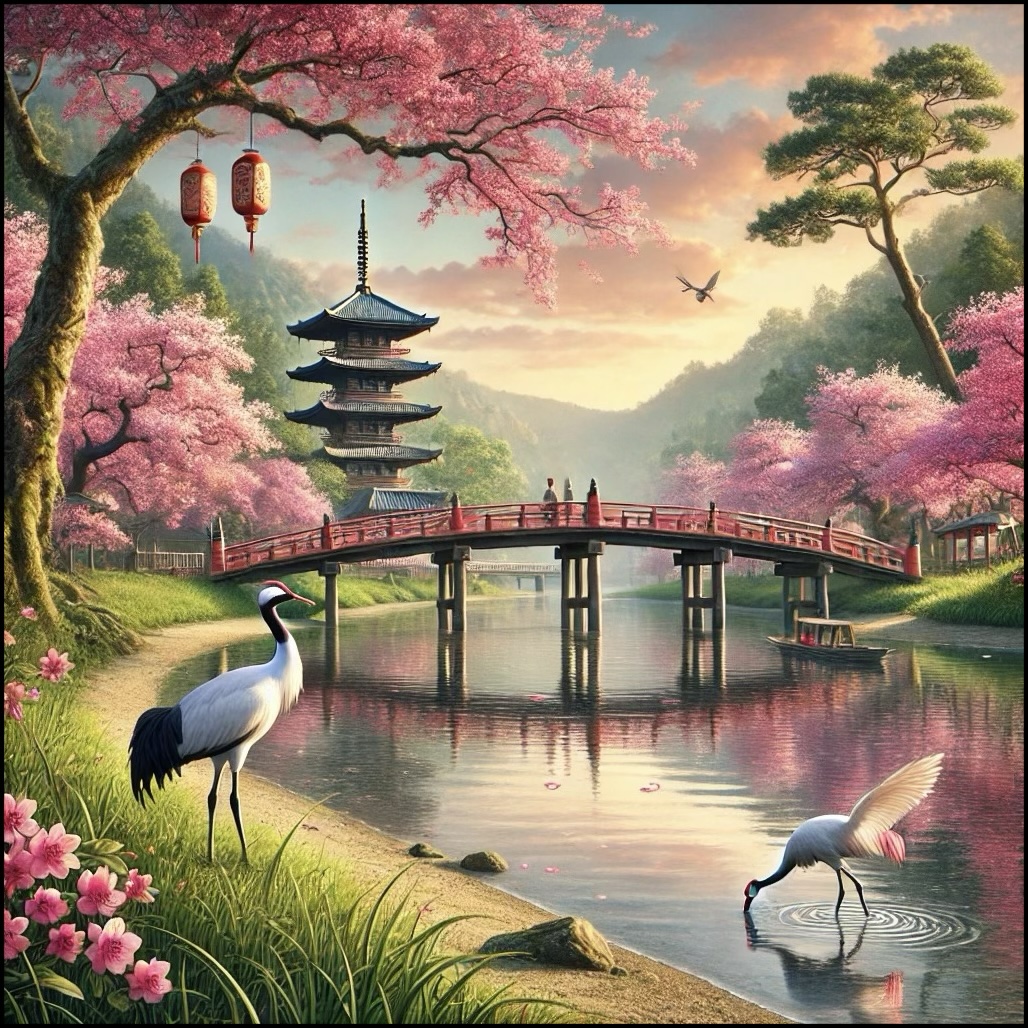
Lower East Asia (with civilization) ©2024-25 Electric Prism, Inc. All rights reserved.
People
Groups
- Aborigines, Taiwanese
- Buddhism
- Confucianists
- Shinto
- Taoism
- Khitan people
- Buddhists, Zen or Chán
- Japan, Heian Period
- Neo-Confucianism
- Jurchens
- Liao Dynasty, or Khitan Empire
- Goryeo
- Chinese Empire, Pei (Northern) Song Dynasty
- Dai Viet, Kingdom of
- Buddhism, Pure Land
- Jin Dynasty (Chin Empire), Jurchen
- Chinese Empire, Nan (Southern) Song Dynasty
- Jin Dynasty (Chin Empire), Jurchen
- Japan, Kamakura Period
- Jin Dynasty (Chin Empire), Jurchen
Topics
Commodoties
Subjects
- Writing
- Watercraft
- Engineering
- Painting and Drawing
- Labor and Service
- Decorative arts
- Conflict
- Faith
- Government
- Custom and Law
- Technology
- Invention
Regions
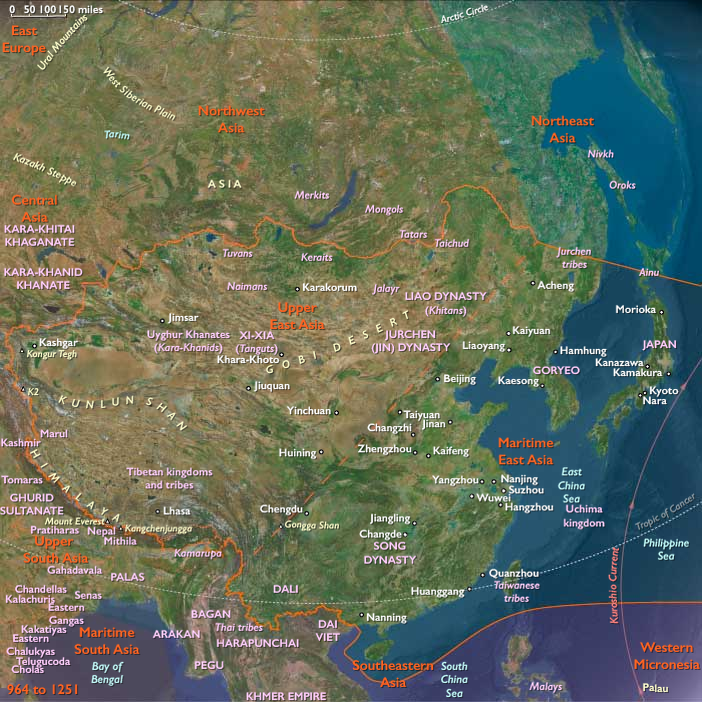
Subregions
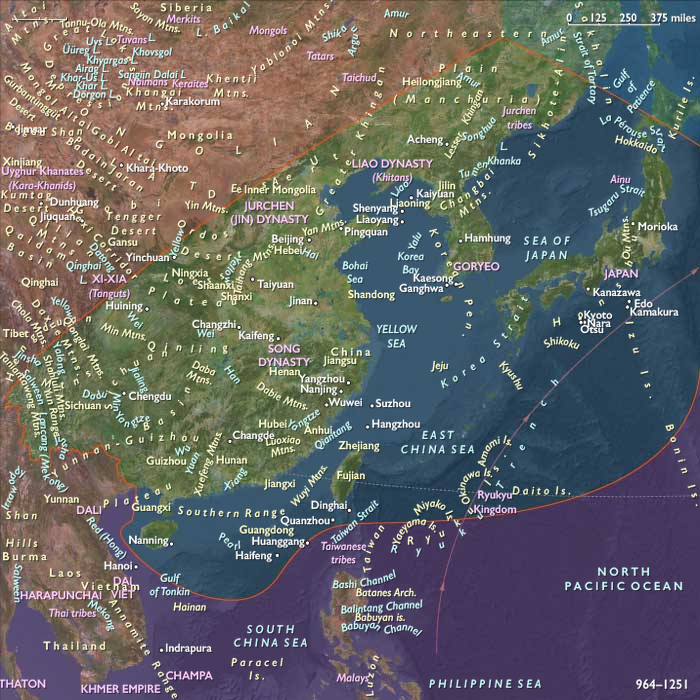
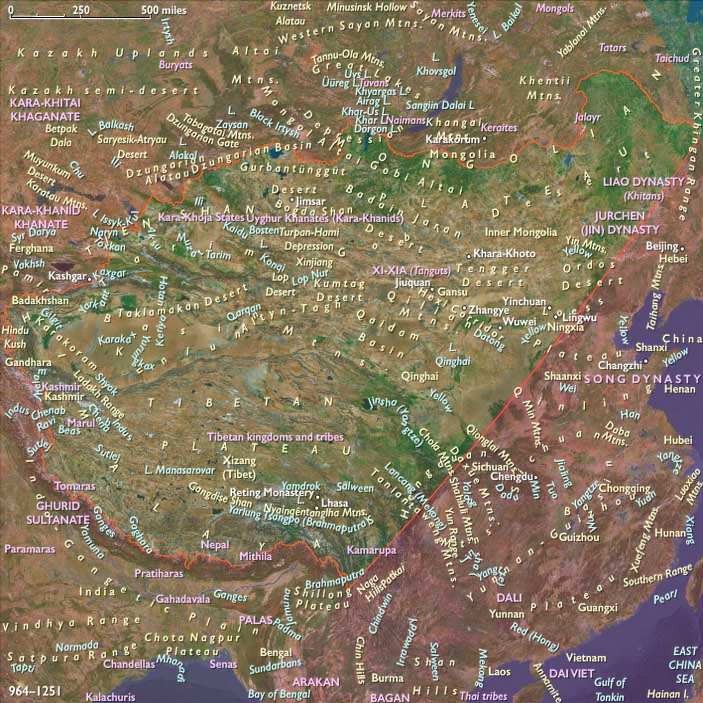
Years: 1108 - 1251
Lower East Asia (with civilization) ©2024-25 Electric Prism, Inc. All rights reserved.
People
Groups
- Aborigines, Taiwanese
- Buddhism
- Confucianists
- Shinto
- Taoism
- Khitan people
- Buddhists, Zen or Chán
- Japan, Heian Period
- Neo-Confucianism
- Jurchens
- Liao Dynasty, or Khitan Empire
- Goryeo
- Chinese Empire, Pei (Northern) Song Dynasty
- Dai Viet, Kingdom of
- Buddhism, Pure Land
- Jin Dynasty (Chin Empire), Jurchen
- Chinese Empire, Nan (Southern) Song Dynasty
- Jin Dynasty (Chin Empire), Jurchen
- Japan, Kamakura Period
- Jin Dynasty (Chin Empire), Jurchen
Topics
Commodoties
Subjects
- Writing
- Watercraft
- Engineering
- Painting and Drawing
- Labor and Service
- Decorative arts
- Conflict
- Faith
- Government
- Custom and Law
- Technology
- Invention
Regions
Subregions