
Maritime East Africa (1972–1983 CE): Independence Consolidation, …
Years: 1972 - 1983
Maritime East Africa (1972–1983 CE): Independence Consolidation, Political Shifts, and Cold War Dynamics
Between 1972 and 1983, Maritime East Africa undergoes substantial political realignments, consolidation of independence, and socio-economic transformation amid intensified Cold War rivalries. Newly independent nations navigate complex internal and external pressures, striving for stable governance and economic development.
Seychelles: Transition to Independence and Socialist Reforms
In 1976, Seychelles achieves independence from Britain. Immediately afterward, Prime Minister France-Albert René assumes power through a bloodless coup in 1977, initiating a socialist-oriented government. René’s administration implements extensive social reforms, redistributes land, expands social welfare, and nationalizes key industries, significantly reshaping Seychelles' society and economy.
Comoros: Turbulent Independence and Fragmentation
The Comoros Islands declare independence from France in 1975, but the period is marred by political instability and internal divisions. The island of Mayotte rejects independence and remains a French overseas territory following a contentious referendum. Comoros itself experiences rapid political upheaval marked by multiple coups, notably the brief but destabilizing rule of Ali Soilih (1975–1978), whose radical socialist policies spark significant internal conflict.
Madagascar: Socialist Experimentation Under Ratsiraka
In 1975, Didier Ratsiraka seizes power in Madagascar, establishing a socialist regime known as the Democratic Republic of Madagascar. His administration nationalizes major industries, implements centralized economic controls, and strengthens ties with socialist countries, including the Soviet Union. Despite ambitious modernization projects, Ratsiraka's policies result in widespread economic stagnation, food shortages, and growing rural discontent.
Somalia: Cold War Realignment and Conflict in the Ogaden
Under President Siad Barre, Somalia initially aligns closely with the Soviet Union. However, after the disastrous Ogaden War (1977–1978) against Ethiopia—during which the Soviet Union shifts support to Ethiopia—Barre dramatically pivots toward the United States and the West. This realignment reflects intense Cold War competition in the Horn of Africa, heightening regional instability. Barre's increasingly authoritarian governance results in political repression and economic decline, sowing seeds for future internal conflict.
Malawi and Mozambique
Mozambique secures independence from Portugal in 1975, with central and northern regions severely affected by subsequent civil conflicts between FRELIMO and RENAMO (Mozambican National Resistance).
Malawi under Banda’s continued presidency maintains regional stability, though economic pressures lead to increasing internal tensions and authoritarian governance. Blantyre continues to serve as Malawi’s economic heart, while the Beira Corridor in Mozambique becomes a central flashpoint in regional Cold War geopolitics.
Regional Economic Struggles and Political Realities
Throughout Maritime East Africa, economic challenges intensify amid fluctuating global markets, uneven agricultural productivity, and lingering impacts of colonial economic structures. Mauritius emerges as a notable exception, successfully diversifying its economy through manufacturing, textiles, and tourism, thereby mitigating economic pressures common in the region.
Elsewhere, nations face significant governance challenges, marked by ethnic and political tensions, ideological polarization, and dependency on foreign aid and investment, influenced by broader global economic conditions and Cold War geopolitics.
Legacy of the Era
The era 1972–1983 significantly shapes Maritime East Africa's contemporary political landscape. Nations consolidate their independence while navigating profound internal and external challenges. Cold War alignments and socialist experiments leave lasting impacts on political institutions and economic trajectories, setting the stage for subsequent political reforms, economic restructuring, and evolving international relationships in the region.
People
Groups
- Somalis
- Comoro Islands
- United States of America (US, USA) (Washington DC)
- Seychelles, Crown Colony of the
- Ethiopia, (restored) Empire of
- Malagasay Republic
- Somalia
- Uganda, Republic of
- Kenya, Republic of
- Tanzania, United Republic of
- Mauritius, Republic of
- Comoros, Federal Islamic Republic of the
- Madagascar, Democratic Republic of
- RENAMO (Mozambican National Resistance)
- Seychelles, Republic of
Topics
- Cold War
- Portuguese Colonial War
- Mozambican War of Independence
- Mozambican Civil and Guerilla Wars of 1976-92
- Ogaden War
- Mozambique Rebellion
Commodoties
Subjects
Regions
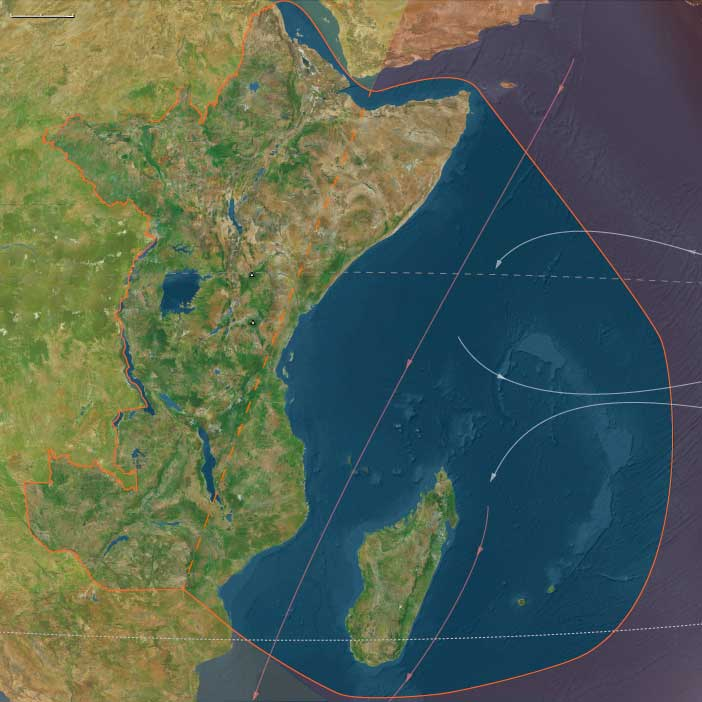
Subregions
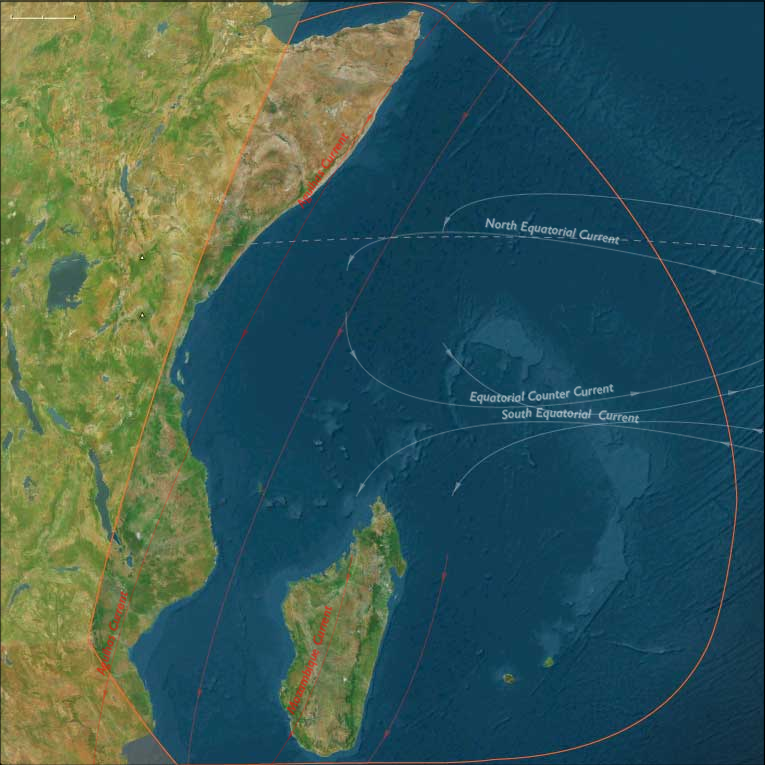
Years: 1972 - 1983
People
Groups
- Somalis
- Comoro Islands
- United States of America (US, USA) (Washington DC)
- Seychelles, Crown Colony of the
- Ethiopia, (restored) Empire of
- Malagasay Republic
- Somalia
- Uganda, Republic of
- Kenya, Republic of
- Tanzania, United Republic of
- Mauritius, Republic of
- Comoros, Federal Islamic Republic of the
- Madagascar, Democratic Republic of
- RENAMO (Mozambican National Resistance)
- Seychelles, Republic of
Topics
- Cold War
- Portuguese Colonial War
- Mozambican War of Independence
- Mozambican Civil and Guerilla Wars of 1976-92
- Ogaden War
- Mozambique Rebellion
Commodoties
Subjects
Regions
Subregions