
Maritime East Africa (1960–1971 CE): Independence Achieved, …
Years: 1960 - 1971
Maritime East Africa (1960–1971 CE): Independence Achieved, National Consolidation, and Regional Realignments
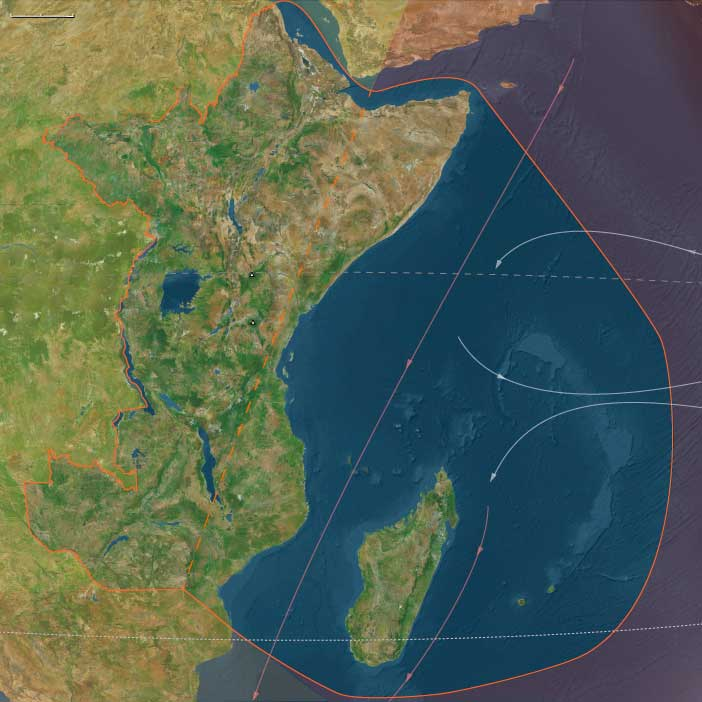
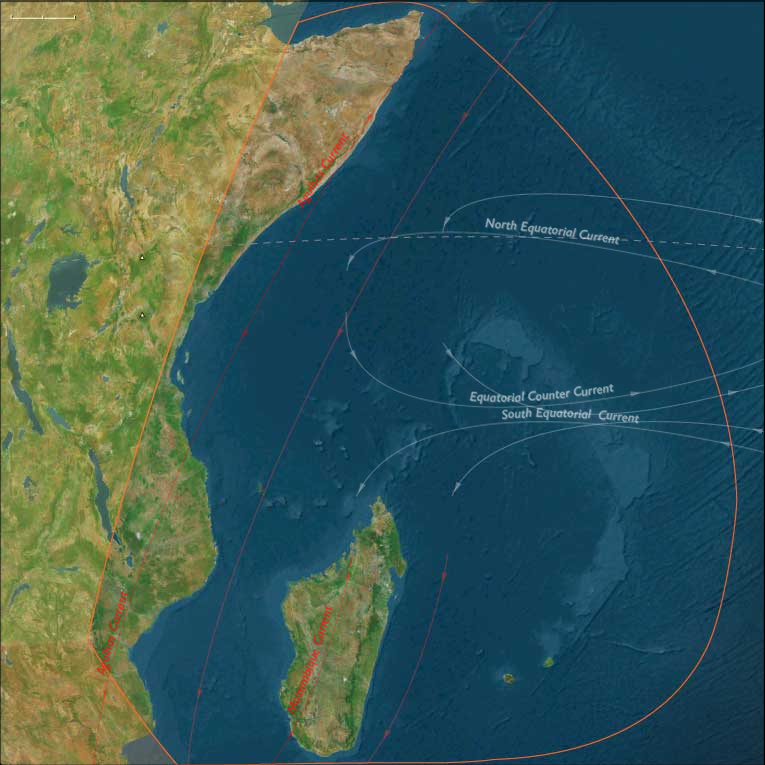
From 1960 to 1971 CE, Maritime East Africa—including the Swahili Coast, Comoros, Madagascar, Mauritius, Seychelles, and Somali coastal territories—experiences transformative developments marked by widespread independence, national consolidation, and significant regional and international realignments.
Achievement of Independence and Nation-Building
This era witnesses the dramatic realization of independence for most of Maritime East Africa. Somalia leads the way, achieving independence in 1960 through the unification of British Somaliland and Italian Somaliland, forming the Somali Republic. The new government emphasizes Somali nationalism and embarks on ambitious programs to unify Somali-speaking territories, laying groundwork for regional tensions.
In Tanganyika, independence from Britain is secured in 1961 under the leadership of Julius Nyerere and TANU. Tanganyika subsequently unites with Zanzibar, following the Zanzibar Revolution of 1964, to form the United Republic of Tanzania. Nyerere introduces "Ujamaa," a socialist-inspired policy aimed at rural development, self-reliance, and collective ownership, fundamentally shaping Tanzania’s national identity.
Kenya attains independence from British colonial rule in 1963, with Jomo Kenyatta as its first Prime Minister and later President. The country faces immediate challenges of unifying diverse ethnic groups, addressing land redistribution, and navigating Cold War dynamics while solidifying its national identity and governance structures.
Political Evolution and Challenges in Madagascar and Comoros
In Madagascar, full independence from France occurs in 1960 under the presidency of Philibert Tsiranana. The early post-independence period is marked by moderate policies closely aligned with France. However, rising nationalist sentiments and economic frustrations fuel political tension, setting the stage for later political upheaval and ideological realignment.
The Comoros Islands see heightened political mobilization during this period, characterized by active demands for autonomy and eventual independence from French colonial rule. Internal political developments increasingly move toward complete independence, although formal independence will not be achieved until later.
Malawi and Mozambique
Malawi achieves independence from Britain in 1964, with Hastings Kamuzu Banda becoming its first president. Blantyre emerges as an economic and political focal point for the newly independent nation, emphasizing development and regional trade.
Mozambique, still under Portuguese control, faces a protracted liberation war initiated by FRELIMO (Front for the Liberation of Mozambique), particularly affecting central and northern areas, reshaping regional political dynamics.
Mauritius and Seychelles: Paths Toward Sovereignty
In Mauritius, independence from Britain is achieved in 1968, with Seewoosagur Ramgoolam becoming the first Prime Minister. The new nation faces the immediate challenge of economic diversification, moving beyond reliance on sugar production to develop industries such as tourism, textiles, and manufacturing.
The Seychelles intensifies demands for self-governance and economic development, though it remains a British colony through this period. Growing political awareness and activism lay critical groundwork for full independence in the following decade.
Regional Dynamics and Cold War Influences
The geopolitical landscape of Maritime East Africa is significantly influenced by the broader Cold War context. Newly independent states navigate competing interests from Western nations, the Soviet Union, and China. Somalia’s strategic location near critical maritime routes increases international interest, leading to shifting alliances and regional tensions, particularly with Ethiopia and Kenya.
The formation of the East African Community in 1967, comprising Kenya, Uganda, and Tanzania, exemplifies regional cooperation efforts, promoting economic integration and collaborative infrastructure projects, though internal political differences pose ongoing challenges.
Legacy of the Era
The era from 1960 to 1971 CE fundamentally reshapes Maritime East Africa, marked by the historic realization of independence, ambitious national consolidation efforts, and significant regional realignments within the Cold War framework. This foundational period lays essential groundwork for the diverse political, economic, and social trajectories that Maritime East African nations will follow in subsequent decades.
People
Groups
- Somalis
- Comoro Islands
- Portuguese Empire
- Portuguese Mozambique
- Angola (Portuguese colony)
- Portugal, Bragança Kingdom of
- United States of America (US, USA) (Washington DC)
- Britain (United Kingdom of Great Britain and Ireland)
- Mauritius, British
- Italy, Kingdom of
- France (French republic); the Third Republic
- British Somaliland
- Italian Somaliland
- Zanzibar, (British) Protectorate of
- Portuguese East Africa (Moçambique)
- French Madagascar
- Seychelles, Crown Colony of the
- Kenya, (British) Protectorate of
- Union of Soviet Socialist Republics (USSR), or Soviet Union
- Tanganyika (territory)
- Somaliland, British Military Administration in
- China, People's Republic of
- Rhodesia and Nyasaland, Federation of (Central African Federation)
- Malagasay Republic
- Somalia
- Uganda, Republic of
- FRELIMO (Liberation Front of Mozambique)
- Kenya, Republic of
- Nyasaland (British Protectorate)
- Tanzania, United Republic of
- Malawi, Republic of
Topics
Commodoties
Subjects
Regions
Subregions
Years: 1960 - 1971
People
Groups
- Somalis
- Comoro Islands
- Portuguese Empire
- Portuguese Mozambique
- Angola (Portuguese colony)
- Portugal, Bragança Kingdom of
- United States of America (US, USA) (Washington DC)
- Britain (United Kingdom of Great Britain and Ireland)
- Mauritius, British
- Italy, Kingdom of
- France (French republic); the Third Republic
- British Somaliland
- Italian Somaliland
- Zanzibar, (British) Protectorate of
- Portuguese East Africa (Moçambique)
- French Madagascar
- Seychelles, Crown Colony of the
- Kenya, (British) Protectorate of
- Union of Soviet Socialist Republics (USSR), or Soviet Union
- Tanganyika (territory)
- Somaliland, British Military Administration in
- China, People's Republic of
- Rhodesia and Nyasaland, Federation of (Central African Federation)
- Malagasay Republic
- Somalia
- Uganda, Republic of
- FRELIMO (Liberation Front of Mozambique)
- Kenya, Republic of
- Nyasaland (British Protectorate)
- Tanzania, United Republic of
- Malawi, Republic of
Topics
Commodoties
Subjects
Regions
Subregions