
Maritime East Africa (1876–1887 CE): European Exploration, …
Years: 1876 - 1887
Maritime East Africa (1876–1887 CE): European Exploration, Somali Power Shifts, and Colonial Expansion
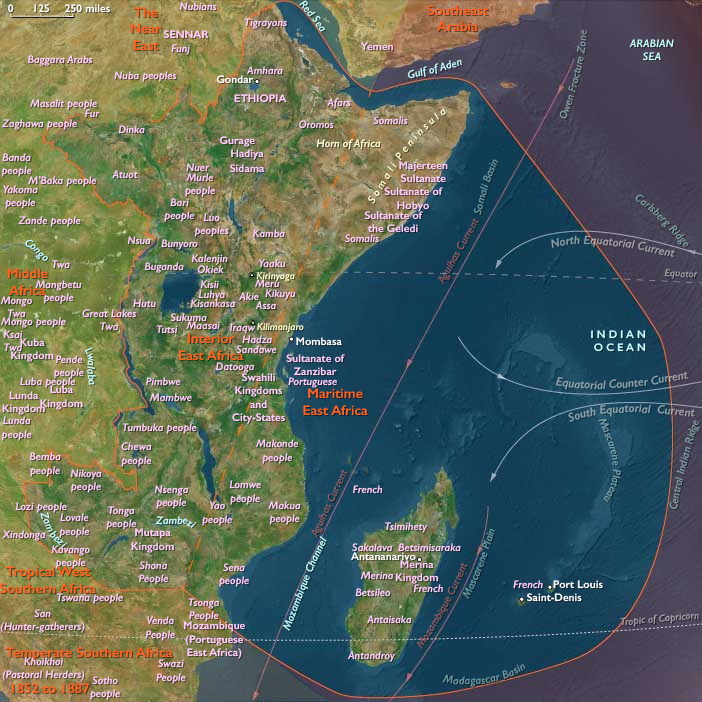
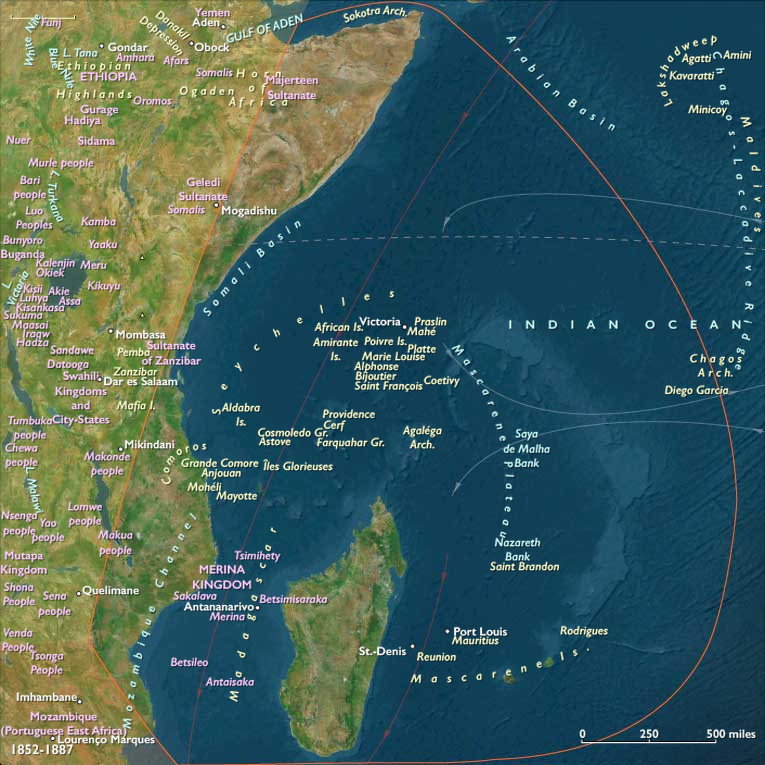
From 1876 to 1887 CE, Maritime East Africa experiences intensified European exploration and colonization efforts, significant shifts in local political power in Somalia, and deepening European rivalry over strategic island territories and coastal regions.
Portuguese Expeditions into the African Interior
In 1877, Portugal launches a significant scientific expedition from Luanda, led by naval officers Hermenegildo Capelo and Roberto Ivens, accompanied by army major Alexandre Serpa Pinto. The group travels into Angola's interior to the Bié plateau, where they split:
-
Serpa Pinto explores the headwaters of Angola's Cuanza River and follows the Zambezi River to Victoria Falls, eventually crossing the Transvaal and reaching Natal in 1879.
-
Later, in 1884–1885, Capelo and Ivens traverse previously unexplored territories from the coast of Angola (Mocamades) to Quelimane on Mozambique's east coast.
-
Simultaneously, Serpa Pinto and Augusto Cardoso conduct expeditions around Lake Nyassa, significantly enhancing Portuguese geographical knowledge of Mozambique’s interior.
Establishment of German East Africa
In the early 1880s, German adventurer Carl Peters actively seeks colonial acquisitions. After securing treaties with native chiefs opposite Zanzibar, the Society for German Colonization is granted an imperial charter by Chancellor Otto von Bismarck on February 27, 1885. Upon the Sultan of Zanzibar's protest, Bismarck swiftly dispatches a German naval squadron that compels the Sultan's acquiescence, establishing German control over Bagamoyo, Dar es Salaam, and Kilwa.
Return and Rise of Sultan Yuusuf Ali Keenadiid in Somalia
In the 1870s, exiled Somali leader Sultan Yuusuf Ali Keenadiid returns from Arabia with a small contingent of Hadhrami fighters and loyal followers. Utilizing force and strategic alliances, he establishes the new Somali kingdom of Hobyo, subduing local Hawiye clans. Keenadiid’s emergence marks a significant shift in Somali power dynamics, though his rule, along with the neighboring Majeerteen Sultanate, faces increasing pressure from advancing European colonial interests.
European Competition for Somali Territories
The latter part of this era sees intensified European colonial ambitions in Somalia, driven by strategic interests:
-
Britain actively expands its influence from 1884, motivated by the need to secure the northern Somali coast as a supply base (livestock and provisions) for its crucial naval port at Aden, vital for the defense of British India. Major A. Hunter negotiates protection treaties with Somali clans, and British vice-consuls are installed in Berbera, Bullaxaar, and Saylac.
-
Italy, seeking colonial expansion, increasingly pushes into southern Somalia, setting the stage for future colonial consolidation.
French Influence in the Comoros
France, already established in Comoros, gradually extends its influence across the archipelago. Although progress is slow, fueled by persistent internal conflicts among local sultans and rivalry with British and German ambitions, France finally secures protectorate agreements with the rulers of Njazidja, Nzwani, and Mwali in 1886. These agreements set the foundation for the eventual formal annexation and administration of Comoros as part of the French colony of Madagascar in the early twentieth century.
Malawi and Mozambique
Portuguese expeditions like those of explorers Serpa Pinto, Capelo, and Ivens underscore increased colonial ambitions across central and northern Mozambique, emphasizing the economic importance of trade routes through Quelimane and the Zambezi Valley. Southern Malawi (Nyasaland) becomes formally a British protectorate in 1889, with Blantyre established as an administrative and commercial capital, firmly integrating Malawi into Britain’s broader colonial framework in East Africa.
Legacy of the Era
Between 1876 and 1887 CE, Maritime East Africa witnesses transformative European exploration, aggressive colonial expansion, strategic shifts in Somali political power, and deepening European rivalries. These complex interactions set the stage for profound regional changes in the late nineteenth century, significantly impacting local autonomy, trade networks, and sociopolitical structures.
People
- Alexandre de Serpa Pinto
- Hermenegildo Capelo
- Jean Laborde
- Osman Mahamuud
- Rainilaiarivony
- Roberto Ivens
- Yusuf Ali Kenadid
Groups
- Austronesian peoples
- Bantu peoples
- Arab people
- Omanis
- Somalis
- Madagascar
- Nilotic peoples
- Merina people
- Swahili people
- Comoro Islands
- Islam
- Antanosy people
- Kilwa Sultanate
- Mecca, Sharifate of
- Ajuran Sultanate
- Portuguese Empire
- Portuguese Mozambique
- Protestantism
- Merina, Kingdom of
- Angola (Portuguese colony)
- Portugal, Bragança Kingdom of
- Mazrui
- Britain, Kingdom of Great
- Oman, Sultanate of
- Majeerteen Sultanate
- Mauritius, British
- France, constitutional monarchy of
- Hobyo, Sultanate of
Commodoties
Subjects
Regions
Subregions
Related Events
Showing 10 events out of 12322 total
Years: 1876 - 1887
People
- Alexandre de Serpa Pinto
- Hermenegildo Capelo
- Jean Laborde
- Osman Mahamuud
- Rainilaiarivony
- Roberto Ivens
- Yusuf Ali Kenadid
Groups
- Austronesian peoples
- Bantu peoples
- Arab people
- Omanis
- Somalis
- Madagascar
- Nilotic peoples
- Merina people
- Swahili people
- Comoro Islands
- Islam
- Antanosy people
- Kilwa Sultanate
- Mecca, Sharifate of
- Ajuran Sultanate
- Portuguese Empire
- Portuguese Mozambique
- Protestantism
- Merina, Kingdom of
- Angola (Portuguese colony)
- Portugal, Bragança Kingdom of
- Mazrui
- Britain, Kingdom of Great
- Oman, Sultanate of
- Majeerteen Sultanate
- Mauritius, British
- France, constitutional monarchy of
- Hobyo, Sultanate of
Commodoties
Subjects
Regions
Subregions