
Maritime East Africa (1828–1839 CE): Abolition, Social …
Years: 1828 - 1839
Maritime East Africa (1828–1839 CE): Abolition, Social Transformation, and Political Reaction
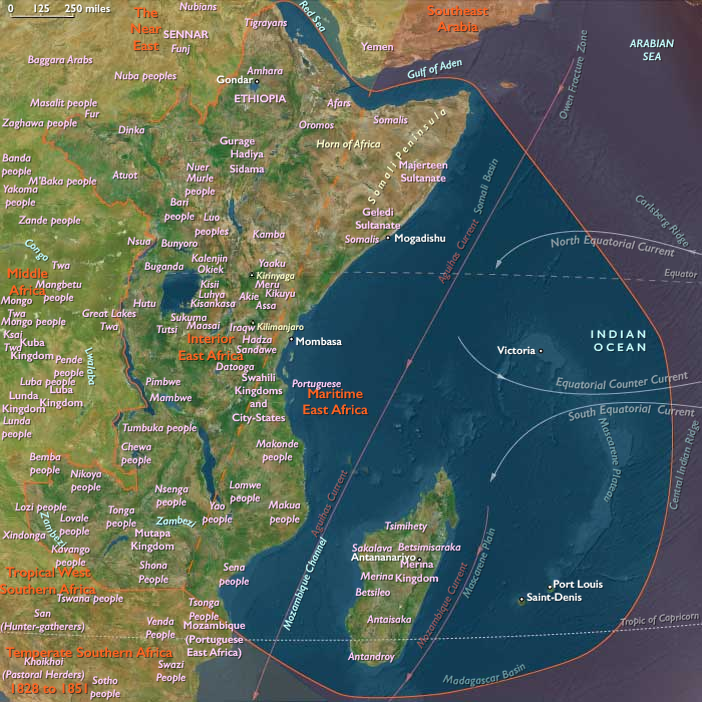
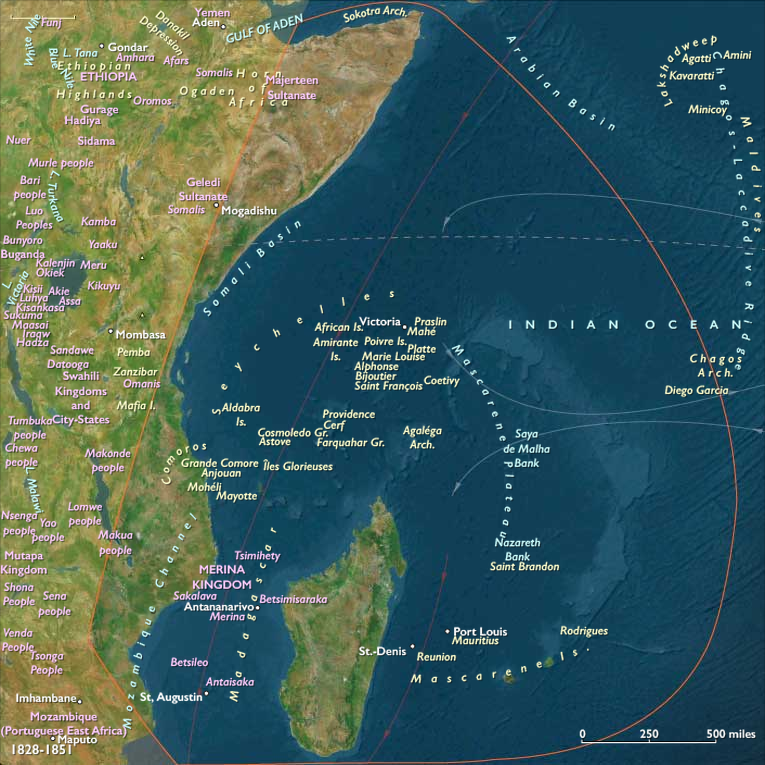
From 1828 to 1839 CE, Maritime East Africa—including Mauritius, Seychelles, Madagascar, and the Swahili Coast—undergoes pivotal transformations marked by the abolition of slavery, profound social restructuring, significant missionary influence, and complex political dynamics.
Mauritius: Abolition of Slavery and Economic Transition
In Mauritius, plantation owners of French origin (Franco-Mauritians) have vigorously resisted British efforts to abolish slavery. Nevertheless, under sustained British pressure, slavery is finally abolished in 1835. To appease the powerful planter class, the British government grants substantial concessions, including financial compensation totaling £2.1 million and enforced "apprenticeship" for former enslaved persons, compelling them to remain on plantations for another six years.
However, widespread desertions among the so-called apprentices create a severe labor shortage, forcing authorities to abandon the apprenticeship system in 1838, two years ahead of schedule. This abrupt shift dramatically reshapes the island's economy, leading to increased reliance on indentured laborers from India in subsequent decades.
Seychelles: Post-Abolition Migration and Cultural Integration
In the Seychelles, slavery is abolished in 1834, triggering a significant demographic and social shift. Many impoverished European settlers leave the islands, taking their former slaves with them. Subsequently, the British navy brings in large numbers of liberated Africans, rescued from slave ships intercepted along the East African coast, dramatically altering the islands’ demographic makeup.
The arrival of small groups of traders from China, Malaysia, and India adds to this diversity, with these groups primarily engaging in commerce. A pattern of extensive intermarriage among African, European, and Asian populations emerges (with the notable exception of the Indian community), creating a highly mixed society. By 1911, racial classifications become effectively meaningless due to this extensive integration and are ultimately abandoned.
Madagascar: Radical Reform and Conservative Backlash
In Madagascar, Radama I (r. 1810–1828) had significantly modernized and centralized the island’s administration, inviting Protestant missionaries from the London Missionary Society to establish schools, introduce the printing press, and devise a written form of the local language (Malagasy), using the Latin alphabet. By 1828, thousands of Merina individuals had become literate, and a select few students traveled to Britain for education. These efforts dramatically reshape the cultural landscape, fostering the development of a literate Merina elite and widespread Protestant conversion.
The accession of Queen Ranavalona I (r. 1828–1861) marks a stark shift. Reacting strongly against foreign influence, Ranavalona I's reign is characterized by isolationism, persecution of Protestant converts, and stringent control over trade. Many Europeans flee, although a privileged few, such as the French artisan Jean Laborde, continue to enjoy special favor. Laborde establishes a significant manufacturing complex at Mantasoa, near Antananarivo, producing silk, soap, guns, tools, and cement, highlighting a paradoxical embrace of limited modernization within a broadly reactionary political framework.
Swahili Coast: Omani Influence and Local Resistance
On the Swahili Coast, Omani control remains robust, notably under Sultan Sa'id bin Sultan, who asserts his authority firmly against local resistance—especially in strategically important cities like Mombasa and islands such as Zanzibar and Pemba. British naval forces temporarily intervene (1824–1826) on behalf of Oman but eventually withdraw. Continued local resistance, notably from the Mazrui dynasty, persists, reflecting sustained tension between Omani rulers and indigenous populations.
Malawi and Mozambique:
In the early nineteenth century, southern Malawi sees the establishment of missionary settlements, particularly the Scottish-founded town of Blantyre (named after the birthplace of explorer David Livingstone). These missions introduce new economic and agricultural practices, gradually transforming regional socioeconomic patterns. Meanwhile, central and northern Mozambique continue under Portuguese influence, their coastal settlements serving as pivotal hubs for trade in ivory, gold, and enslaved people, maintaining regional economic significance amid growing European imperial interests.
Legacy of the Age
The period from 1828 to 1839 CE in Maritime East Africa is marked by significant social and political transformations: the end of institutional slavery profoundly reshapes economic structures in Mauritius and Seychelles, triggering demographic and cultural shifts. Madagascar experiences dramatic swings between progressive modernization and conservative isolationism, profoundly influencing its political and social trajectory. The Swahili Coast continues its complex interplay between Omani dominance and resilient local identities, setting the stage for further colonial and imperial contests in the coming decades.
People
Groups
- Austronesian peoples
- Bantu peoples
- Arab people
- Omanis
- Somalis
- Madagascar
- Nilotic peoples
- Merina people
- Swahili people
- Comoro Islands
- Islam
- Antanosy people
- Kilwa Sultanate
- Mecca, Sharifate of
- Ajuran Sultanate
- Anglicans (Episcopal Church of England)
- Merina, Kingdom of
- Mauritius, Dutch
- Oman, Second Imamate of
- Mazrui
- Britain, Kingdom of Great
- East India Company, British (United Company of Merchants of England Trading to the East Indies)
- Oman, Sultanate of
- London Missionary Society
Commodoties
Subjects
Regions
Subregions
Related Events
Showing 10 events out of 19829 total
Years: 1828 - 1839
People
Groups
- Austronesian peoples
- Bantu peoples
- Arab people
- Omanis
- Somalis
- Madagascar
- Nilotic peoples
- Merina people
- Swahili people
- Comoro Islands
- Islam
- Antanosy people
- Kilwa Sultanate
- Mecca, Sharifate of
- Ajuran Sultanate
- Anglicans (Episcopal Church of England)
- Merina, Kingdom of
- Mauritius, Dutch
- Oman, Second Imamate of
- Mazrui
- Britain, Kingdom of Great
- East India Company, British (United Company of Merchants of England Trading to the East Indies)
- Oman, Sultanate of
- London Missionary Society
Commodoties
Subjects
Regions
Subregions