
Maritime East Africa (1684–1827 CE): Omani Ascendancy, …
Years: 1684 - 1827
Maritime East Africa (1684–1827 CE): Omani Ascendancy, Malagasy Kingdoms, and Island Crossroads
Geographic & Environmental Context
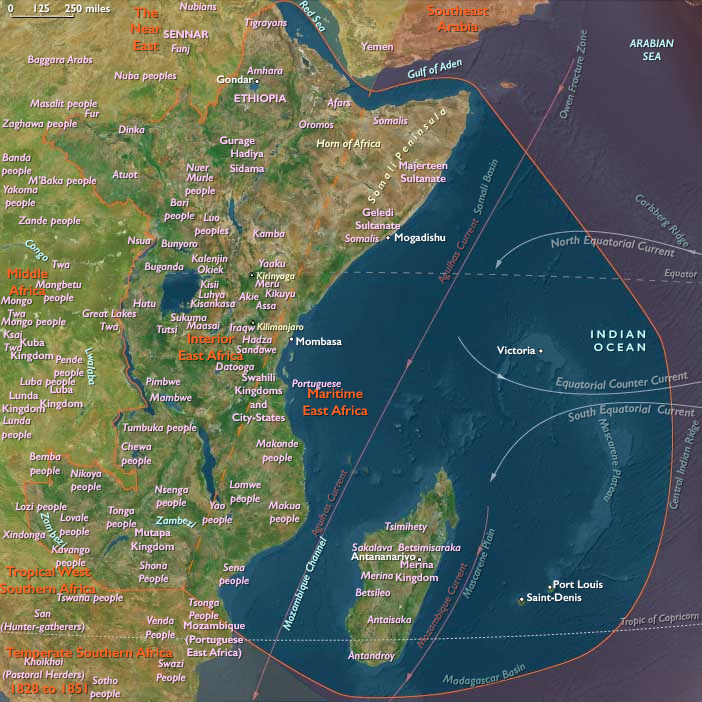
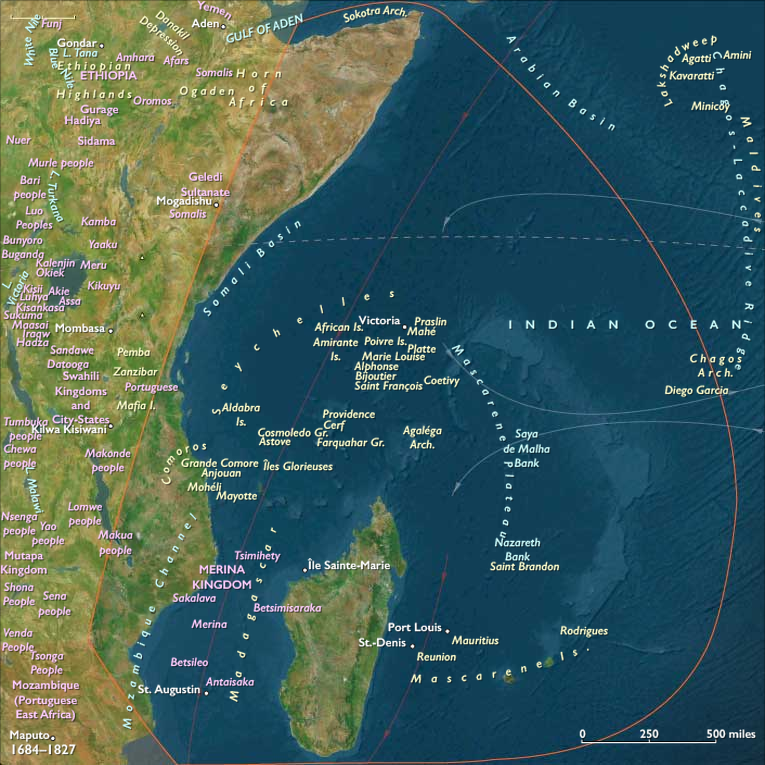
The subregion of Maritime East Africa includes Somalia, eastern Ethiopia, eastern Kenya, eastern Tanzania and its islands, northern Mozambique, the Comoros, Madagascar, Mauritius, and Seychelles. Anchors included the Swahili port cities (Mombasa, Zanzibar, Kilwa, Sofala, Mogadishu), the offshore islands of Zanzibar, Pemba, and the Comoros, the highlands and rice terraces of Madagascar, and the outlying islands of Mauritius and Seychelles.During this period, Portuguese coastal dominance receded and Omani Arabs asserted control, reshaping trade and political authority across the Indian Ocean rim.
Climate & Environmental Shifts
The waning Little Ice Age produced cycles of drought and flood. Pastoral Horn communities faced grazing crises; coastal farmers diversified subsistence with cassava, maize, and bananas. Madagascar experienced alternating famine and abundance: drought struck southern regions, while the highlands expanded irrigated rice. Cyclones occasionally battered the Comoros, Mauritius, and Seychelles.
Subsistence & Settlement
-
Swahili towns: Retained Islamic, mercantile character; hinterland caravans carried ivory, slaves, and gold. Cassava and maize, by now entrenched, expanded diets.
-
Zanzibar and Pemba: Grew coconuts, rice, and cloves (clove plantations expanded in the early 19th century under Omani rule). Fishing and trade supported islanders.
-
Comoros: Balanced subsistence gardens, rice paddies, fishing, and inter-island commerce; communities rebuilt repeatedly after cyclones.
-
Madagascar: Merina kingdom in the central highlands expanded under Andrianampoinimerina (r. c. 1787–1810), consolidating rice terraces, tribute systems, and iron-armed armies. The Sakalava maintained coastal cattle-based polities, raiding for slaves.
-
Mauritius and Seychelles: Colonized by the French in the 18th century; developed sugar plantations using enslaved labor.
Technology & Material Culture
Swahili towns featured coral-stone mosques, minarets, and merchant houses with carved doors. Dhows with lateen sails carried regional cargoes. Firearms, imported via Omani and European trade, armed coastal and Malagasy polities. On Madagascar, rice irrigation systems, cattle corrals, and fortified hilltop villages symbolized power. French colonists built sugar mills on Mauritius; Seychellois settlers planted coconuts and food gardens.
Movement & Interaction Corridors
-
Omani ascendancy: By the late 17th century, Oman expelled Portugal from Mombasa (1698) and gradually claimed authority over Swahili ports, consolidating Zanzibar as a capital of Indian Ocean commerce.
-
Ivory and slave caravans: Moved inland from Tanzania and Mozambique toward coastal entrepôts, feeding growing Omani and French demand.
-
Madagascar: Exported slaves and cattle to the Mascarenes and Swahili coast; imported textiles, firearms, and beads.
-
Comoros: Functioned as provisioning islands for dhows, slavers, and European ships rounding the Cape.
-
Mauritius and Seychelles: Integrated into the French colonial empire as plantation colonies, with enslaved Africans imported from Mozambique and Madagascar.
Cultural & Symbolic Expressions
Islam remained central to Swahili towns: mosques, madrasas, and Arabic-script poetry thrived. Omani authority patronized Islamic judges and scholars. On Madagascar, ancestor veneration, tomb construction, and cattle rituals anchored Merina and Sakalava legitimacy; Merina rulers combined ritual kingship with bureaucratic tribute. The Comoros developed Islamic scholarship blended with local ritual. In the Mascarenes, French Catholicism, African traditions, and creole cultures fused in plantation societies.
Environmental Adaptation & Resilience
Coastal and island farmers diversified crops—cassava, maize, bananas—buffering drought. Highland Merina expanded rice terraces to secure food supplies. Sakalava herders maintained cattle herds across shifting pastures. Island societies rebuilt after cyclones, replanting coconuts and rice paddies. Plantation colonies relied on enslaved labor for resilience, but suffered when storms or droughts disrupted supply lines.
Technology & Power Shifts (Conflict Dynamics)
Portuguese forts weakened as Oman asserted dominance; cannon and ships secured Zanzibar and Mombasa. Omani sultans organized tribute and port governance, tying the coast to Muscat. Slave and ivory raiding expanded inland, destabilizing societies in Tanzania, Mozambique, and Madagascar. The Merina kingdom grew into a centralized power, conquering neighbors with firearms and reorganizing tribute. In the Mascarenes, French planters entrenched slavery; enslaved resistance and marronage persisted.
Transition
By 1827 CE, Maritime East Africa had entered a new era. Omani Zanzibar dominated the Swahili coast, dispatching dhows across the Indian Ocean. Madagascar saw the rise of the powerful Merina kingdom, while coastal Sakalava still controlled raiding zones. The Comoros remained small but strategic. Mauritius and Seychelles functioned as French plantation colonies, later to be contested by Britain. The balance of power had shifted: Portuguese authority had receded, Omani Arabs and Malagasy monarchs had risen, and European plantation regimes had taken root—setting the stage for the 19th-century surge in slave and ivory exports.
People
Groups
- Austronesian peoples
- Bantu peoples
- Arab people
- Omanis
- Somalis
- Madagascar
- Nilotic peoples
- Sakalava people
- Merina people
- Swahili people
- Comoro Islands
- Islam
- Antanosy people
- Kilwa Sultanate
- Mecca, Sharifate of
- Ajuran Sultanate
- Merina, Kingdom of
- Mauritius, Dutch
- Oman, Second Imamate of
- Mazrui
- Boina, Sakalava Kingdom of
- Britain, Kingdom of Great
- East India Company, British (United Company of Merchants of England Trading to the East Indies)
- Betsimisaraka confederation
- Oman, Sultanate of
Commodoties
Subjects
Regions
Subregions
Related Events
Showing 10 events out of 45 total
Years: 1684 - 1827
People
Groups
- Austronesian peoples
- Bantu peoples
- Arab people
- Omanis
- Somalis
- Madagascar
- Nilotic peoples
- Sakalava people
- Merina people
- Swahili people
- Comoro Islands
- Islam
- Antanosy people
- Kilwa Sultanate
- Mecca, Sharifate of
- Ajuran Sultanate
- Merina, Kingdom of
- Mauritius, Dutch
- Oman, Second Imamate of
- Mazrui
- Boina, Sakalava Kingdom of
- Britain, Kingdom of Great
- East India Company, British (United Company of Merchants of England Trading to the East Indies)
- Betsimisaraka confederation
- Oman, Sultanate of
Commodoties
Subjects
Regions
Subregions