
Maritime East Africa (1792–1803 CE): Intensifying European …
Years: 1792 - 1803
Maritime East Africa (1792–1803 CE): Intensifying European Rivalries and Omani Consolidation
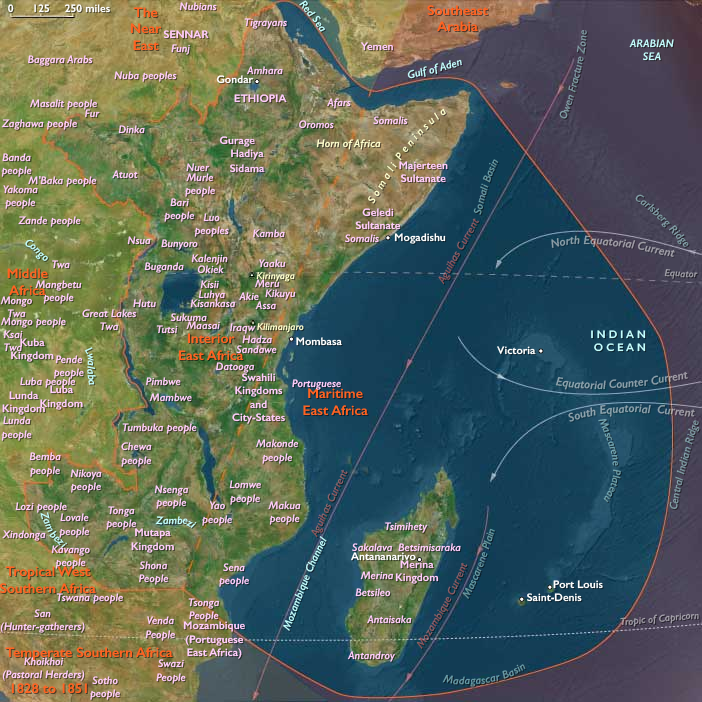
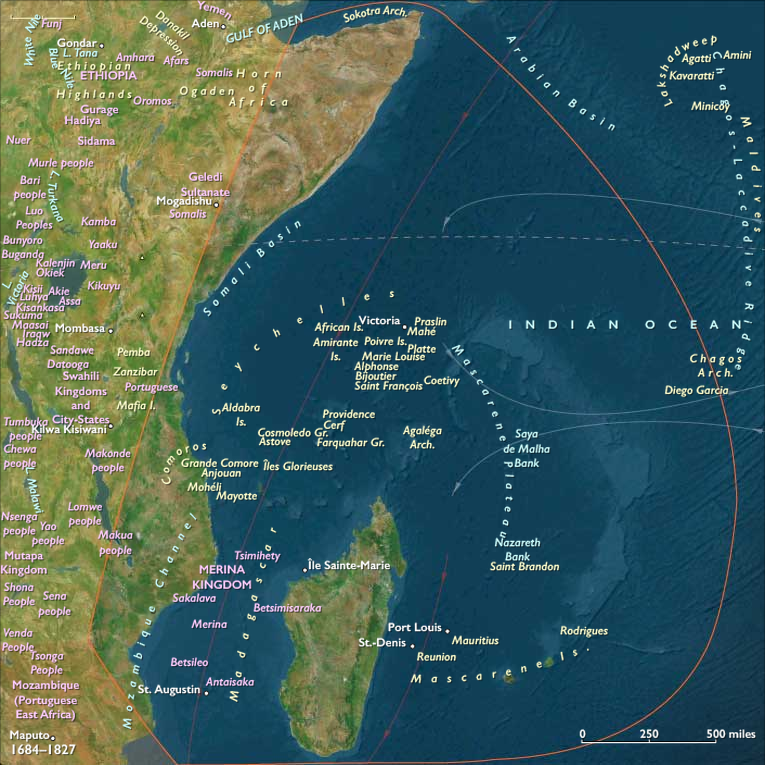
From 1792 to 1803 CE, Maritime East Africa—including the Swahili Coast, Comoros, Madagascar, Mauritius, Seychelles, and Somali coastal cities—witnesses increased European strategic competition, solidification of Omani political authority, and ongoing local resistance and economic dynamism.
Heightened European Naval Competition
The rivalry between Britain and France in the Indian Ocean region becomes more acute, particularly around strategic islands such as Mauritius (Isle de France) and Réunion (Île Bourbon). Both islands continue to serve as crucial naval bases and trading centers for the French, becoming frequent targets for British naval interference.
Strengthened Omani Rule on the Swahili Coast
Omani dominance consolidates further along the Swahili Coast. Zanzibar reinforces its central economic role, thriving from its expanding trade in cloves, ivory, and the continuing demand for enslaved labor. This economic strength enables the Omanis to maintain robust administrative and military structures throughout the region.
Persistent Local Resistance in Mombasa
In Mombasa, continued local resistance challenges Omani authority. Despite the presence of Fort Jesus and strong Omani military oversight, periodic rebellions highlight enduring tensions and a local determination to maintain autonomy.
Political Instability and Prosperity in the Comoros
The Comoros Islands experience ongoing political instability due to competing sultanates, yet their strategic maritime position enables sustained economic prosperity. Trade remains vigorous in commodities such as spices, ambergris, enslaved persons, and agricultural goods, drawing European and Arab traders alike.
Madagascar: Autonomous Kingdoms and Resilience
The indigenous kingdoms of Madagascar, notably the Merina Kingdom, persistently resist European attempts at domination. These Malagasy societies further strengthen their agricultural base, trade networks, and political structures, effectively maintaining their autonomy and limiting foreign influence.
Somali Coastal Cities: Diplomatic Autonomy
Somali coastal centers such as Mogadishu, Merca, and Baraawe sustain their independence through adept diplomatic maneuvering and vibrant maritime commerce. Their strategic positions ensure continued prosperity and autonomy amid growing external pressures.
Seychelles and Mauritius: European Economic and Naval Importance
Mauritius remains under French control, with Port Louis thriving as a naval stronghold and prosperous economic center focused on sugar production. Meanwhile, the Seychelles attract increased European navigational interest due to their strategic location and resources, foreshadowing future colonial ambitions.
Cultural Vitality and Integration
Across the Swahili Coast and broader Maritime East Africa, local cultures persistently integrate external influences while maintaining distinct identities. Islam continues to be a unifying cultural and religious force, underpinning social resilience amid shifting political and economic conditions.
Legacy of the Era
The period from 1792 to 1803 CE is marked by intensifying European competition, reinforced Omani rule, resilient indigenous kingdoms, and sustained regional economic vitality. These developments lay the critical groundwork for transformations in Maritime East Africa in the nineteenth century.
Groups
- Austronesian peoples
- Bantu peoples
- Arab people
- Omanis
- Somalis
- Madagascar
- Nilotic peoples
- Persian Empire, Sassanid, or Sasanid
- Merina people
- Swahili people
- Comoro Islands
- Islam
- Antanosy people
- Kilwa Sultanate
- Mecca, Sharifate of
- Ajuran Sultanate
- Ottoman Empire
- Merina, Kingdom of
- Abyssinia (also called "Mecca and Medina"), Ottoman eyalet of
- France, (Bourbon) Kingdom of
- Mauritius, Dutch
- Oman, Second Imamate of
- Britain, Kingdom of Great
- Oman, Sultanate of
Commodoties
Subjects
Regions
Subregions
Related Events
Showing 10 events out of 23942 total
Years: 1792 - 1803
Groups
- Austronesian peoples
- Bantu peoples
- Arab people
- Omanis
- Somalis
- Madagascar
- Nilotic peoples
- Persian Empire, Sassanid, or Sasanid
- Merina people
- Swahili people
- Comoro Islands
- Islam
- Antanosy people
- Kilwa Sultanate
- Mecca, Sharifate of
- Ajuran Sultanate
- Ottoman Empire
- Merina, Kingdom of
- Abyssinia (also called "Mecca and Medina"), Ottoman eyalet of
- France, (Bourbon) Kingdom of
- Mauritius, Dutch
- Oman, Second Imamate of
- Britain, Kingdom of Great
- Oman, Sultanate of
Commodoties
Subjects
Regions
Subregions