
Maritime East Africa (1684–1695 CE): Shifts in …
Years: 1684 - 1695
Maritime East Africa (1684–1695 CE): Shifts in European Influence and Continued Regional Resilience
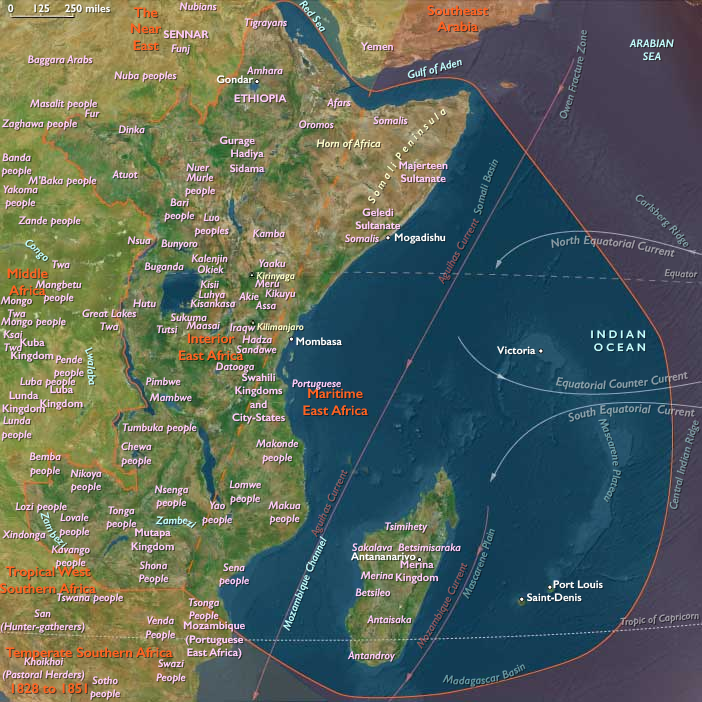
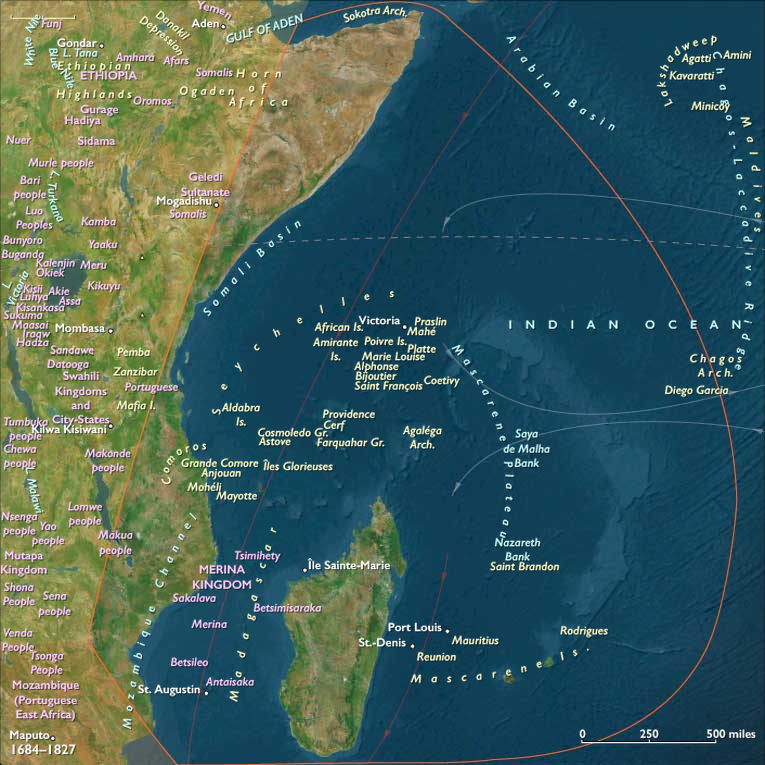
From 1684 to 1695 CE, Maritime East Africa—encompassing the Swahili Coast, Comoros, Madagascar, Mauritius, Seychelles, and Somali coastal cities—undergoes significant transformations as European colonial interests recalibrate, local political dynamics evolve, and trade networks adapt to shifting external and internal pressures.
Portuguese Decline and Omani Ascendancy
The era sees a marked decline in Portuguese influence along the East African coast. Continuous local resistance, logistical difficulties, and fierce competition from rival European powers increasingly weaken their control over strategic trading posts such as Kilwa, Sofala, and Mombasa.
Omani Arabs, already deeply involved in the region’s maritime trade, capitalize on Portuguese vulnerabilities, intensifying their presence. This leads to the gradual emergence of Omani dominance, particularly in areas like Zanzibar and Mombasa, setting the stage for future Omani expansion and political control.
Comoros: Sultanates and Trade Continuity
In the Comoros archipelago, local sultanates maintain their strategic trade activities, particularly in spices, ambergris, rice, and slaves. These trade goods continue to attract merchants from Europe, the Middle East, and India, ensuring sustained prosperity despite occasional political rivalries among the sultanates of Njazidja and Nzwani.
Madagascar: Shifting Alliances and Internal Consolidation
After the devastating French withdrawal following the massacre at Tolanaro (Fort Dauphin) in 1674, Madagascar sees local kingdoms further consolidate their positions. In the central highlands, the Merina kingdom advances significantly, enhancing its sophisticated rice cultivation techniques and political structures. This internal strengthening sets a foundation for future political dominance across Madagascar.
Coastal communities adapt swiftly to shifting trade patterns, maintaining significant autonomy in interactions with visiting European and Arab traders, ensuring their economic resilience despite external volatility.
Somali Coast: Strategic Stability and Economic Resilience
The Somali coastal cities—especially Mogadishu, Berbera, and Merca—retain economic importance due to their strategic positions along Indian Ocean trade routes. These cities manage to preserve their autonomy through alliances and diplomatic maneuvers, notably against fading Portuguese threats and the emerging influence of the Ottoman Turks.
Inland, the legacy of the Ajuran state continues to shape local political and economic structures, though its political unity is increasingly challenged by regional fragmentation and external pressures.
Early European Exploration of Seychelles and Mauritius
European interest in the Seychelles and Mauritius persists, though no stable European settlements take root during this brief era. Following the abandonment of Dutch colonial attempts in Mauritius in 1664, European visits become sporadic, focusing largely on occasional exploration and resource extraction without establishing lasting colonial footholds.
Cultural and Commercial Continuity
Throughout this period, the resilience of Swahili culture along the East African coast and Islamic traditions within coastal city-states remain strong. Educational and religious centers sustain their prominence, facilitating the continued integration of diverse cultural influences.
Legacy of the Era
From 1684 to 1695 CE, Maritime East Africa demonstrates notable adaptability amid shifting colonial pressures. The decline of Portuguese power allows local and Omani interests to realign political and economic networks. Comorian and Malagasy societies continue internal consolidation, positioning themselves strategically for future developments. These shifts mark a transitional yet critical period, significantly shaping subsequent colonial and regional interactions.
People
Groups
- Khoisan
- Austronesian peoples
- Bantu peoples
- Arab people
- Omanis
- Somalis
- Madagascar
- Nilotic peoples
- Persian Empire, Sassanid, or Sasanid
- Dutch people
- Merina people
- Swahili people
- Comoro Islands
- Islam
- Antanosy people
- Kilwa Sultanate
- Mecca, Sharifate of
- Ajuran Sultanate
- Portugal, Avizan (Joannine) Kingdom of
- Ottoman Empire
- Merina, Kingdom of
- Netherlands, United Provinces of the (Dutch Republic)
- France, (Bourbon) Kingdom of
- Mauritius, Dutch
Topics
- Colonization of Asia, Portuguese
- Colonization of Asia, Dutch
- Colonization of Asia, French
- Fort Dauphin, Massacre of
Commodoties
Subjects
Regions
Subregions
Related Events
Showing 10 events out of 30218 total
Years: 1684 - 1695
People
Groups
- Khoisan
- Austronesian peoples
- Bantu peoples
- Arab people
- Omanis
- Somalis
- Madagascar
- Nilotic peoples
- Persian Empire, Sassanid, or Sasanid
- Dutch people
- Merina people
- Swahili people
- Comoro Islands
- Islam
- Antanosy people
- Kilwa Sultanate
- Mecca, Sharifate of
- Ajuran Sultanate
- Portugal, Avizan (Joannine) Kingdom of
- Ottoman Empire
- Merina, Kingdom of
- Netherlands, United Provinces of the (Dutch Republic)
- France, (Bourbon) Kingdom of
- Mauritius, Dutch
Topics
- Colonization of Asia, Portuguese
- Colonization of Asia, Dutch
- Colonization of Asia, French
- Fort Dauphin, Massacre of
Commodoties
Subjects
Regions
Subregions