
The Hook and Cod Wars: The Succession …
Years: 1350 - 1350
The Hook and Cod Wars: The Succession Crisis in Holland (1350)
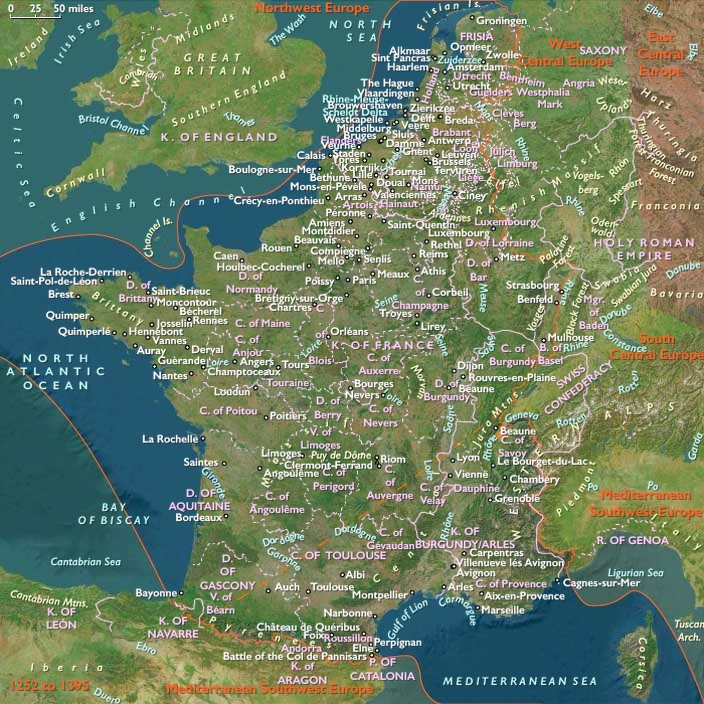
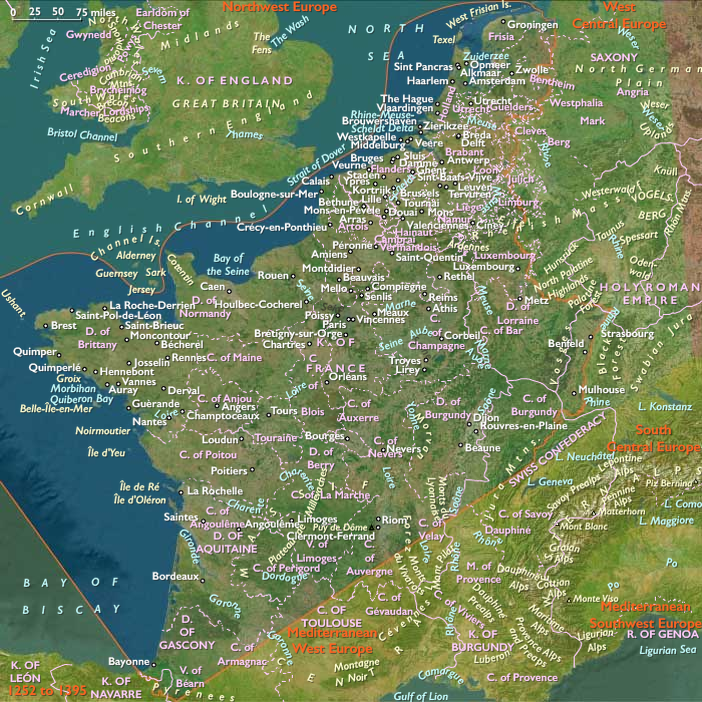
In 1345, Margaret of Bavaria, sister of the late Count William IV of Hainaut, inherited the County of Hainaut, Holland, and Zeeland after her brother was killed at the Battle of Warns. However, as she was married to Emperor Louis IV of Bavaria and resided in Bavaria, she appointed her second son, William (later William V), to govern Holland as her representative.
By 1350, tensions had risen between William and his mother’s supporters, leading to the formation of two rival factions, the Cods and the Hooks, and igniting a civil war in Holland.
The Growing Divide: Margaret’s Return to Holland
- The Hollandic nobility, dissatisfied with William’s rule, invited Margaret to return from Bavaria in 1350 to reclaim direct authority over the county.
- This move split the nobility, as some supported Margaret’s return, while others remained loyal to William’s rule.
The Formation of the Cod and Hook Leagues
As tensions escalated, two political factions emerged:
-
The Cod League (May 23, 1350)
- Formed by supporters of William V.
- Primarily consisted of burghers and the urban merchant elite, who favored strong centralized rule and economic stability.
-
The Hook League (September 5, 1350)
- Formed by Margaret’s supporters, mostly nobles who opposed William’s control.
- Included landed aristocrats and rural elites, who sought to maintain traditional feudal privileges.
Civil War Breaks Out (1350–1354)
- Clashes between the Cods and Hooks soon erupted into open warfare across Holland and Zeeland.
- The conflict was not just about succession but also reflected social and economic divisions, with urban factions supporting William and the feudal nobility backing Margaret.
- The war would continue for four years, drawing in external forces and shaping Holland’s political landscape for generations.
Significance and Legacy
- The Hook and Cod Wars were among the earliest documented factional struggles in the Low Countries, influencing future power struggles in the region.
- The conflict weakened Holland’s stability, making it a target for external intervention, including from the Dukes of Burgundy in the late 14th century.
- The dispute between Margaret and William V would eventually be settled in 1354, but the rivalry between Cods and Hooks persisted for over a century, continuing to affect Dutch politics well into the 16th century.
The Hook and Cod Wars of 1350 marked a pivotal moment in the political evolution of Holland, highlighting the tensions between centralized authority and feudal autonomy, as well as the growing power of urban elites in medieval Europe.
Locations
People
Groups
- Burgundy, Duchy of
- Christians, Roman Catholic
- Hainaut, County of
- Holland, County of
- England, (Plantagenet, Angevin) Kingdom of
- Brabant, Duchy of
- Zeeland, County of
- Bavaria-Straubing, Wittelsbach Duchy of
Topics
Subjects
Regions
Subregions
Years: 1350 - 1350
Locations
People
Groups
- Burgundy, Duchy of
- Christians, Roman Catholic
- Hainaut, County of
- Holland, County of
- England, (Plantagenet, Angevin) Kingdom of
- Brabant, Duchy of
- Zeeland, County of
- Bavaria-Straubing, Wittelsbach Duchy of
Topics
Subjects
Regions
Subregions