
The Death of Margaret II of Hainaut …
Years: 1356 - 1356
The Death of Margaret II of Hainaut and William V’s Consolidation of Power (1356)
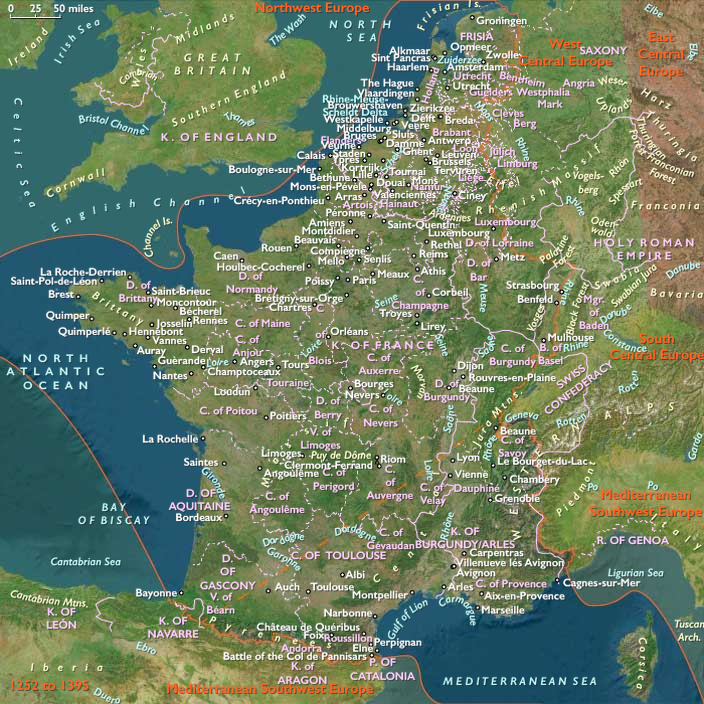
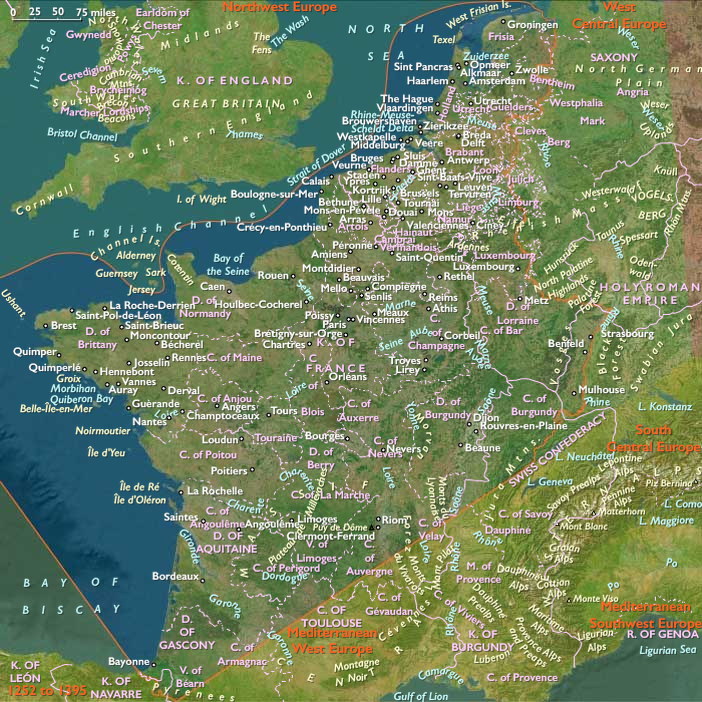
In July 1356, Margaret II of Hainaut died, leaving her son, William V, Count of Holland and Hainaut, in possession of the entire Holland-Hainaut inheritance. With her passing, the long-running Hook and Cod Warsbetween Margaret and William officially came to an end, as William was now undisputed ruler of these territories.
William V’s Rule Over Holland and Hainaut
- After years of civil conflict, William now controlled Holland, Zeeland, and Hainaut, unifying the strategic lands of the Low Countries.
- His reign continued to be shaped by internal power struggles between the urban elite (Cods) and the noble factions (Hooks), though he emerged as a strong ruler.
Marriage to Maud of Lancaster
- William V was married to Maud of Lancaster, a sister of Blanche of Lancaster.
- This marriage strengthened his ties to the English royal family, as Blanche was married to John of Gaunt, Duke of Lancaster, a key figure in English politics and the Hundred Years' War.
- These connections aligned William with English interests, further embedding Holland and Hainaut into the broader Anglo-French conflicts.
Legacy and Impact
- With Margaret’s death in 1356, William became the undisputed ruler of his domains, marking the end of the direct conflict between mother and son.
- His marriage to Maud of Lancaster cemented ties with England, potentially influencing future Dutch-English relations.
- However, William’s rule would later be overshadowed by his mental illness, leading to internal instability in Holland and Hainaut.
The death of Margaret II in 1356 marked the final resolution of the Hook and Cod Wars, allowing William V to rule a united Holland and Hainaut, though his reign would face future challenges.
Locations
People
Groups
Commodoties
Subjects
Regions
Subregions
Related Events
Showing 10 events out of 44108 total
Years: 1356 - 1356
Locations
People
Groups
Commodoties
Subjects
Regions
Subregions