
Marcus Vinicius, born the son of a …
Years: 14BCE - 14BCE
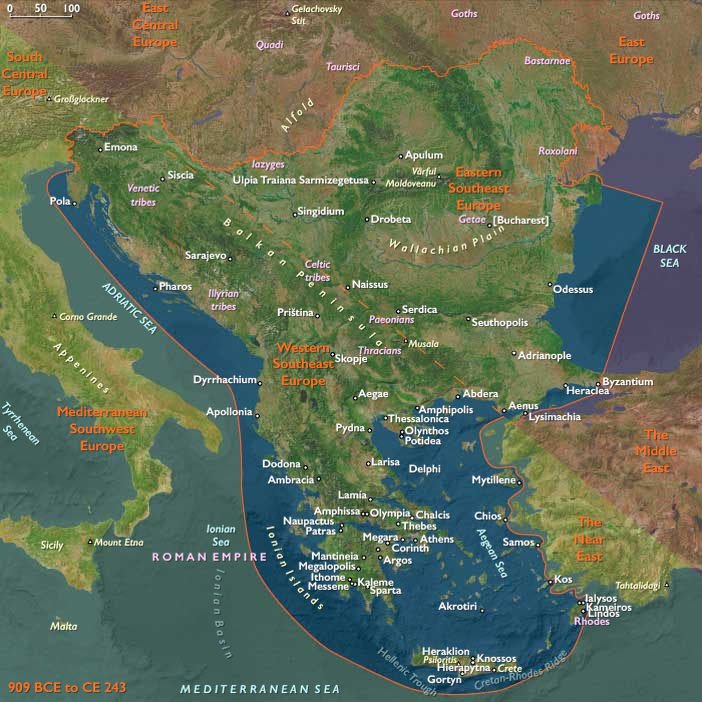
Marcus Vinicius, born the son of a Roman knight at Cales in Regio I (Latium et Campania) of Italia, had distinguished himself as legatus Augusti pro praetore (governor) of the Roman province of Gallia Belgica in 25 BCE, when he led a successful campaign into Germania.
At some point, Vinicius may also have served as governor of the Roman province of Achaea; an inscription from Corinth, dated to 18-12 BCE and honoring his fellow-general, and the Emperor's right-hand man, Agrippa, reveals that an administrative division of the city had been named the tribus Vinicia, apparently in Vinicius' honor.
In recognition of his services, Vinicius, the archetypal homo novus, had been appointed suffect consul in 19 BCE, replacing C. Sentius Saturninus and holding the office together with Q. Lucretius Vespillo.
After his consulship, Vinicius continues to be entrusted with important military commands.
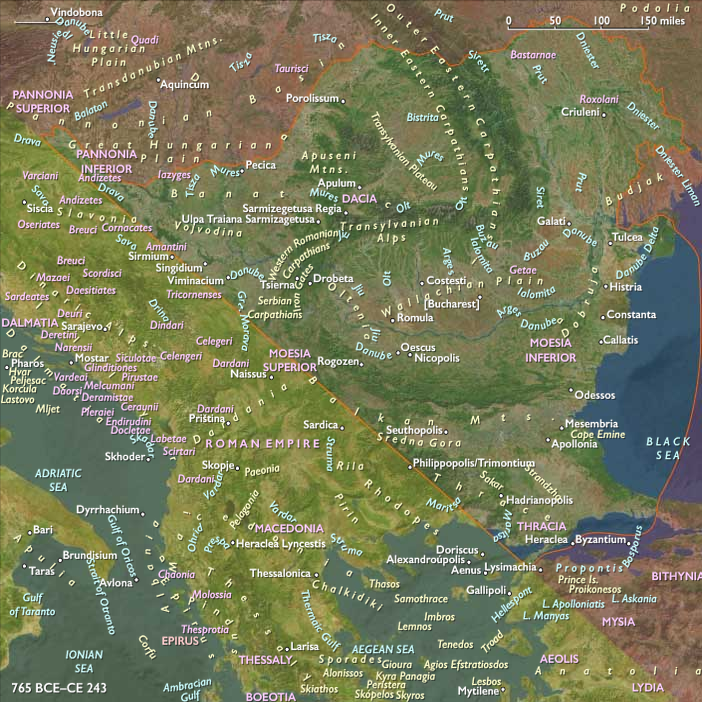
Starting in 14 or 13 BCE, Vinicius serves as governor of Illyricum where he is in charge of the early stages of the Roman conquest of Pannonia (the bellum Pannonicum, 14 - 9 BCE) until Augustus' stepson and future successor as Emperor, Tiberius, assumes overall command.
With the Scordisci as allies, Vinicius takes Sirmium.
During or shortly after this war, he becomes the first Roman general to campaign on the far side of the river Danube: he routs an army of Dacians and Bastarnae and subjugates the Celtic tribes of the Hungarian Plain.
Throughout his life, Vinicius seems to have enjoyed a close friendship with the emperor: the historian Suetonius quotes a letter by Augustus in which he talks about playing dice with Vinicius and his fellow homo novus, Publius Silius Nerva.
Locations
People
Groups
- Dacians, or Getae, or Geto-Dacians
- Celts
- Scordisci (Celtic tribe)
- Bastarnae (East Germanic tribe)
- Roman Principate (Rome)
Topics
Commodoties
Subjects
Regions
Subregions
Related Events
Showing 10 events out of 62140 total
Years: 14BCE - 14BCE
Locations
People
Groups
- Dacians, or Getae, or Geto-Dacians
- Celts
- Scordisci (Celtic tribe)
- Bastarnae (East Germanic tribe)
- Roman Principate (Rome)
Topics
Commodoties
Subjects
Regions
Subregions