
Marcus is soon assassinated and replaced in …
Years: 407 - 407
Marcus is soon assassinated and replaced in early 407 by Gratianus, acclaimed as emperor by the army in Britain.
His background, as recorded by Orosius, is that of a native Briton and one of the urban aristocracy.
He rules for four months at a time when a huge barbarian invasion is taking place in Gaul.
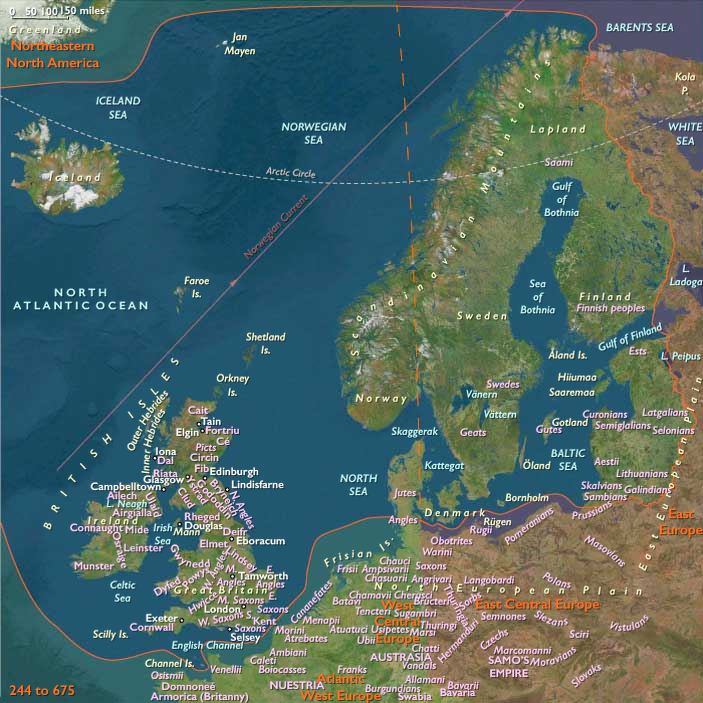
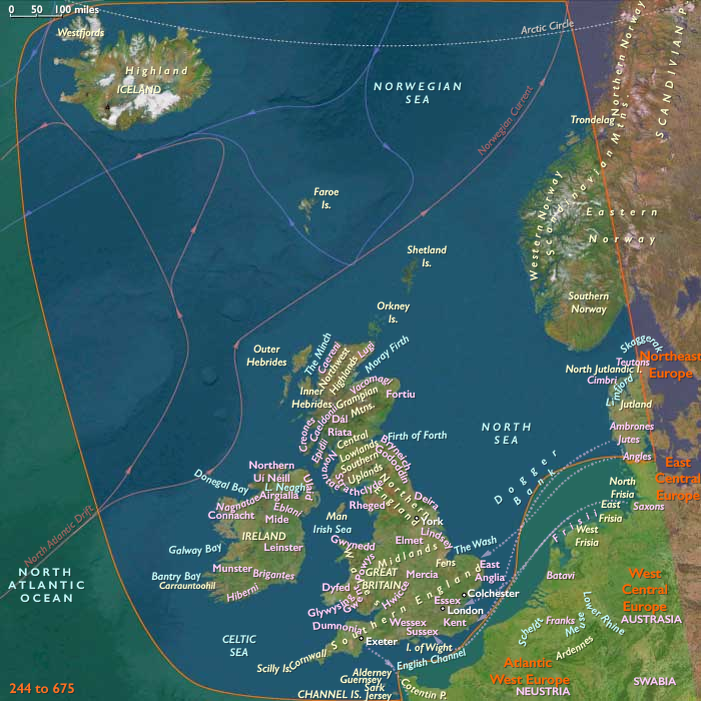
The Vandals, Suevi and Alans during 407 spread across northern Gaul towards Boulogne, and Zosimus writes that the troops in Britain feared an invasion across the English Channel.
The army wants to cross to Gaul and stop the barbarians but Gratian orders them to remain.
Unhappy with this, the troops kill him and choose Constantine III as their leader.
A common soldier but one of some ability, Constantine moves quickly.
He crosses the English Channel to the continent at Bononia and (historians have assumed) takes along with him all of the mobile troops left in Britain, thus denuding the province of any first line military protection and explaining their disappearance in the early fifth century.
This is generally seen as the beginning of Rome's withdrawal from Britain.
After three hundred and sixty years of occupation, the local regional British-Roman leaders raise their own levies for defense against Saxon sea rovers.
They cultivate oysters, having learned the technique from the Romans.
Locations
People
Groups
- Britons (historical)
- Alans (Sarmatian tribal grouping)
- Vandals (East Germanic tribe)
- Saxons
- Britain, Roman
- Suebi (Suevi), Realms of the
- Gaul, Diocese of
- Roman Empire: Theodosian dynasty (Constantinople)
- Roman Empire, Western (Ravenna)
Topics
- Middle Subatlantic Period
- Late Antiquity
- Migration Period
- Fall of the Western Roman Empire
- Stilicho's Wars with the Visigoths
- Vandal Raids on the Roman Empire
- Saxon Raids of 407-550
Commodoties
Subjects
Regions
Subregions
Related Events
Showing 10 events out of 59203 total
Years: 407 - 407
Locations
People
Groups
- Britons (historical)
- Alans (Sarmatian tribal grouping)
- Vandals (East Germanic tribe)
- Saxons
- Britain, Roman
- Suebi (Suevi), Realms of the
- Gaul, Diocese of
- Roman Empire: Theodosian dynasty (Constantinople)
- Roman Empire, Western (Ravenna)
Topics
- Middle Subatlantic Period
- Late Antiquity
- Migration Period
- Fall of the Western Roman Empire
- Stilicho's Wars with the Visigoths
- Vandal Raids on the Roman Empire
- Saxon Raids of 407-550
Commodoties
Subjects
Regions
Subregions