
Filters:
The armies of the two kings march …
Years: 1144 - 1155
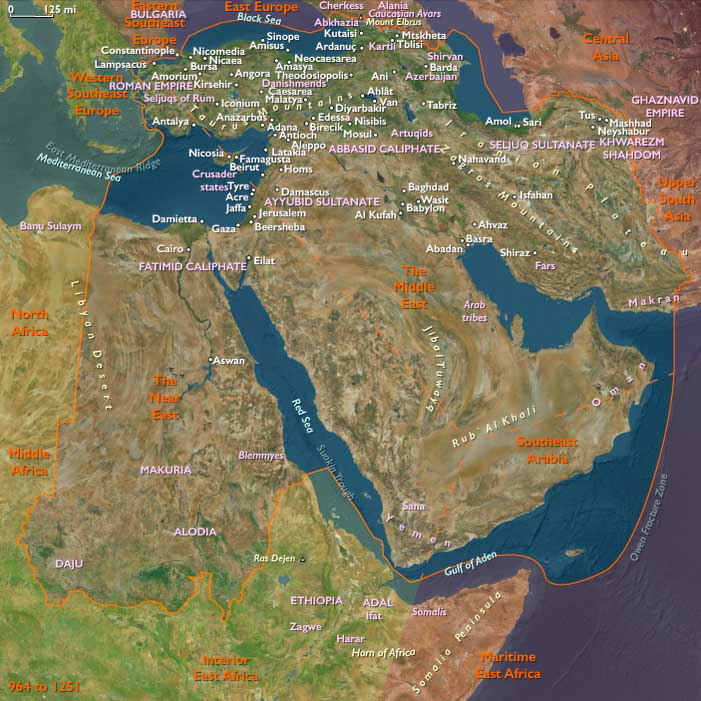
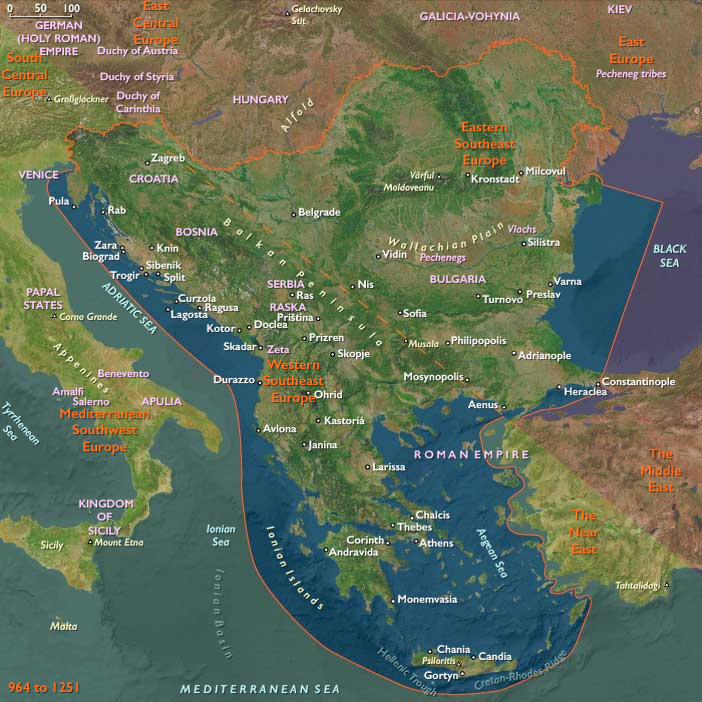
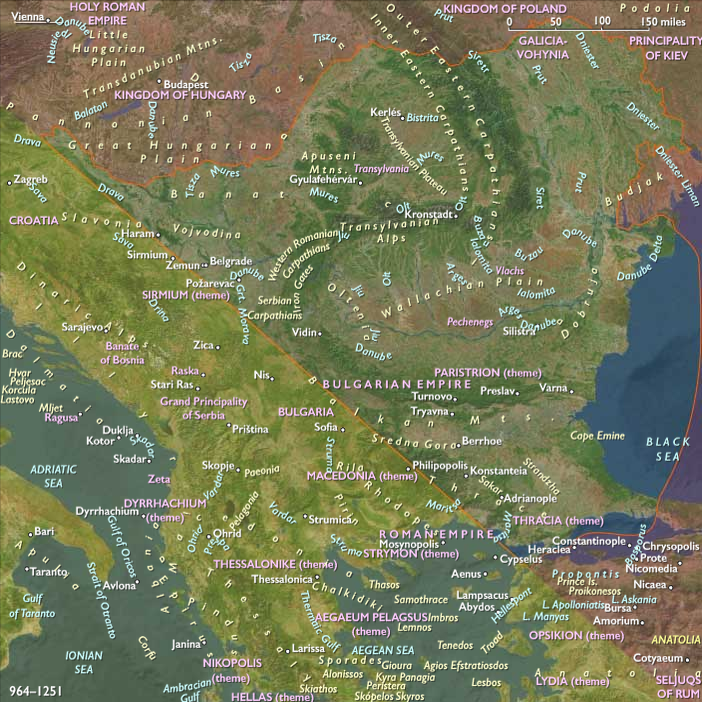
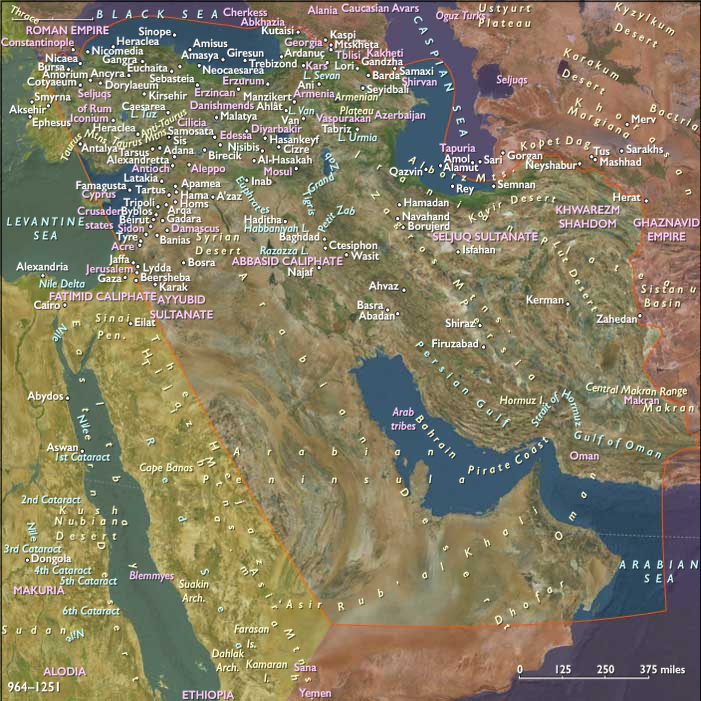
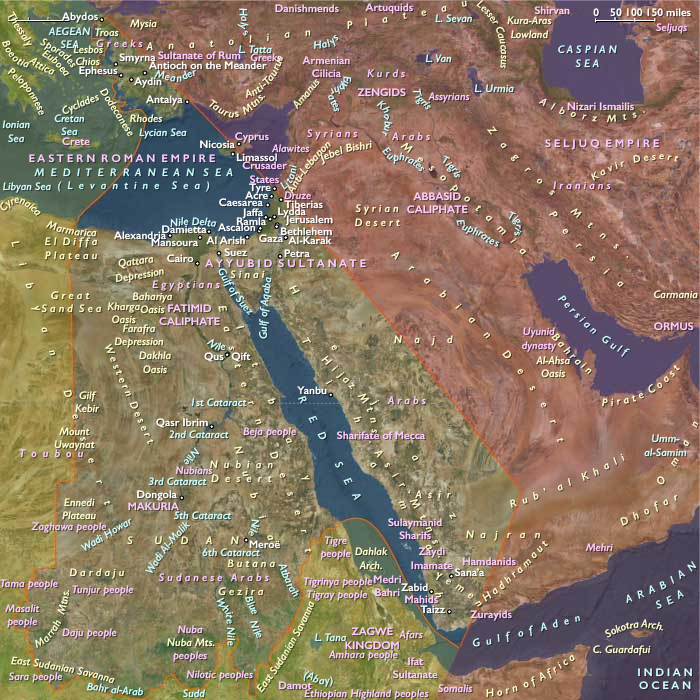
The armies of the two kings march separately across Europe and are somewhat hindered by Emperor Manuel; after crossing imperial territory into Anatolia, both armies are separately defeated by the Seljuq Turks.
Louis and Conrad and the remnants of their armies reach Jerusalem and, in 1148, participate in an ill-advised attack on Damascus.
The crusade in the east, a failure for the crusaders and a great victory for the Muslims, will ultimately lead to the fall of Jerusalem and the Third Crusade at the end of the twelfth century.
People
Groups
- Germans
- Oghuz Turks
- Greeks, Medieval (Byzantines)
- Islam
- Muslims, Sunni
- Flemish people
- Holy Roman Empire
- German, or Ottonian (Roman) Empire
- Turkmen people
- French people (Latins)
- France, (Capetian) Kingdom of
- Christians, Eastern Orthodox
- Christians, Roman Catholic
- Roman Empire, Eastern: Komnenos dynasty, restored
- Rûm, Sultanate of
- Jerusalem, Latin Kingdom of
- Damascus, Burid Emirate of
- Seljuq Empire, Western capital
Topics
- Reconquista, the
- Crusades, The
- Western Architecture: 1108 to 1252
- Renaissance of the Twelfth Century
- Crusade, Second
Subjects
Regions
Subregions
Related Events
Showing 6 events out of 6 total
Years: 1144 - 1155
People
Groups
- Germans
- Oghuz Turks
- Greeks, Medieval (Byzantines)
- Islam
- Muslims, Sunni
- Flemish people
- Holy Roman Empire
- German, or Ottonian (Roman) Empire
- Turkmen people
- French people (Latins)
- France, (Capetian) Kingdom of
- Christians, Eastern Orthodox
- Christians, Roman Catholic
- Roman Empire, Eastern: Komnenos dynasty, restored
- Rûm, Sultanate of
- Jerusalem, Latin Kingdom of
- Damascus, Burid Emirate of
- Seljuq Empire, Western capital
Topics
- Reconquista, the
- Crusades, The
- Western Architecture: 1108 to 1252
- Renaissance of the Twelfth Century
- Crusade, Second
Subjects
Regions
Subregions