
…Mantineia, which until the early fifth century …
Years: 471BCE - 471BCE
…Mantineia, which until the early fifth century BCE had been a cluster of five villages, but, at the suggestion of Argos, had been merged into one city.
Locations
People
Groups
- Argos, City-State of
- Tegea, City-State of
- Greece, classical
- Sparta, Kingdom of
- Thessalian League
- Peloponnesian League (Spartan Alliance)
Topics
Commodoties
Subjects
Regions
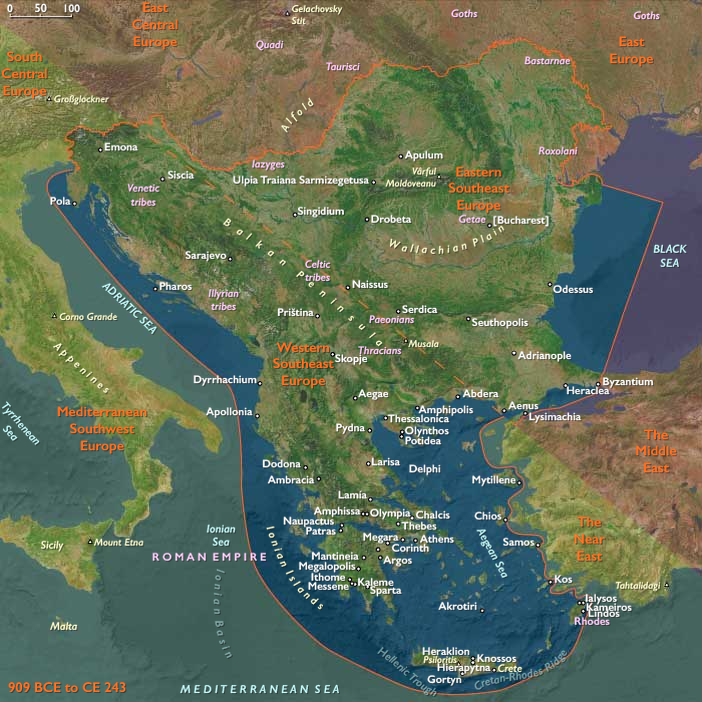
Subregions
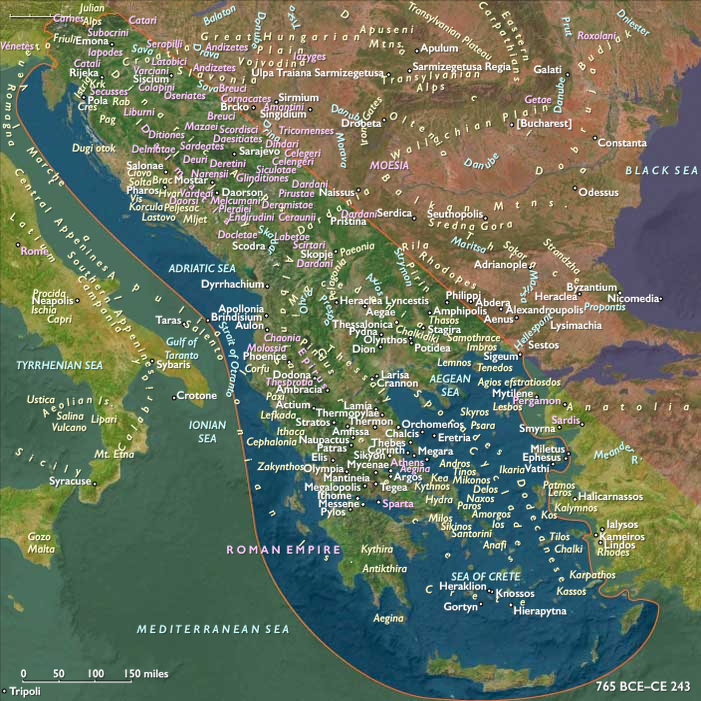
Related Events
Showing 10 events out of 65419 total
Years: 471BCE - 471BCE
Locations
People
Groups
- Argos, City-State of
- Tegea, City-State of
- Greece, classical
- Sparta, Kingdom of
- Thessalian League
- Peloponnesian League (Spartan Alliance)
Topics
Commodoties
Subjects
Regions
Subregions