
Mani, born an exceptionally gifted child of …
Years: 255 - 255
Mani, born an exceptionally gifted child of Iranian (Parthian) parentage in Babylon, had inherited his father's mystic temperament, and it is said that communications of a supernatural character came to him.
He had first encountered religion in his early youth while living with a Jewish-Christian ascetic group known as the Elcesaites, a subgroup of the Ebionites.
In his mid-twenties, he had come to believe that salvation was possible through education, self-denial, vegetarianism, fasting, and chastity.
He will later claim to be the Paraclete promised in the New Testament, the Last Prophet or Seal of the Prophets, finalizing a succession of men guided by God, which included figures such as Seth, Noah, Abraham, Shem, Nikotheos, Enoch, Zoroaster, Hermes, Plato, Buddha and Jesus.
Mani also follows the Indian holy books, the Puranas and the Kural.
Mani's first excursion had been to the Kushan Empire in northwestern India (several religious paintings in Bamiyan are attributed to him), where he is believed to have lived and taught for some time.
Traveling and preaching throughout the Persian Empire and as far as India, with many disciples to carry out evangelism, he has gathered considerable adherents to his view that the world is irreconcilably divided into the kingdoms of light and darkness, representing good and evil, and that only an abstemious life offers salvation of the soul from the darkness that entraps it.
After forty years of evangelizing, he returns with his retinue to Persia and converts Peroz, King Shapur's brother, to his teaching.
During this period, the large existing religious groups, most notably Christianity and Zoroastrianism, are competing for stronger political and social power.
Although having fewer adherents than Zoroastrianism, for example, Manichaeism wins the support of high ranking political figures and with the aid of the Persian Empire, Mani will initiate several missionary excursions.
Locations
People
Groups
- Zoroastrians
- Babylonia, Classical
- Jews
- Christians, Early
- Persian Empire, Sassanid, or Sasanid
- Manicheanism
Topics
Subjects
Regions
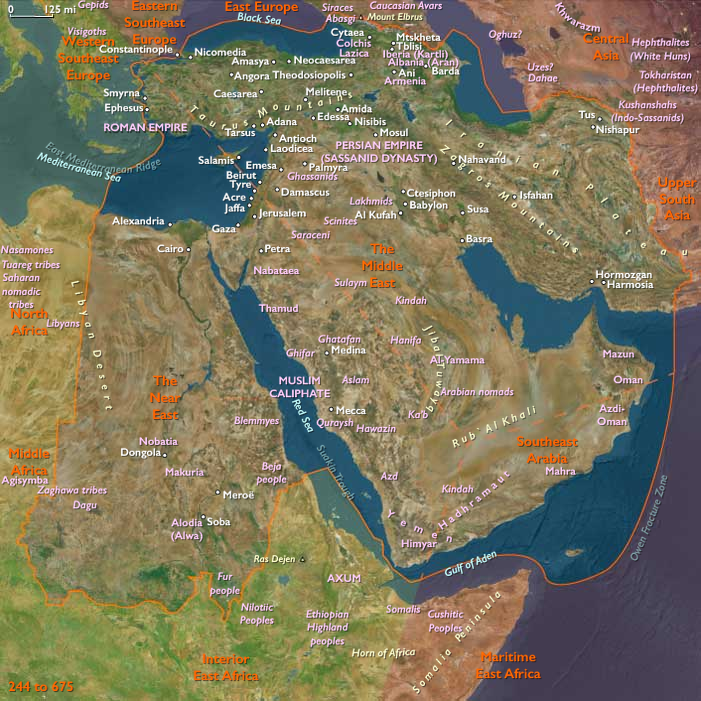
Subregions
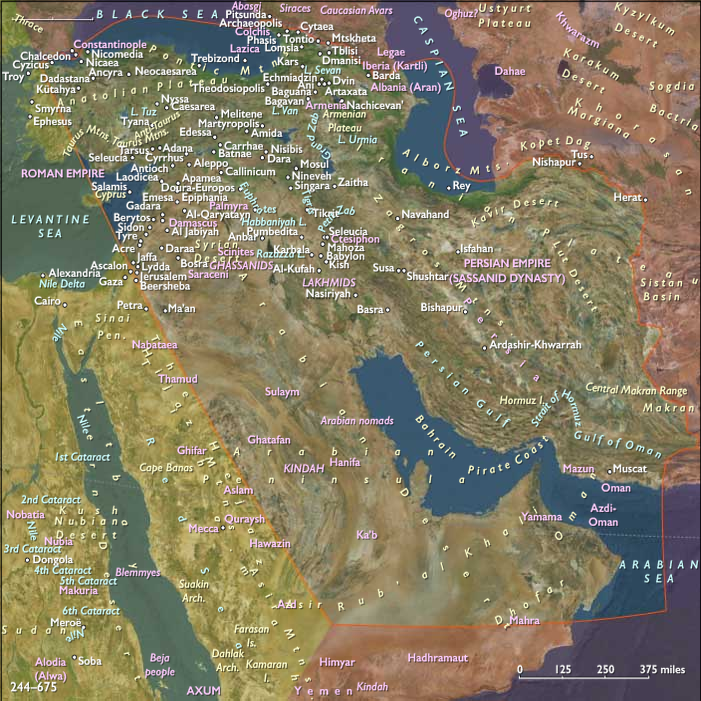
Related Events
Showing 10 events out of 60353 total
Years: 255 - 255
Locations
People
Groups
- Zoroastrians
- Babylonia, Classical
- Jews
- Christians, Early
- Persian Empire, Sassanid, or Sasanid
- Manicheanism
Topics
Subjects
Regions
Subregions