
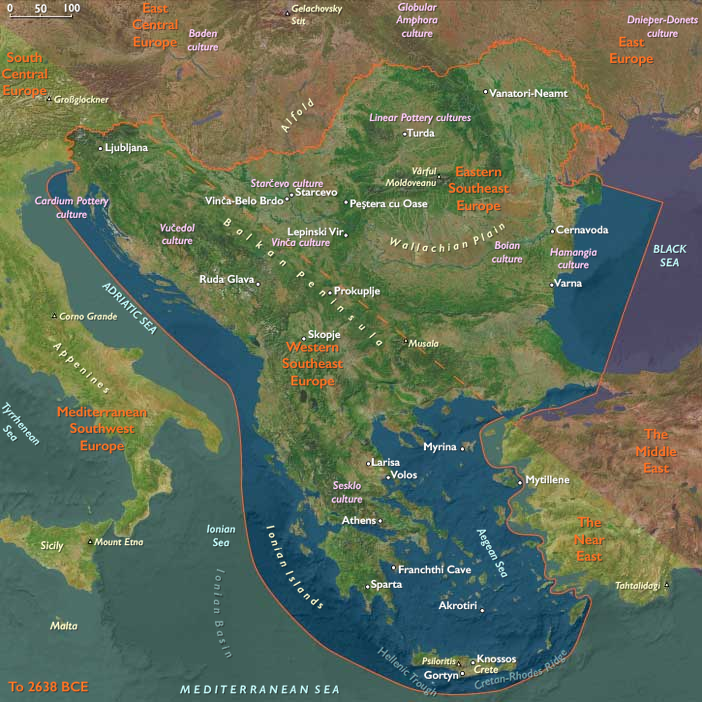
Man had first appeared in the Balkans …
Years: 6093BCE - 4366BCE
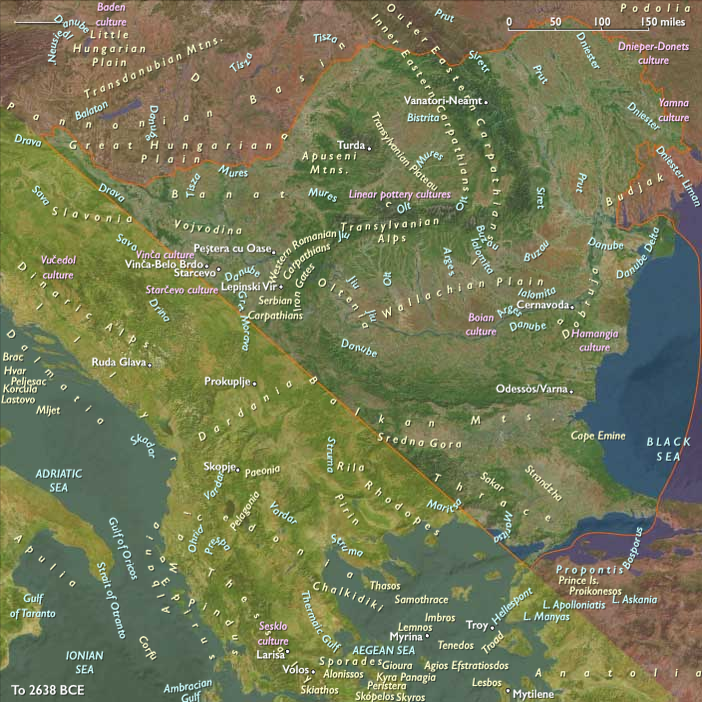
Man had first appeared in the Balkans during the Pleistocene Epoch, a period of advancing and receding glacial ice that began about six hundred thousand years ago.
Once the glaciers had withdrawn completely, a humid climate prevailed in the area and thick forests covered the terrain.
Archaeological evidence indicates that the Balkan regions were populated well before the Neolithic Period (New Stone Age; about ten thousand years ago).
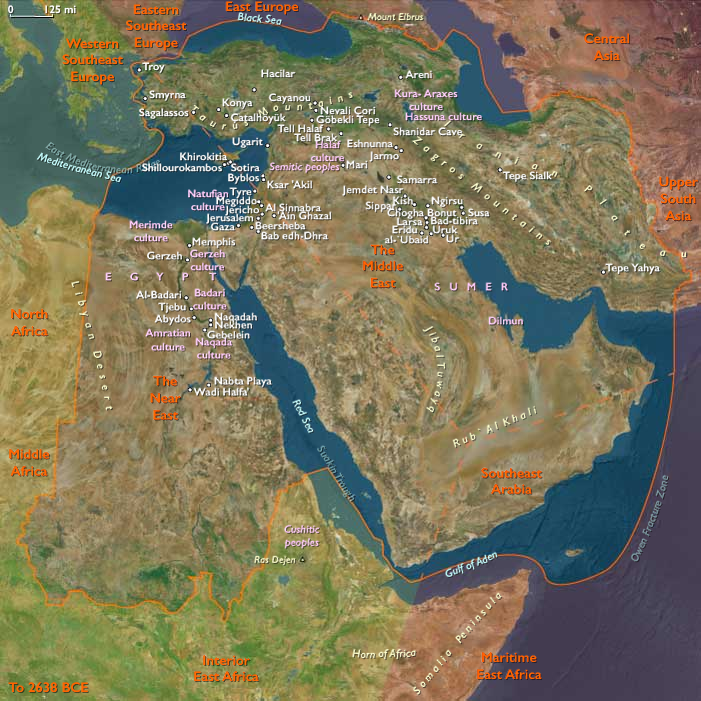
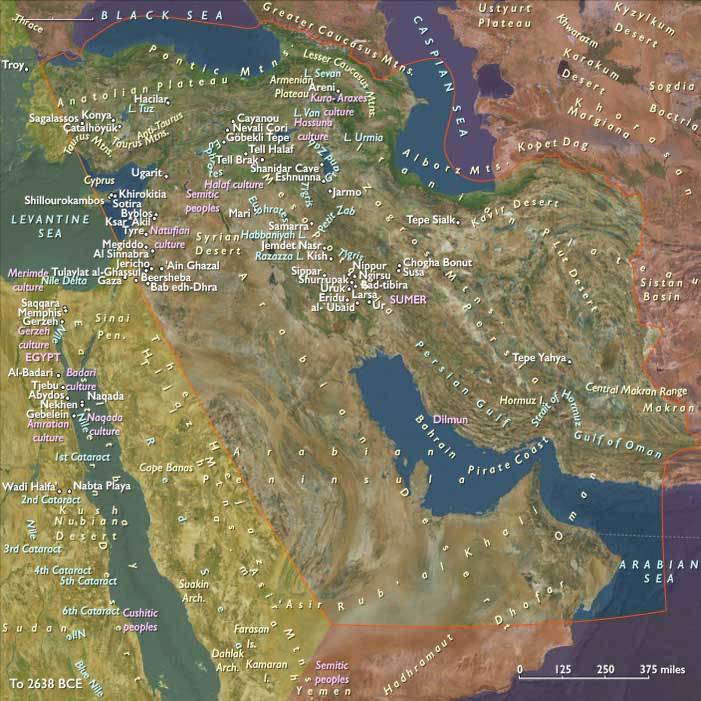
Agriculture, together with the domestication of food animals, spreads throughout the Crescent during the sixth millennium.
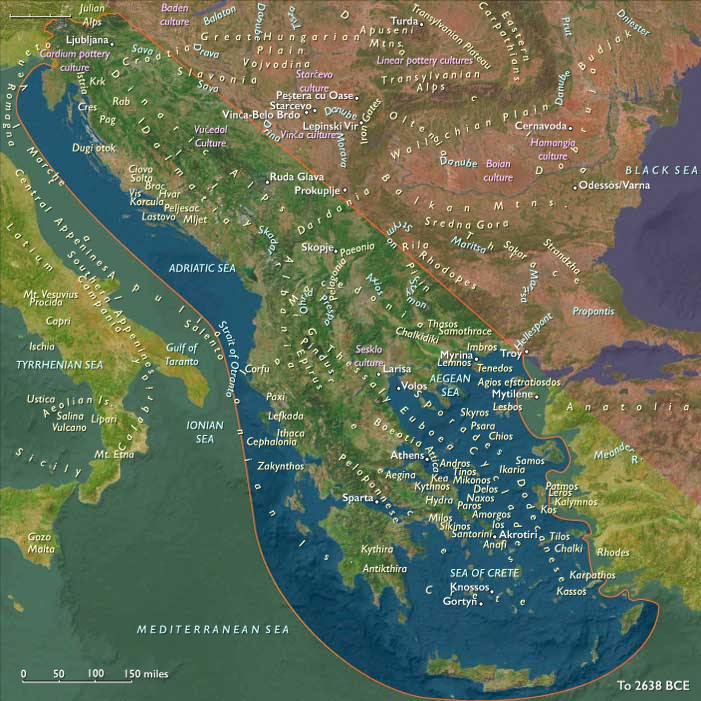
People are everywhere on the move: some groups, still using stone tools but with knowledge of agriculture, reach the Aegean from Anatolia or farther east and settle in parts of the Greek mainland and in Crete.
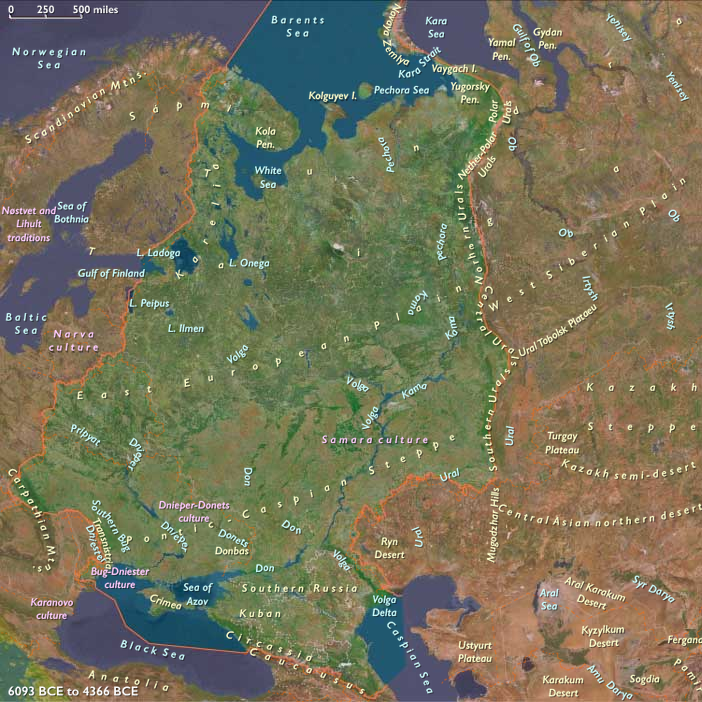
At some point in the early- to mid-sixth millennium, rising sea levels evidently breach the natural dam at the Bosporus that separates the Mediterranean Sea from the great freshwater lake occupying the basin of the modern Black Sea, three hundred and fifty feet below present sea level.
Fueled by the infinite waters of the Atlantic, Pacific and Indian Oceans, the seawaters rush in for the next year or so with the force and volume of multiple Niagaras, increasing the lake area by a third.
Surviving marine life is driven into the newly abbreviated estuaries of the Danube, Dniester, Dnieper, Don and Bug Rivers.
In flatter coastal areas, the shoreline may advance daily by as much as a mile.
Indo-European people are present in the Balkans beginning about 5500 BCE.
Groups
- Linear Pottery (Linearbandkeramik, or LBK) culture
- Daxi culture
- Samarra culture
- Yangshao culture
- Hemudu culture
- Majiabang culture
Topics
- Neolithic Revolution
- Mesolithic Europe
- Neolithic Europe
- 8.2 kiloyear event during the Neolithic Subpluvial
- Aurolithic Epoch, or “Gold” Ages
- Atlantic Period during the Neolithic Subpluvial
- Older Peron Transgression during the Neolithic Subpluvial
Commodoties
Subjects
Regions
Subregions
Years: 6093BCE - 4366BCE
Groups
- Linear Pottery (Linearbandkeramik, or LBK) culture
- Daxi culture
- Samarra culture
- Yangshao culture
- Hemudu culture
- Majiabang culture
Topics
- Neolithic Revolution
- Mesolithic Europe
- Neolithic Europe
- 8.2 kiloyear event during the Neolithic Subpluvial
- Aurolithic Epoch, or “Gold” Ages
- Atlantic Period during the Neolithic Subpluvial
- Older Peron Transgression during the Neolithic Subpluvial
Commodoties
Subjects
Regions
Subregions