
Mamai, sometime in the second half of …
Years: 1378 - 1378
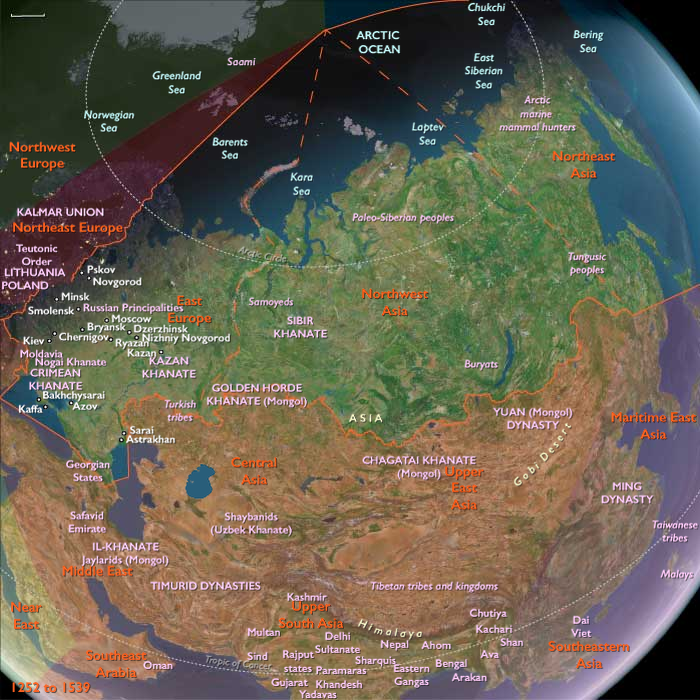
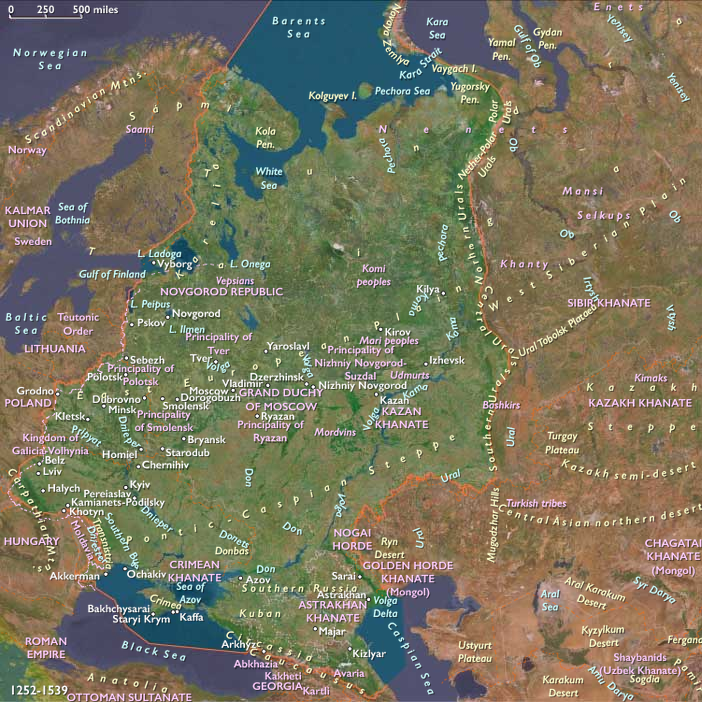
Mamai, sometime in the second half of the 1350s, had become governor of a territory that later will become the Crimean Khanate.
During the rule of Berdi Beg (1357–59) Mamai had been appointed as beqlar beg (beylerbey), a position simultaneously combining the duties of general of the army, minister of foreign affairs, and the head of the supreme court.
Upon the assassination of Berdi Beg by Qulpa in 1359, Mamai had associated himself with one of the coalitions formed to depose Qulpa.
During that period of time the Golden Horde was in relative chaos; numerous regional governors were striving to become the Khan.
Qulpa eventually was killed by Nawruz Beg, who was himself assassinated less than six months later.
Mamai, who is not a direct descendant of Genghis Khan, had played a key role in promoting and supporting rival khans of the White Horde (western part of Golden Horde).
In 1361, he had supported Ğabdullah, son of Uzbeg Khan, who became Khan in Crimea.
Upon the death of Ğabdullah in 1370, Mamai had supported Bulak, who only briefly enjoyed power before being replaced by his main opponent Urus in 1372.
From 1378, by which time there are numerous squabbling concurrent khans who are probably not of Genghisid lineage, Mamai tries to force Russians to pay annual tribute to him instead of the khans of the Blue Horde.
He sends forces led by the warlord Murza Begich to enforce Donskoi's obedience, but the Horde army is defeated in battle near the Vozha river in Riazan' principality and Begich is killed.
As the first serious victory of the Russians over a large army of the Golden Horde, the battle has a significant psychological effect because it has demonstrated the vulnerability of the Tatar cavalry, which has proven unable to overcome determined resistance or withstand strong counterattacks.
Locations
People
Groups
Topics
Commodoties
Subjects
Regions
Subregions
Years: 1378 - 1378
Locations
People
Groups
Topics
Commodoties
Subjects
Regions
Subregions