
Filters:
The original inhabitants of Laos were Austroasiatic …
Years: 388 - 531
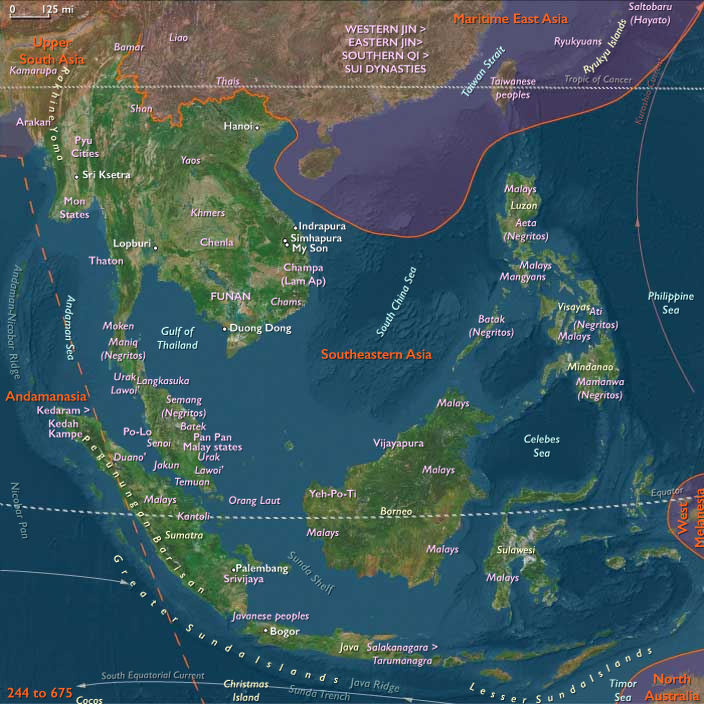
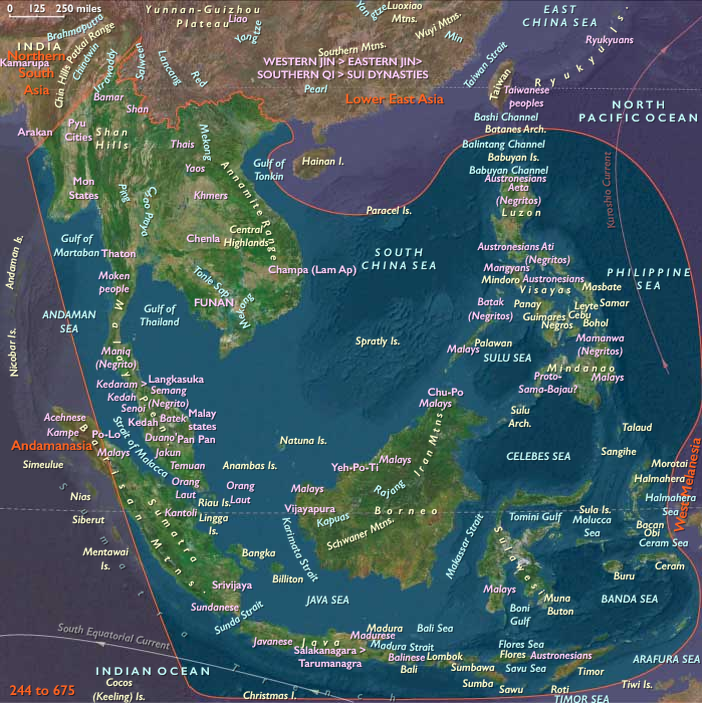
The original inhabitants of Laos were Austroasiatic peoples, who lived by hunting and gathering before the advent of agriculture.
Skilled at river navigation using canoes, these Laotian traders used routes through the mountains, especially rivers, from earliest times.
The most important river route is the Mekong because its many tributaries allow traders to penetrate deep into the hinterland, where they buy products such as cardamom, gum benzoin, sticklac, and many foods.
A number of princely fiefdoms based on wet rice cultivation and associated with the pottery and bronze culture of Ban Chiang have developed in the middle Mekong Valley from the first century CE.
These fiefdoms exercise power over their neighbors, in circumstances of generally sparse populations, through expanding and contracting spheres of influence best described by the term mandala.
Commerce, marriage contracts, and warfare serve to expand the mandala.
Thus, a plurality of power centers occupy the middle Mekong Valley in early times.
Skilled at river navigation using canoes, these Laotian traders used routes through the mountains, especially rivers, from earliest times.
The most important river route is the Mekong because its many tributaries allow traders to penetrate deep into the hinterland, where they buy products such as cardamom, gum benzoin, sticklac, and many foods.
A number of princely fiefdoms based on wet rice cultivation and associated with the pottery and bronze culture of Ban Chiang have developed in the middle Mekong Valley from the first century CE.
These fiefdoms exercise power over their neighbors, in circumstances of generally sparse populations, through expanding and contracting spheres of influence best described by the term mandala.
Commerce, marriage contracts, and warfare serve to expand the mandala.
Thus, a plurality of power centers occupy the middle Mekong Valley in early times.
Commodoties
Subjects
Regions
Subregions
Years: 388 - 531
Commodoties
Subjects
Regions
Subregions