
Makassar has by the sixteenth century become …
Years: 1511 - 1511
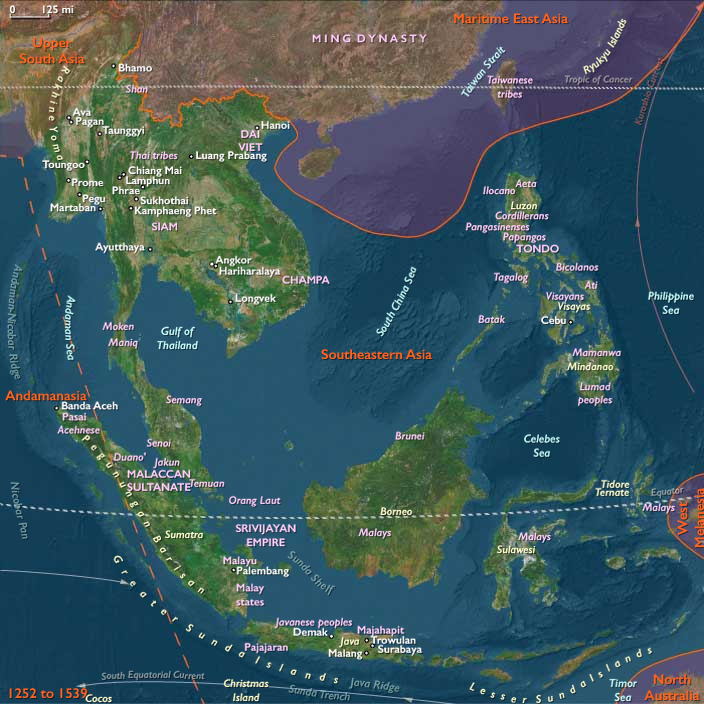
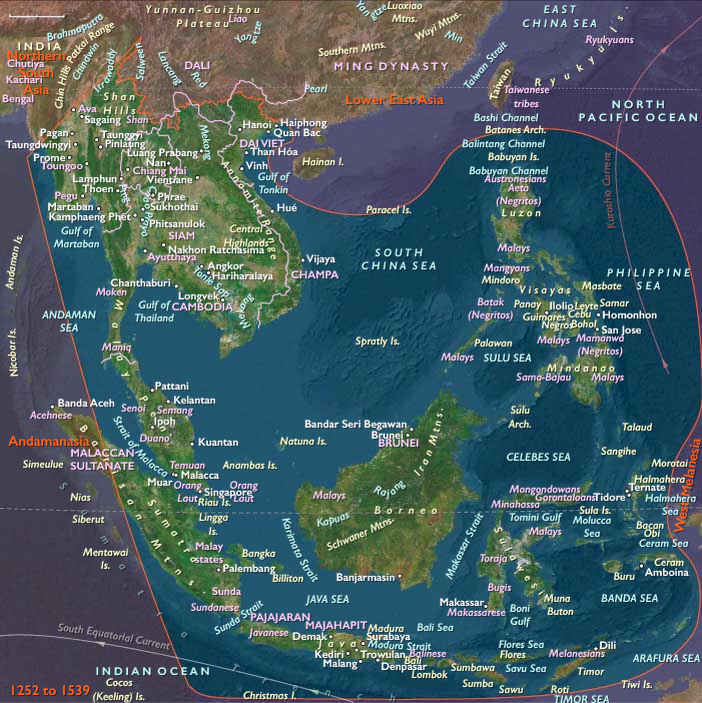
Makassar has by the sixteenth century become Sulawesi's major port and center of the powerful Gowa and Tallo sultanates, which between them have a series of eleven fortresses and strongholds and a fortified sea wall that extends along the coast.
Portuguese rulers call the city Macáçar.
Having become the dominant trading center of eastern Indonesia, Makassar will soon become one of the largest cities in island Southeast Asia.
The Makassar kings maintain a policy of free trade, insisting on the right of any visitor to do business in the city, and will reject the later attempts of the Dutch to establish a monopoly over the city in the early seventeenth century.
The trade in spices figures prominently in the history of Sulawesi, which involves frequent struggles between rival native and foreign powers for control of the lucrative trade during the pre-colonial and colonial period, when spices from the region are in high demand in the West.
Much of South Sulawesi's early history is written in old texts that can be traced back to the thirteenth and fourteenth centuries.
Further, tolerant religious attitudes mean that even as Islam becomes the dominant faith in the region, Christians and others are still able to trade in the city.
With these attractions, Makassar is a key center for Malays working in the spice trade, as well as a valuable base for European and Arab traders from much further afield.
The first European settlers are the Portuguese sailors.
When the Portuguese reach Sulawesi in 1511, they find Makassar a thriving cosmopolitan entrepôt where Chinese, Arabs, Indians, Siamese, Javanese, and Malays come to trade their manufactured metal goods and textiles for pearls, gold, copper, camphor and spices—nutmeg, cloves and mace imported from the interior and the neighboring Spice Islands of Maluku.
Locations
Groups
- Arab people
- Malaysian Malays
- Tai peoples, or Thais
- Indian people
- Javanese people
- Chinese (Han) people
- Portugal, Avizan (Joannine) Kingdom of
- Portuguese Empire
- Portuguese Malacca
Topics
Commodoties
Subjects
- Commerce
- Engineering
- Labor and Service
- Conflict
- Exploration
- Faith
- Government
- Custom and Law
- Technology
- Finance
Regions
Subregions
Related Events
Showing 10 events out of 39308 total
Years: 1511 - 1511
Locations
Groups
- Arab people
- Malaysian Malays
- Tai peoples, or Thais
- Indian people
- Javanese people
- Chinese (Han) people
- Portugal, Avizan (Joannine) Kingdom of
- Portuguese Empire
- Portuguese Malacca
Topics
Commodoties
Subjects
- Commerce
- Engineering
- Labor and Service
- Conflict
- Exploration
- Faith
- Government
- Custom and Law
- Technology
- Finance
Regions
Subregions