
There is no evidence of human habitation …
Years: 1540 - 1683
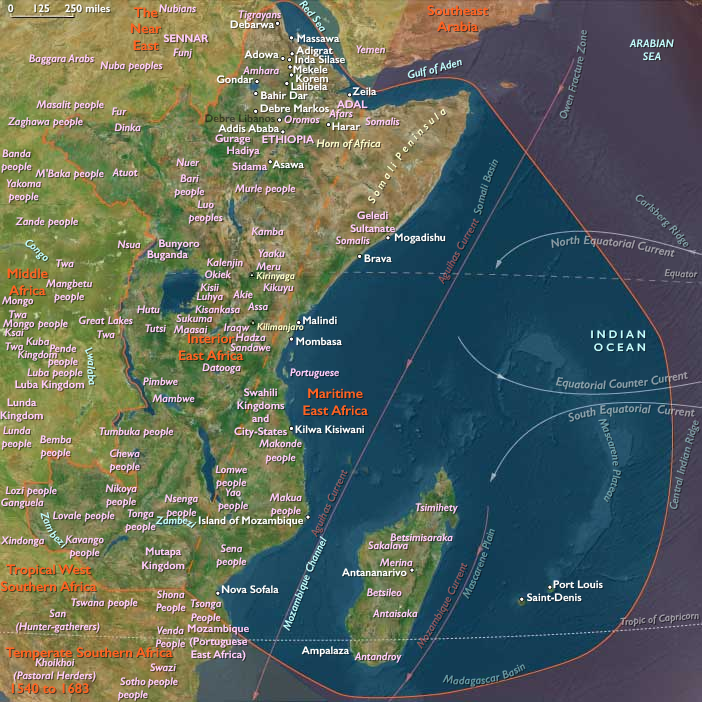
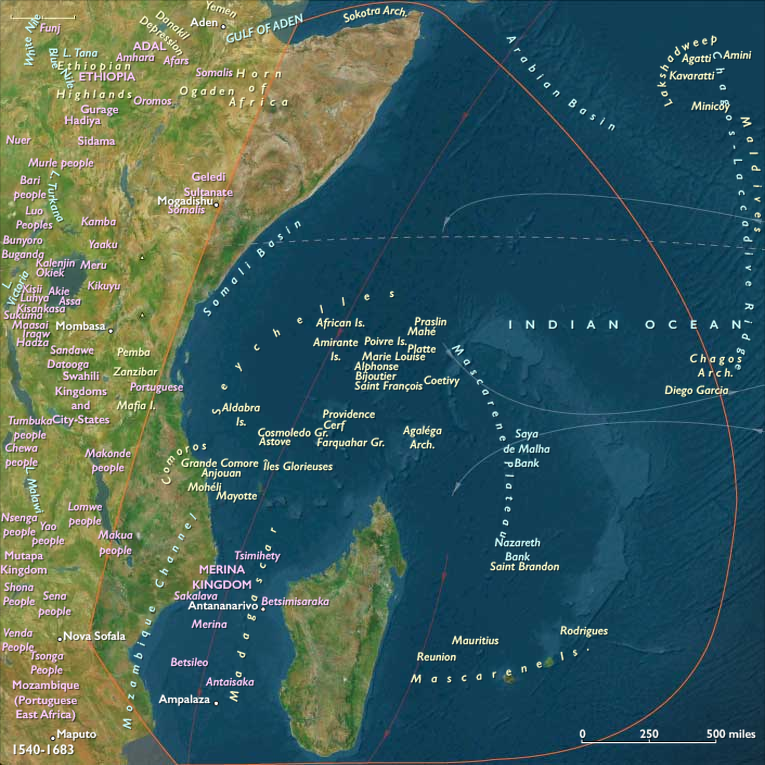
There is no evidence of human habitation on Mauritius before the early seventeenth century, but Phoenicians probably visited the island about two thousand years ago, and Malays and Arabs stop on the island in subsequent centuries.
The Portuguese chart the waters surrounding the island, which they call Ilha do Cirne (Island of the Swan), in the early sixteenth century.
In 1638 the Dutch begin colonizing the island, which they name after Maurice of Nassau, the stadthouder (head of state) of Holland.
The island's first governor, Cornelius Simonsz Gooyer, presides over a small population of Dutch convicts and slaves from Indonesia and Madagascar, who seek to export ambergris, ebony, and other resources.
After twenty years, the colony fails, as does a second settlement established in 1664.
Locations
People
Groups
- Arab people
- Malays, Ethnic
- Dutch people
- Madagascar, feudal
- Netherlands, United Provinces of the (Dutch Republic)
Topics
- Interaction with Subsaharan Africa, Early European
- Age of Discovery
- Colonization of Asia, Portuguese
- Colonization of Asia, Dutch
- Sub-Saharan Africa, Modern
- Piracy, Golden Age of
Commodoties
Subjects
Regions
Subregions
Years: 1540 - 1683
Locations
People
Groups
- Arab people
- Malays, Ethnic
- Dutch people
- Madagascar, feudal
- Netherlands, United Provinces of the (Dutch Republic)
Topics
- Interaction with Subsaharan Africa, Early European
- Age of Discovery
- Colonization of Asia, Portuguese
- Colonization of Asia, Dutch
- Sub-Saharan Africa, Modern
- Piracy, Golden Age of
Commodoties
Subjects
Regions
Subregions