
Maastricht Becomes a City Under Dual Sovereignty …
Years: 1204 - 1204
Maastricht Becomes a City Under Dual Sovereignty (1204 CE)
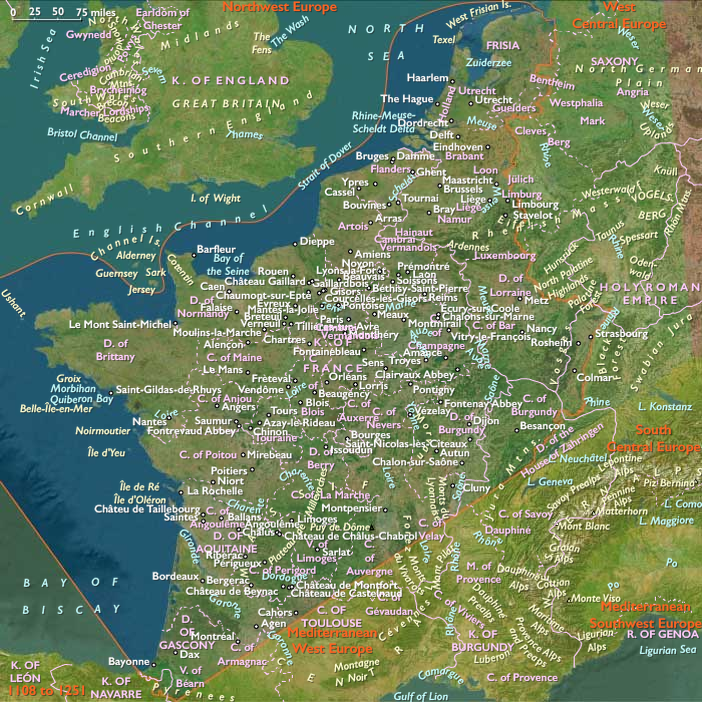
By 1204, the city of Maastricht, located on the Meuse River in what is now the southeastern Netherlands, had developed into a unique condominium—a city of dual authority under international law. This meant that two separate states of the Holy Roman Empire, the Prince-Bishopric of Liège and the Duchy of Brabant, held joint sovereignty over Maastricht.
That same year, the German Emperor granted Maastricht city rights, formally recognizing its urban status and self-governing privileges.
Maastricht’s Unique Political Structure
- The Prince-Bishop of Liège controlled Maastricht due to its ecclesiastical importance, as Liège had been a major religious center since Carolingian times.
- The Dukes of Brabant asserted control because of Maastricht’s strategic location along the Meuse, making it vital for trade and military access.
- As a condominium, Maastricht was effectively ruled by two overlords, each with separate rights and responsibilities, a rare political arrangement in medieval Europe.
Maastricht’s City Rights (1204)
-
The Holy Roman Emperor granted Maastricht city rights, providing:
- Legal autonomy and municipal governance.
- The right to hold markets, strengthening its role as a commercial hub.
- Fortification privileges, allowing it to build defensive walls.
-
The city’s status as a joint possession of Liège and Brabant meant that it developed distinct civic institutions, blending religious and secular influences.
Significance of Maastricht’s Status
- Economic Growth – Receiving imperial city rights in 1204 allowed Maastricht to expand its trade networksalong the Meuse River.
- Political Complexity – The dual authority system created a delicate balance between the Prince-Bishops of Liège and the Dukes of Brabant, shaping the city’s political history for centuries.
- Military and Strategic Importance – As a border city, Maastricht became a contested stronghold in later conflicts between the Dutch, Spanish, French, and Germans.
The recognition of Maastricht as a city in 1204 solidified its role as a major center of commerce and governance in the Holy Roman Empire, with its unusual condominium status shaping its legal and political development for centuries to come.
Locations
People
Groups
Commodoties
Subjects
Regions

Subregions
Years: 1204 - 1204
Locations
People
Groups
Commodoties
Subjects
Regions
Subregions