
Lund, along with Sigtuna, is the oldest …
Years: 1103 - 1103
Lund, along with Sigtuna, is the oldest city in present-day Sweden.
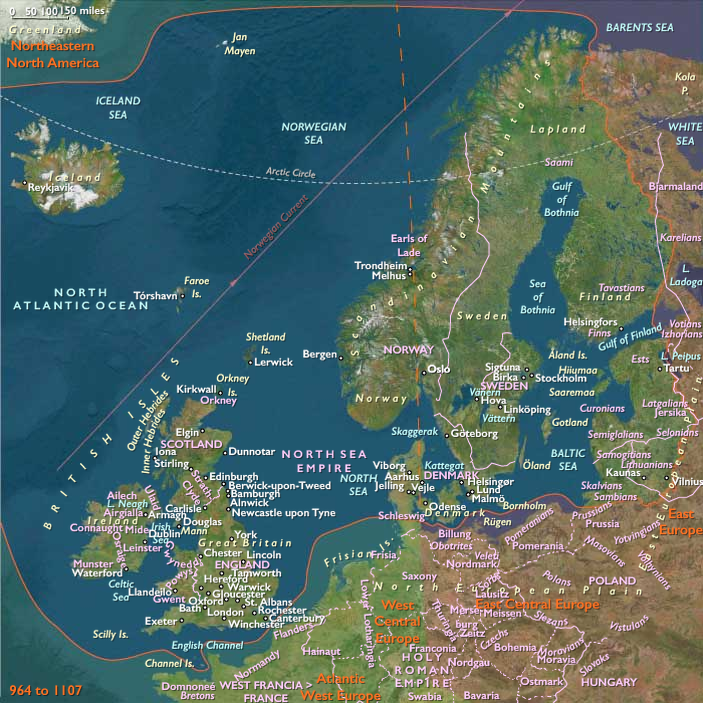
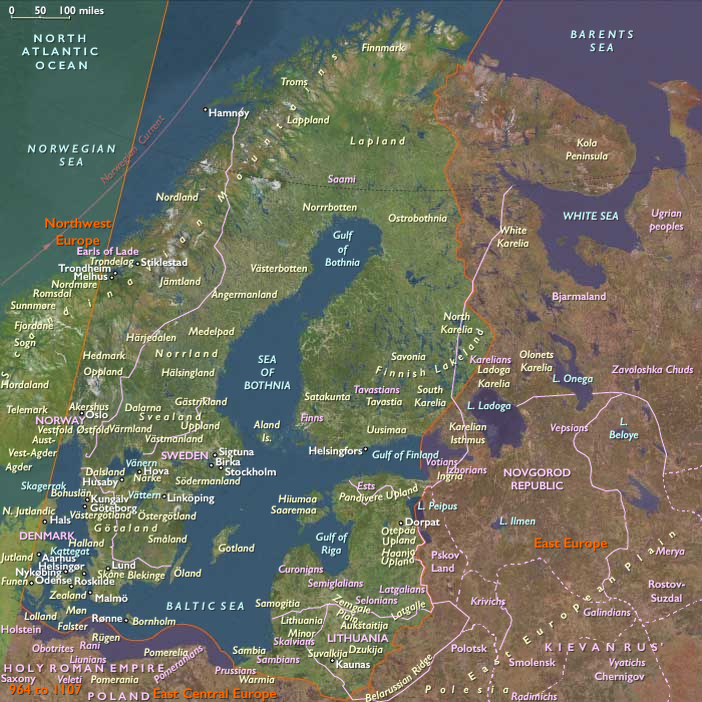
Until the 1980s, the town was thought to have been founded around 1020 by either Sweyn I Forkbeard or his son Canute the Great of Denmark, the kingdom of which the area was then a part, bu recent archaeological discoveries suggest that the first settlement dated to circa 990, possibly the relocation of settlers at Uppåkra, when Scania belonged to Denmark.
The Uppåkra settlement dates back to the first century BCE and its remains are at the present site of the village of Uppåkra.
King Sweyn I Forkbeard had moved Lund to its present location, a distance of some five kilometers (three point one miles).
The new location of Lund, on a hill and across a ford, gives the new site considerable defensive advantages in comparison with Uppåkra, situated on the highest point of a large plain.
Lund had soon become a major Christian center of the Baltic Sea region, at a time when the area is still a frontier area for Christian mission, and within Scandinavia and especially Denmark through the Middle Ages.
King Eric I of Denmark had gone to Rome on a pilgrimage and secured two important concessions from Pope Pascal II: sainthood for his murdered brother, Saint Canute IV and the creation of an archdiocese that includes all of Scandinavia.
Lund was named as the headquarters.
The city had been made a see in 1048 and united with Dalby in 1060, and in 1103 becomes the seat of the archbishop for Scandinavia.
The diocese of nearby Dalby had been absorbed in 1066.
Lund Cathedral is similarly founded in or shortly after 1103.
Locations
People
Groups
Subjects
Regions
Subregions
Years: 1103 - 1103
Locations
People
Groups
Subjects
Regions
Subregions