
Luis de Carabajal y Cueva, a Spanish-Portuguese …
Years: 1590 - 1590
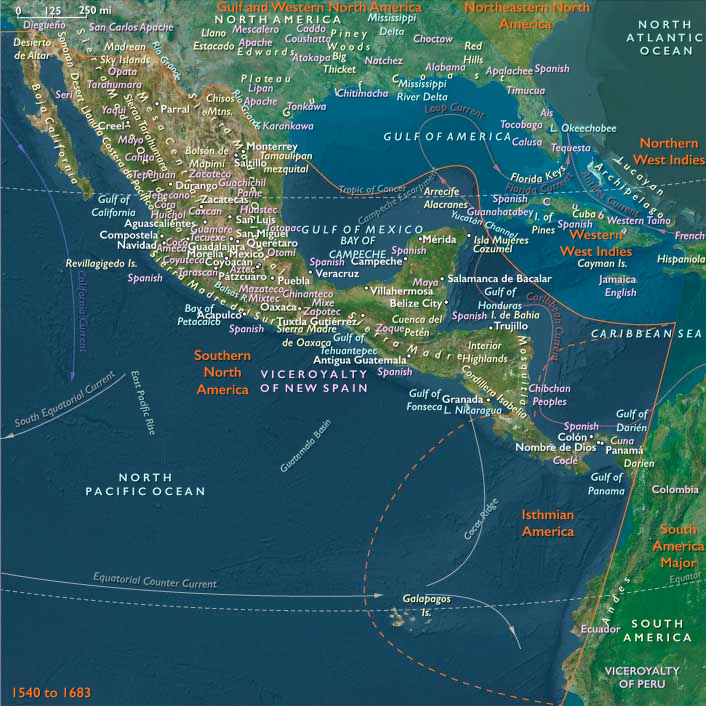
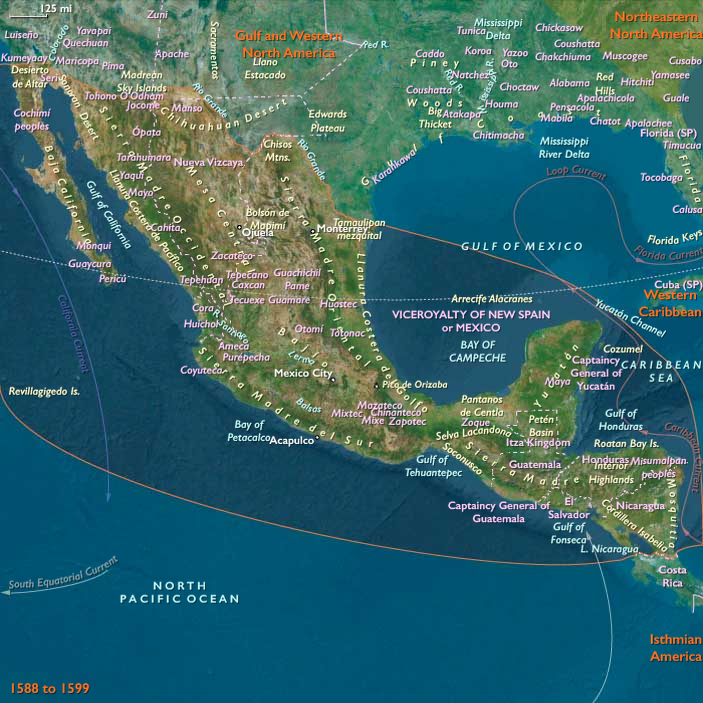
Luis de Carabajal y Cueva, a Spanish-Portuguese adventurer, slave-trader, and from 1579 governor of Nuevo León, had been allowed one hundred soldiers and sixty married laborers, accompanied by their wives and children, to pacify and colonize the new territory.
It is safe to assume that a number of these early colonists were Spanish Jews, who, as conversos like the Carabajal family, had hoped to escape persecution and find prosperity in the New World.
In this expectation they are disappointed, for within a decade after their settlement a score of them are openly denounced and more or less severely punished for Judaizing.
There seems to be an extensive colony of them in Mexico in 1590.
Don Luis had brought with him to Mexico his brother-in-law, Don Francisco Rodríguez de Matos, and his sister, Doña Francisca Nuñez de Carabajal, with their children.
While in the midst of prosperity, and seemingly leading Christian lives, they are seized in 1590 by the Inquisition.
Doña Isabel is tortured until she implicates the whole of the Carabajal family, who, with the exception of Don Baltasar, are imprisoned.
The latter succeeds in escaping to Tasco, and is condemned to death in his absence.
Carabajal, also accused by the Inquisition of heresy, is condemned to a six-year exile from New Spain, but will die in prison in 1595 while awaiting the execution of his sentence.
Locations
People
Groups
- Jews
- Christians, Roman Catholic
- Inquisition, Spanish
- Christians, New
- New Spain, Viceroyalty of
- Spain, Habsburg Kingdom of
Topics
- Colonization of the Americas, Spanish
- Encomienda system
- Counter-Reformation (also Catholic Reformation or Catholic Revival)
Commodoties
Subjects
Regions
Subregions
Related Events
Showing 10 events out of 34447 total
Years: 1590 - 1590
Locations
People
Groups
- Jews
- Christians, Roman Catholic
- Inquisition, Spanish
- Christians, New
- New Spain, Viceroyalty of
- Spain, Habsburg Kingdom of
Topics
- Colonization of the Americas, Spanish
- Encomienda system
- Counter-Reformation (also Catholic Reformation or Catholic Revival)
Commodoties
Subjects
Regions
Subregions