
Filters:
The fossilized remains of Homo sapiens idaltu …
Years: 173709BCE - 152974BCE
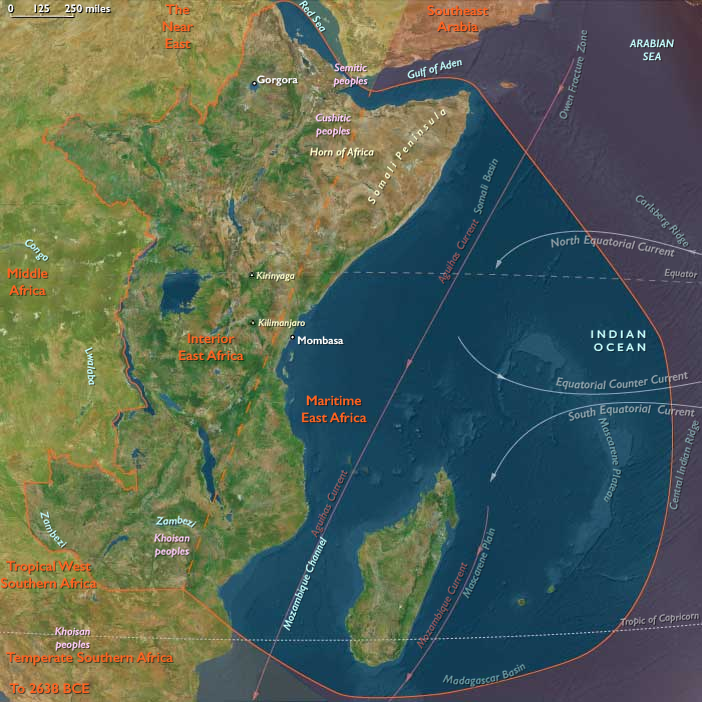
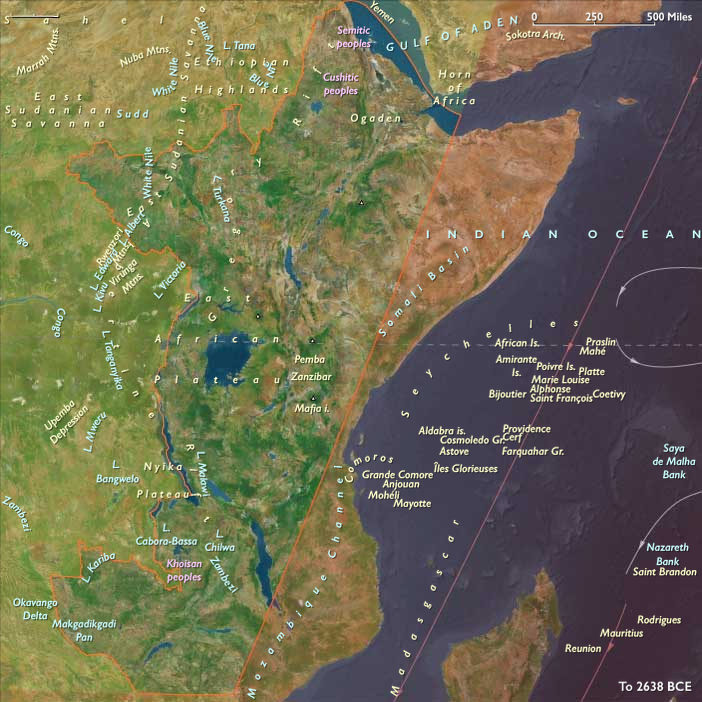
The fossilized remains of Homo sapiens idaltu, an extinct subspecies of Homo sapiens that lived almost one hundred and sixty thousand years ago in Pleistocene Africa, discovered at Herto Bouri in the Middle Awash site of Ethiopia's Afar Triangle in 1997 by Tim White, is first unveiled in 2003.
Herto Bouri is a region of Ethiopia under volcanic layers.
By using radioisotope dating, the layers date between one hundred and fifty-four thousand and one hundred and sixty thousand years old.
Idaltu is the Afar word for "elder, first born.”
These fossils differ from those of chronologically later forms of early H. sapiens such as Early European Modern Humans found in Europe and other parts of the world in that their morphology has many archaic features not typical of H. sapiens (although modern human skulls do differ across the globe).
Despite the archaic features, these specimens are postulated to represent the direct ancestors of Homo sapiens sapiens.
"Modern humans" are defined as the Homo sapiens species, of which the only extant subspecies is known as Homo sapiens sapiens.
According to the "Recent African Origin (RAO)" or "Out-Of-Africa" theory, H. sapiens sapiens developed shortly after this period (Khoisan mitochondrial divergence dated not later than 110,000 BP) in Eastern Africa, and as such, to be the oldest representative of the H. sapiens species found so far.
Herto Bouri is a region of Ethiopia under volcanic layers.
By using radioisotope dating, the layers date between one hundred and fifty-four thousand and one hundred and sixty thousand years old.
Idaltu is the Afar word for "elder, first born.”
These fossils differ from those of chronologically later forms of early H. sapiens such as Early European Modern Humans found in Europe and other parts of the world in that their morphology has many archaic features not typical of H. sapiens (although modern human skulls do differ across the globe).
Despite the archaic features, these specimens are postulated to represent the direct ancestors of Homo sapiens sapiens.
"Modern humans" are defined as the Homo sapiens species, of which the only extant subspecies is known as Homo sapiens sapiens.
According to the "Recent African Origin (RAO)" or "Out-Of-Africa" theory, H. sapiens sapiens developed shortly after this period (Khoisan mitochondrial divergence dated not later than 110,000 BP) in Eastern Africa, and as such, to be the oldest representative of the H. sapiens species found so far.
Locations
Topics
Subjects
Regions
Subregions
Years: 173709BCE - 152974BCE
Locations
Topics
Subjects
Regions
Subregions